


Generadores Solares Ecuador: Harnessing the Andean Sun for Reliable, Clean Power
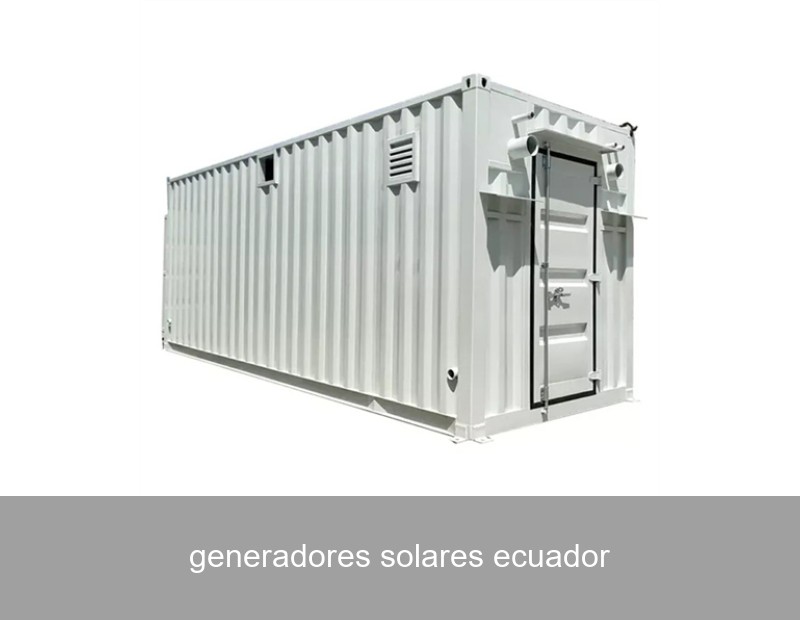
Imagine a country blessed with some of the most consistent solar radiation on the planet, where the sun is a near-constant companion. This isn't a futuristic vision—it's present-day Ecuador. For homes, businesses, and communities across this diverse nation, from the Galápagos Islands to the Andean highlands, generadores solares Ecuador (solar generators in Ecuador) are transforming from a niche alternative into a mainstream energy solution. The phenomenon is clear: faced with the desire for energy independence, rising electricity costs, and a global push for sustainability, Ecuadorians are looking upward to the sun. But what does this shift truly entail, and how can one ensure their investment delivers reliable power day and night? Let's explore the data, the real-world applications, and the technology that makes true energy autonomy possible.
Beyond Panels: The Critical Role of Solar Generators
When most people think of solar power, they picture photovoltaic (PV) panels. And while panels are the essential harvesters of sunlight, the true brain and brawn of a reliable system lie in the solar generator—more accurately termed a solar battery storage system. A simple panel setup without storage only works when the sun shines, leaving you vulnerable at night or during cloudy periods. This is a significant limitation in regions with microclimates, like Ecuador's Sierra.
A complete generador solar integrates three core components:
- Solar Panels: Capture sunlight and convert it to direct current (DC) electricity.
- Inverter: The "translator," converting DC electricity from panels and batteries into the alternating current (AC) used by your appliances.
- Battery Storage System: The heart of the generator. It stores excess solar energy produced during the day for use anytime, ensuring an uninterrupted power supply.
According to the International Renewable Energy Agency (IRENA), the global capacity of battery energy storage is set to multiply exponentially, driven by its pivotal role in enabling higher shares of renewables. For Ecuador, this means that adopting solar-plus-storage isn't just about going green; it's about achieving resilience and predictability in energy supply.

Image: Solar installations in mountainous regions require robust and efficient storage solutions. Source: Unsplash
An Ecuadorian Case Study: Powering a Sustainable Future
Let's move from theory to practice. Consider a medium-sized agro-processing cooperative in the province of Loja. Their challenge was twofold: high operational costs from grid electricity and frequent, unpredictable power fluctuations that damaged sensitive drying equipment and led to product spoilage.
Their Solution: The cooperative installed a 50 kW solar array coupled with a 120 kWh battery storage system. This system was designed to power their cold storage and processing lines during the day from solar and seamlessly switch to battery power during grid outages or at night for essential security and monitoring loads.
The Data-Driven Outcome (12-month period):
| Metric | Before Installation | After Installation |
|---|---|---|
| Grid Electricity Reliance | 100% | 35% |
| Energy Cost Savings | Baseline | 62% reduction |
| Production Downtime (due to outages) | ~18 hours/month | 0 hours/month |
| CO2 Emissions Reduction | Baseline | Approx. 28 metric tons |
This case, echoed by many across Ecuador, illustrates the tangible impact. The "solar generator" didn't just provide backup; it became the primary, most stable power source, turning a cost center into a strategic asset. The cooperative's success story is a powerful testament to how generadores solares Ecuador can drive economic and environmental benefits simultaneously.
Choosing the Right Solar Generator System: Key Considerations
Not all storage solutions are created equal. For the demanding environments and critical needs of commercial and industrial applications in Ecuador, selecting the right technology is paramount. Here are the critical factors to evaluate:
- Battery Chemistry & Lifespan: Lithium Iron Phosphate (LFP) batteries are now the industry standard for stationary storage due to their superior safety, longer cycle life (often 6,000+ cycles), and stability under high temperatures—a crucial factor for Ecuador's coastal regions.
- Depth of Discharge (DoD): A high DoD (e.g., 90%) means you can use more of your battery's stored energy without damaging it, providing more usable capacity for your investment.
- Scalability & Modularity: Can the system start small and grow as your energy needs expand? Modular designs offer future-proofing and flexibility.
- Intelligent Energy Management: The system's software is its brain. It should intelligently decide when to charge from solar, discharge to power your loads, or even sell excess back to the grid (where regulations permit), maximizing your return on investment.
The Highjoule Solution: Intelligent Energy for Ecuador
This is where Highjoule's expertise comes into play. Since 2005, we have been at the forefront of advanced energy storage, designing systems that are not just hardware, but intelligent power platforms. For businesses, communities, and industrial operators in Ecuador looking for reliable generadores solares, our HPS (Highjoule PowerStack) Series offers a compelling answer.
Our systems are engineered with the realities of diverse markets in mind. The HPS Series features:
- Ultra-Safe LFP Technology: Built with thermal stability and long service life as a core principle, ensuring safety and reliability for decades.
- True Modular Design: Start with a single unit and expand capacity seamlessly from kWh to MWh scale. This aligns perfectly with the growth trajectory of many Ecuadorian enterprises.
- Adaptive Power Management Software: Our proprietary AI-driven software doesn't just store energy; it optimizes it. It learns your consumption patterns, weather forecasts (leveraging Ecuador's predictable sun), and tariff schedules to autonomously manage your energy flow for maximum savings and uptime.
- Grid-Forming Capability: For critical operations or microgrid applications, our systems can create a stable, independent electrical grid ("black start") without relying on the main utility, a vital feature for remote areas or ensuring business continuity.
We understand that adopting such technology is a significant decision. That's why Highjoule works with a network of certified local partners in key regions, providing not just world-class equipment but also local design support, installation expertise, and long-term service. Our goal is to deliver a complete, worry-free solar generator solution for Ecuador that empowers your independence.

Image: A modern, modular battery energy storage system like Highjoule's HPS Series. Source: Unsplash
Shaping Ecuador's Future Energy Landscape
The transition to renewable energy in Ecuador is supported by a favorable policy framework. The government's push for efficiency and diversification, as outlined in its national energy plans, creates a conducive environment for investment in solar and storage. By integrating generadores solares with battery storage, Ecuadorian energy users are not just consumers; they become active participants in a more stable and sustainable national grid—a concept known as "prosumers."
This decentralized model of energy production enhances national security, reduces strain on transmission infrastructure, and accelerates the transition away from fossil fuels. The data from the International Energy Agency (IEA) highlights the growth potential for renewables in Latin America, with solar leading the charge.
A Final Thought: What Does Energy Independence Mean for You?
The story of generadores solares Ecuador is still being written. The technology has moved from possibility to proven necessity. Whether it's a hotel on the coast aiming to guarantee air conditioning for guests 24/7, a hospital requiring an absolute guarantee of power, or a rural community seeking to develop without waiting for grid extension, the question is no longer "if" but "how."
How will you leverage Ecuador's greatest natural asset to secure your operational continuity, control your costs, and contribute to a cleaner future? What would a day without worrying about power outages or volatile electricity bills look like for your home or business? The sun is providing the fuel; the right storage technology provides the key to unlock its full, unwavering potential.
 Inquiry
 Online Chat