


The 5000W Solar Generator: Your Complete Guide to Robust, Independent Power
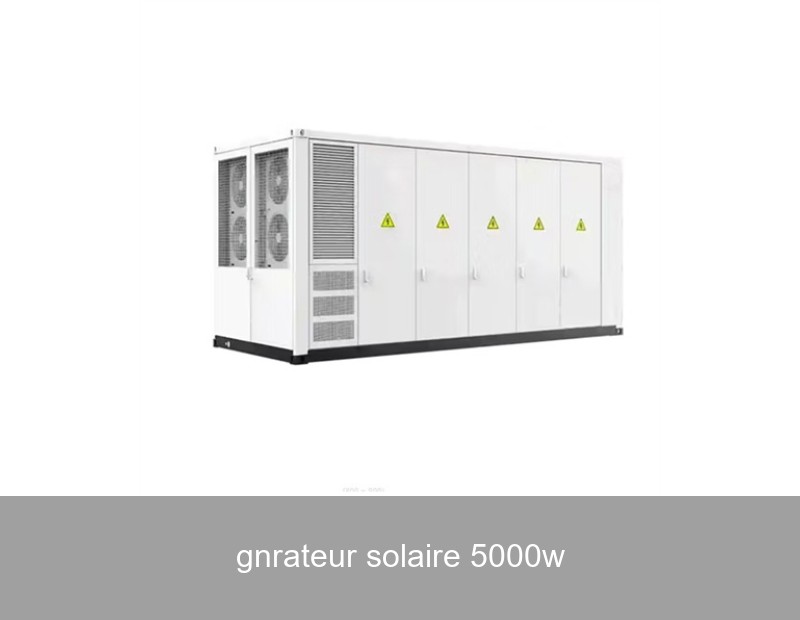
Imagine a power outage hits your home during a storm. The lights flicker and die, the refrigerator falls silent, and your connection to the world goes dark. Now, imagine a different scenario: your lights remain on, your essential appliances hum steadily, and life continues with minimal disruption. This isn't magic; it's the reality enabled by modern solar technology, specifically a robust générateur solaire 5000w (5000W solar generator) system. But is a "solar generator" just a big battery box? For homeowners and businesses in Europe and the US seeking true energy resilience and cost savings, the answer is far more sophisticated. This guide will demystify the 5000W solar power system, moving beyond the marketing term to explore the integrated technology that delivers reliable, clean energy independence.
What is a 5000W Solar Generator?
Let's clarify the terminology first. Colloquially, a "générateur solaire 5000w" refers not to a single device but to a system capable of delivering a continuous 5000 watts (5 kilowatts) of AC power. This is the backbone of a serious off-grid or hybrid power setup. A true system consists of three core components: high-efficiency solar panels to capture energy, a sophisticated battery storage system to hold it, and a powerful inverter to convert that stored DC power into the AC electricity your home or business uses. This 5kW output is significant—it can simultaneously power a suite of essential appliances: refrigerators, lighting, computing equipment, well pumps, and even some HVAC systems or power tools, making it a versatile solution for everything from whole-home backup to powering a remote workshop.
Why 5000W? Understanding the Power Sweet Spot
Why has 5000W become such a popular benchmark? The data points to a perfect intersection of capability, cost, and practicality. According to the U.S. Energy Information Administration, the average American home consumes about 886 kWh per month, or roughly 29 kWh per day. A well-designed 5000W system, when paired with sufficient battery capacity, can cover a substantial portion of this daily load, especially when energy-efficient appliances are used.
- Phenomenon: Homeowners want to power more than just a few lights during an outage; they seek to maintain a semblance of normal life.
- Data: A 5000W inverter can handle the starting surge (surge power) of motors in refrigerators (1200W), well pumps (1500-3000W), and smaller HVAC units, which smaller units cannot.
- Case in Point: A family in California uses their 5kW system to run critical loads for over 24 hours during planned safety power shutoffs, something a smaller 1500W unit could not sustain.
- Insight: The 5000W rating represents a threshold. It moves beyond basic emergency power into the realm of meaningful daily load management and true energy autonomy, making it a sound investment for both resilience and long-term utility bill reduction.
Image: A modern home solar and storage installation. Source: Unsplash
Beyond the "Generator": The Integrated System Advantage
The term "generator" can be misleading, suggesting a simple plug-and-play unit. For reliable, daily 5000W output, you need an integrated system. This is where expertise matters. Companies like Highjoule, with nearly two decades of experience since 2005, focus on designing these cohesive systems. We don't just sell components; we engineer how they work together intelligently. Our battery energy storage systems (BESS) are built with lifecycle and safety in mind, using advanced lithium iron phosphate (LiFePO4) chemistry for longevity and stability. When coupled with our smart hybrid inverters, which manage energy flow between solar panels, batteries, and the grid, you get a true power ecosystem—not just a generator.
Key Components of a Professional 5000W System
| Component | Role | Highjoule's Value Addition |
|---|---|---|
| Solar Panels (Array) | Captures sunlight, typically needing ~6-7kW of panels to consistently charge the system and deliver 5000W output. | We partner with top-tier panel manufacturers and design the optimal array layout for your geography. |
| Hybrid Inverter (5kW+) | The brain. Converts DC to AC, manages grid connection, and prioritizes solar/battery power. | Our inverters feature advanced grid-support functions and seamless switching for zero-interruption backup. |
| Battery Storage (10-20+ kWh) | Stores excess solar energy for use at night or during outages. Capacity determines runtime. | Our modular, scalable BESS allows you to start with what you need and expand later, all managed by a unified platform. |
| Energy Management System (EMS) | Software that optimizes energy use, schedules discharges, and monitors system health. | Highjoule's proprietary EMS learns your consumption patterns to maximize self-consumption and savings automatically. |
Real-World Power: A Case Study from Rural France
Let's look at a concrete example. A small agritourism business in the Provence region of France was plagued by an unreliable grid, which threatened its operations during the peak summer season. Their goal was to ensure uninterrupted power for guest lodges, a small processing kitchen, and irrigation systems.
- Solution Deployed: A Highjoule-designed system featuring a 6.8kW solar array, a 5kW hybrid inverter, and 15kWh of modular battery storage.
- Data & Results: In the first year, the system provided 98% grid independence during daylight hours. During a 14-hour grid outage in July, the system seamlessly powered all critical loads without guest disruption. The business reported a 70% reduction in diesel generator use and an annual electricity cost saving of approximately €1,800.
- Insight: This case illustrates that a correctly sized ~5000W system isn't just for emergencies; it becomes the primary power source, with the grid as a backup. The intelligence of the system to manage loads and prioritize solar self-consumption was key to the financial and operational return.
Choosing Your 5000W Solar Power System: Key Considerations
Selecting the right components is crucial. Here’s a quick checklist:
- Inverter Type: Ensure it's a true hybrid inverter capable of grid-tie, off-grid, and backup functions. Look for high efficiency (e.g., >97%) and a surge rating well above 5000W to handle motor starts.
- Battery Chemistry & Cycle Life: LiFePO4 is the industry standard for safety and cycle life (often 6000+ cycles). Depth of Discharge (DoD) matters—a 90% DoD means you can use more of your stored energy.
- Scalability: Can you easily add more batteries later? Highjoule's systems are designed for modular expansion, protecting your initial investment.
- Software & Monitoring: User-friendly monitoring via an app is non-negotiable. It should provide real-time data on production, consumption, and battery status.
The Highjoule Approach: Intelligent Energy Management
At Highjoule, we believe a générateur solaire 5000w should be a cornerstone of your energy strategy, not just a backup gadget. Our solutions for residential, commercial, and microgrid applications are built on the principle of intelligent integration. Our systems can be configured to:
- Automatically switch to battery power during peak utility rate hours (peak shaving), slashing your bills.
- Create a personal microgrid that can island from the main grid during failures.
- Integrate with future technologies like EV charging, ensuring your energy ecosystem is ready for what's next.
We provide end-to-end support, from initial site assessment and regulatory guidance to installation and lifelong system monitoring, ensuring you get the full potential from your investment.

Image: Inside a modern home battery energy storage system. Source: Unsplash
Future Trends: Where is 5000W Solar Tech Heading?
The technology is rapidly evolving. We're moving towards even higher-density batteries, meaning more storage in the same footprint. Inverter technology is becoming more adaptive, with features like grid-forming capabilities that can help stabilize local grids. Furthermore, AI-driven energy management systems will predict weather and usage patterns to optimize your energy flows down to the minute, maximizing autonomy and financial return.
An Open Question to Consider
As electricity grids face increasing strain from climate events and rising demand, the question shifts from *"Can a solar generator power my home?"* to *"How can my home's energy system contribute to a more resilient and sustainable community grid?"* With the right technology, your 5000W system could one day be part of a virtual power plant, sharing excess energy when the community needs it most. What role do you see your household or business playing in the energy network of the future?
 Inquiry
 Online Chat