


How Much Solar? How Much Storage? Your Guide to a Perfectly Sized Energy System
If you're considering solar power, your first question is almost certainly, **"How much?"** It's the cornerstone of the entire project. But here's the thing: that simple question is actually a bundle of complex, interconnected queries. How much solar *panels*? How much *energy*? How much *money* will I save? And increasingly, for homeowners and businesses seeking true energy independence, the most crucial follow-up is: **how much battery storage** do I need? Getting these answers right is the difference between an investment that underperforms and a system that seamlessly powers your life, day and night. Let's unpack this together.
Breaking Down "How Much Solar?" – The Three Key Factors
Designing a solar system isn't about just covering your roof with panels. It's a precise calculation based on your unique energy profile, physical space, and local climate. Think of it as a tailored suit, not an off-the-rack solution.
How Much Energy Do You Actually Use?
This is your starting point. You can't size a solution without knowing the problem. Your past electricity bills, typically measured in kilowatt-hours (kWh), are your best data source. Don't just look at one month; review a full year to account for seasonal changes in heating and cooling.
- Annual Consumption: Sum your monthly kWh usage for the past 12 months.
- Daily Average: Divide your annual consumption by 365. This gives you a target for daily solar production.
- Peak Demand: Note your highest hourly usage. This is critical for sizing battery storage to handle large loads like air conditioners or EV chargers.

Image Source: Unsplash (Credit: Andreas Gücklhorn)
How Much Roof Space Do You Have?
Solar panels have become more efficient, but they still require physical area. A standard residential panel today is about 1.7 square meters (18 sq ft) and produces roughly 400-450 watts under ideal conditions. A simple table can help visualize the relationship:
| System Size (kW) | Approx. Number of Panels (400W) | Approx. Roof Space Needed (sq meters) |
|---|---|---|
| 5 kW | 12-13 | 20-23 |
| 10 kW | 24-25 | 40-43 |
| 15 kW | 37-38 | 62-65 |
Shading from trees or chimneys, roof pitch, and orientation (south-facing in the Northern Hemisphere is ideal) dramatically affect output. A professional site assessment is non-negotiable here.
How Much Sunlight Does Your Location Get?
Solar potential varies widely. A home in sunny Arizona will generate more power from the same system than one in cloudy Washington state. This is measured in peak sun hours—the number of hours per day when sunlight intensity averages 1,000 watts per square meter. You can find this data from authoritative sources like the National Renewable Energy Laboratory's (NREL) PVWatts Calculator. This tool is invaluable for estimating production.
The Critical Missing Piece: How Much Storage?
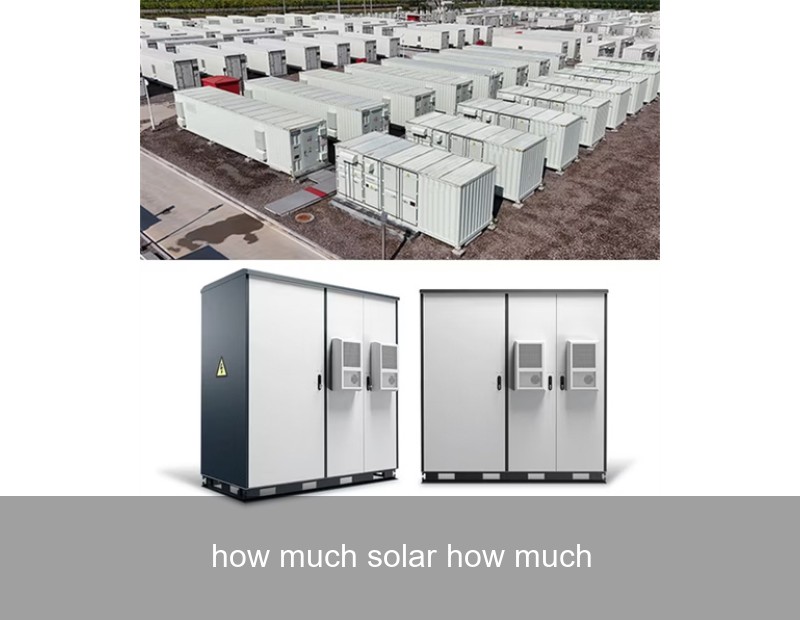
Here’s where the modern energy conversation evolves. Solar panels only produce when the sun shines. What about evenings, cloudy days, or power outages? This is where battery energy storage systems (BESS) become essential. The question shifts from **"how much solar?"** to **"how much solar *and* how much storage?"**
Storage sizing depends on your goals:
- Backup Essentials: Just keeping lights, fridge, and internet on during an outage may require 10-20 kWh of storage.
- Load Shifting (Time-of-Use): In regions with high evening electricity rates, you might store 10-30 kWh of solar produced during the day to use at night, maximizing savings.
- Near-Total Self-Sufficiency: Aiming to go almost entirely off-grid? This requires a large solar array and a substantial battery bank, often 30+ kWh, sized for multiple cloudy days.
A common mistake is pairing a large solar array with an undersized battery. The excess solar energy has nowhere to go if the battery is full and the grid doesn't offer fair compensation (like net metering). This is where intelligent, integrated systems shine.
Case Study: A Real-World Look at "How Much" in California
Let's ground this in reality. Consider a typical family home in Sacramento, California, with an annual consumption of 9,000 kWh (about 25 kWh per day).
- Solar Sizing: Using NREL data, Sacramento gets about 5.5 peak sun hours. To cover 100% of usage, they'd need a system sized around: 9,000 kWh / (5.5 hours * 365 days) = ~4.5 kW. However, factoring in real-world inefficiencies and future use (like an EV), a 6-7 kW system is often recommended.
- The Storage Imperative: California has time-of-use rates and a history of public safety power shutoffs (PSPS). The family's goal is backup power and avoiding expensive peak electricity from 4-9 PM.
- The Solution & Outcome: They installed a 7.2 kW solar array paired with a **Highjoule HES-12 modular battery system** (12 kWh usable capacity). The system was programmed to reserve 40% for backup and use 60% for daily load shifting. In the first year, they achieved 92% grid independence and reduced their electricity bill by over 85%, despite several multi-hour outages. The battery seamlessly covered their critical loads every evening. The California Energy Commission reports such solar-plus-storage systems are becoming the standard for new builds, not the exception.
Highjoule's Intelligent Approach to the "How Much" Equation
At Highjoule, founded in 2005, we believe the answer to "how much" shouldn't be a static guess. It should be a dynamic, intelligent response to your life. Our products are designed to solve this equation holistically.
Our HES Series (Home Energy System) integrates high-efficiency solar inverters with modular lithium-iron-phosphate (LiFePO4) batteries. The key is our Adaptive Energy Operating System (AEOS). Instead of just filling a battery blindly, AEOS learns your consumption patterns, considers weather forecasts, and knows your utility rate plan. It dynamically answers "how much energy should I store right now versus send to the grid?" to optimize for savings, backup, or a combination.

Image Source: Unsplash (Credit: American Public Power Association)
Beyond the Basics: The Highjoule Difference
For commercial and industrial clients, the "how much" question scales in complexity. Our C&I Energy Platform tackles demand charge management, renewable integration for microgrids, and providing grid services. We've helped factories, data centers, and agricultural sites not just save on energy costs, but also create new revenue streams and ensure operational resilience.
Whether for a home or a factory, our systems are built on three pillars:
- Intelligence: Software that makes optimal decisions every minute of the day.
- Modularity: Start with what you need. Our battery storage can be expanded later as your needs change—answering "how much" over time.
- Safety & Durability: With LiFePO4 chemistry and robust thermal management, our systems are designed for a 15+ year lifespan, providing long-term certainty.
Your Energy Future Starts with the Right Questions
So, "how much solar, how much storage?" is the perfect starting line. The finish line is a system that feels invisible—it just works, providing clean, reliable, and affordable power. It's about taking control, not just adding hardware to your roof and wall.
What specific energy goal is driving your question about "how much"? Is it achieving total bill elimination, ensuring your business never loses power, or simply doing your part for a more sustainable grid? Defining that will illuminate the perfect path forward.
 Inquiry
 Online Chat