


The 6000W Solar Generator: Your Ultimate Guide to Robust Energy Independence
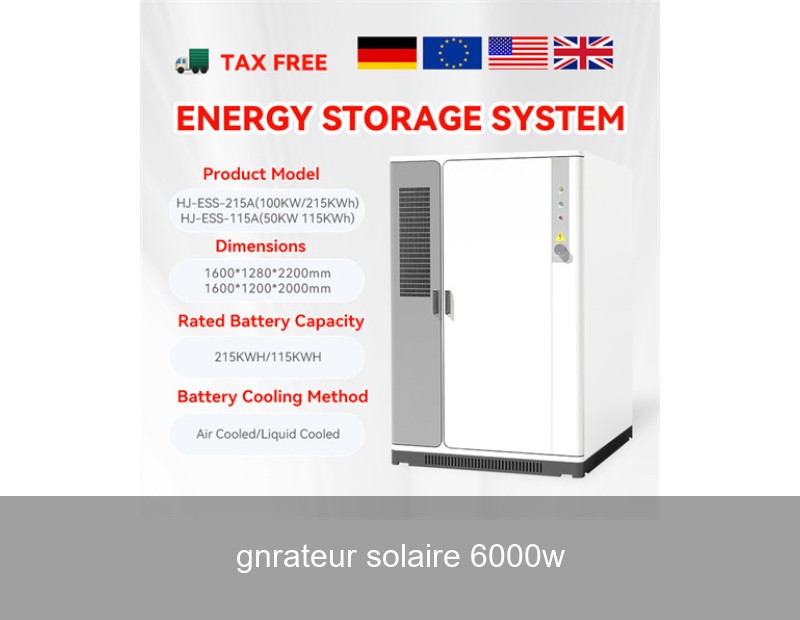
You're likely here because you've heard the term générateur solaire 6000w buzzing around. Maybe you're tired of unreliable power, soaring electricity bills, or you're simply planning for a more self-sufficient future. But what exactly does this specification mean for your home or business? In essence, a 6000W solar generator isn't a single device but a powerful, integrated system capable of delivering 6000 watts of continuous AC power—enough to run heavy-duty appliances, essential home systems, or critical business operations entirely from the sun. Let's demystify this powerful solution and explore how it's reshaping energy access in Europe and the US.
The Modern Power Dilemma: Are You Underpowered?
a storm knocks out the grid in your suburban American neighborhood, or energy prices in Europe hit another record peak. Your standard portable power station sputters trying to keep the fridge and lights on, let alone a well pump or heating system. This is the phenomenon of being "energy vulnerable." The data is telling: in the US, major power outages have increased by approximately 64% since the early 2000s (U.S. Energy Information Administration). Meanwhile, European households faced a 20-40% surge in electricity costs in recent years, pushing self-consumption from a niche interest to a financial necessity.
The common "solution" of a small gasoline generator is noisy, polluting, and depends on a finite fuel supply. This is where the scalable, clean, and intelligent 6000w solar generator system enters the scene, transitioning from a backup plan to a primary pillar of a modern energy strategy.
Breaking Down the 6000W Powerhouse: Key Components
Think of a 6000W system as a team of specialists working in harmony. It's far more than just panels and a battery.
- The Solar Array (The Fuel Source): To reliably feed a 6000W inverter, you need significant solar input. This typically means 4-6kW of solar panels (around 10-15 high-efficiency panels).
- The Inverter/Charger (The Brain & Brawn): This is the core. A 6000W pure sine wave inverter converts stored DC battery power into stable, clean AC power for your appliances. A high-quality MPPT solar charge controller efficiently manages the solar input.
- The Battery Bank (The Energy Reservoir): This is where capacity (kWh) matters. A 6000W output tells you how much power can flow at once, but the battery size determines for how long. For meaningful backup, you'd look at 10kWh to 30kWh of storage, using robust Lithium Iron Phosphate (LiFePO4) chemistry for safety and longevity.
- The System Manager (The Conductor): Advanced systems integrate smart energy management software, allowing you to monitor, control, and optimize your power flow via an app.

Image Source: Unsplash (Representative image of a solar installation)
What Can a 6000W Solar Generator System Power?
This capacity sits in the sweet spot for whole-home and small business backup. Here’s a realistic snapshot:
| Appliance/Device | Estimated Running Watts | Can a 6000W System Handle It? |
|---|---|---|
| Refrigerator | 150-400W | Easily |
| Sump Pump | 800-1500W | Easily |
| Central Air Conditioner (3-ton) | ~3500W | Yes, with careful management of other loads |
| Electric Water Heater (Element) | 3000-4500W | Yes, but a major draw on battery capacity |
| Well Pump (1 HP) | ~2000W | Easily |
| Home Office (Computer, Monitor, Router) | 300-600W | Easily |
| Electric Vehicle Charging (Level 1) | ~1500W | Easily |
A Real-World Case: From Grid Anxiety to Energy Independence
Let's move from theory to practice with a case from California, USA. The Anderson family, living in a wildfire-prone area, faced frequent Public Safety Power Shutoffs (PSPS), sometimes lasting 48 hours. Their goal was to maintain essential operations: refrigeration, lighting, communications, and a critical medical device (a CPAP machine).
They installed a integrated solar storage system with a 6kW inverter and a 15kWh LiFePO4 battery, coupled with an existing 5kW rooftop solar array. The results were transformative:
- Outage Performance: During a 36-hour grid outage, the system powered all essential loads continuously. The home never dropped below 30% battery state of charge, thanks to daytime solar recharge.
- Financial Impact: By leveraging time-of-use rate arbitrage (charging the battery with cheap solar/night rates and using it during peak price periods), they reduced their monthly electricity bill by an average of 65%.
- Peace of Mind: The medical device operated uninterrupted, and the family avoided spoiled food and the stress of a dark, disconnected home.
This mirrors the growing trend in Europe, where systems like these are used not just for backup, but for daily self-consumption to maximize ROI from solar investments and insulate against market volatility.
The Highjoule Difference: Beyond the "Generator" Label
At Highjoule, with nearly two decades of expertise since 2005, we view the générateur solaire 6000w not as an off-the-shelf product, but as a tailored power resilience solution. Our approach goes beyond simply connecting components.
Our HPS Series Hybrid Power Systems are engineered for the demands of the European and North American markets. A system centered around our 6kW hybrid inverter integrates seamlessly with grid, solar, and generator inputs. Its intelligent software allows for multiple operating modes—backup, self-consumption priority, or full off-grid—adapting to your needs automatically.
We pair this with our HyperCore LiFePO4 Battery Modules. Each modular 5kWh unit is built for safety and cycle life, allowing you to scale from 10kWh to 30kWh or more. This modularity means you can start with what you need and expand later, a crucial flexibility for homeowners and businesses alike.

Image Source: Unsplash (Representative image of a modern battery installation)
What truly sets a Highjoule system apart is its intelligence. Our energy management platform provides real-time insights and remote control. You can schedule when to use stored energy, sell excess back to the grid where permitted, or receive proactive system health alerts. For commercial and microgrid applications, this level of control is indispensable for managing energy costs and operational continuity.
Is a 6000W Solar Generator Right for You? Asking the Key Questions
Choosing the right system is a significant decision. To move forward, ask yourself these critical questions:
- What are my critical loads? Perform an energy audit. List the appliances and devices you must keep running during an outage and their wattage (you can often find this on the nameplate).
- What is my primary goal? Is it emergency backup, daily bill savings, or complete off-grid independence? The answer will dictate your required battery capacity.
- What is my solar potential? Do you have unshaded roof space or land for ground-mounted panels to generate enough energy to replenish your battery bank?
- What is my long-term vision? Are you planning to add an electric vehicle or a heat pump? Considering future expansion from the start is more cost-effective.
Navigating these questions can be complex, but you don't have to do it alone. The right partner can make all the difference between a box of components and a reliable, intelligent energy ecosystem.
So, as you contemplate taking control of your power, what's the first load you'd ensure never goes offline again, and how would transforming that anxiety into assurance change your daily life?
 Inquiry
 Online Chat