


The Hybrid Solar Charge Inverter: Your All-in-One Gateway to Energy Independence
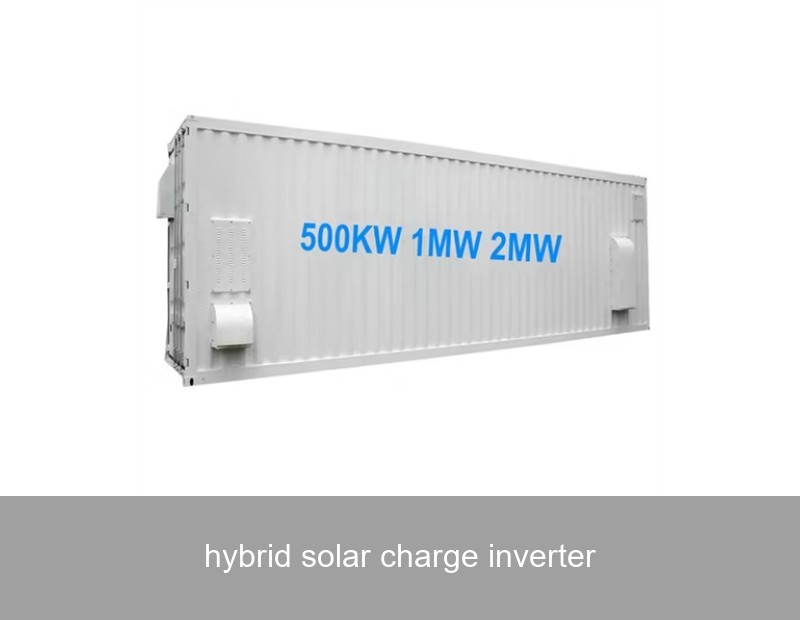
Let's be honest, navigating the world of solar energy can feel like learning a new language. You've got PV panels, batteries, inverters, charge controllers—it's a lot of hardware. But what if the key to a simpler, smarter, and more resilient energy system was a single, intelligent device? Enter the hybrid solar charge inverter, the technological maestro that is fundamentally changing how homes and businesses harness the sun. Think of it as the central brain of your personal power station, seamlessly coordinating solar production, battery storage, and grid power to keep your lights on and your bills down, come rain or shine.
The Problem: Power Grids Under Pressure and Rising Energy Costs
You've likely felt it: that nagging worry when a storm warning pops up, or the frustration of opening another soaring electricity bill. Our reliance on traditional, centralized power grids is being tested like never before. From extreme weather events causing prolonged outages in California and across Europe to volatile energy prices impacting household budgets globally, the need for a more self-sufficient approach is clear. Traditional solar systems with standard grid-tie inverters are a great start—they cut your bills when the sun shines. But when the grid fails, so does your solar production. You're left in the dark, despite having panels on your roof. This gap between generation and usable, reliable power is the exact problem the hybrid solar charge inverter was designed to solve.

Image: A modern energy-independent home utilizing solar and storage. Credit: Unsplash
The Data: Why Hybrid is the Smart Choice for Modern Energy Needs
The numbers speak volumes. According to the International Energy Agency (IEA), global renewable capacity is set to grow by a staggering 2,400 GW between 2023-2028. Crucially, behind-the-meter solar PV (like home and business systems) is a major driver. But capacity alone isn't enough. A study by the National Renewable Energy Laboratory (NREL) highlights that pairing solar with storage (enabled by hybrid inverters) can increase the value of solar by 20-50% for homeowners, primarily through enhanced resilience and optimized self-consumption. Let's break down what this means in practice:
| System Type | Reduces Bills? | Provides Backup Power? | Maximizes Self-Consumption? | Complexity |
|---|---|---|---|---|
| Grid-Tie Only | Yes (During Sunlight) | No | Low | Low |
| Off-Grid Only | Yes (Completely) | Yes | High | Very High |
| Hybrid System | Yes (Optimally) | Yes | Very High | Moderate (Integrated) |
As the table shows, the hybrid solar charge inverter unlocks the best of all worlds: bill savings, backup security, and efficient use of your own clean energy.
A Real Case Study: Weathering the Storm in Texas
Consider the case of a medium-sized dairy farm in Central Texas. After suffering crippling financial losses during the Winter Storm Uri blackouts in 2021, the owners sought a permanent solution. In 2023, they installed a 45kW solar array coupled with a 60kWh battery storage system, all managed by a robust hybrid solar charge inverter platform. The results were put to the test during a localized grid outage in the summer of 2024.
- Challenge: Maintain critical cooling systems for milk storage and basic farm operations during a 14-hour grid failure.
- Solution: The hybrid inverter automatically detected the outage and islanded the farm's critical load panel in less than 20 milliseconds—a seamless transition. It then drew power from the batteries, which were continuously topped up by daytime solar production.
- Outcome: Zero spoilage of product. Continuous operation. An estimated savings of over $8,000 in potential lost inventory for that single event. Furthermore, during normal operation, the system's intelligent software shifts energy usage to avoid peak tariff periods, slashing their monthly utility demand charges by an average of 40%.
Key Features of Modern Hybrid Solar Charge Inverters
So, what should you look for in a quality hybrid solar charge inverter? It's more than just a box that converts DC to AC. Today's advanced units are energy management hubs.
- True Multimode Operation: Seamlessly switches between grid-tied, off-grid, and backup modes without interruption.
- Advanced Battery Compatibility: Supports a range of modern battery chemistries (like LiFePO4) with built-in, optimized charging algorithms for longevity.
- Smart Load Management: Can prioritize which circuits to power during an outage (e.g., fridge, lights, internet) to extend backup duration.
- Grid Services Ready: In some markets, advanced inverters can provide grid support functions like frequency response, a feature that utilities are starting to value.
- Intuitive Monitoring & Control: User-friendly apps that show real-time energy flows, savings, and system health, putting you in control.

Image: The heart of the system - a modern hybrid inverter. Credit: Unsplash
Highjoule Solutions: Engineering Intelligence into Every Kilowatt-Hour
At Highjoule, we've been at the forefront of this integrated energy revolution since 2005. We understand that a hybrid solar charge inverter is not a commodity; it's the intelligence core of a resilient energy asset. Our HPS Series Hybrid Power Systems are engineered for this exact purpose.
Our systems go beyond basic functionality. The Highjoule HPS features our proprietary Adaptive Logic Engine (ALE) software. ALE doesn't just react; it learns. It analyzes your historical consumption patterns, local weather forecasts, and real-time electricity tariffs (in supported regions) to make predictive decisions. Should it store excess solar energy for the evening peak, or sell it back to the grid now because prices are high? Should it keep the batteries at 100% because a storm is forecast tomorrow? It manages these complex trade-offs automatically, ensuring you get the maximum economic and practical value from your investment.
For commercial and industrial clients, our Microgrid Controller can orchestrate multiple HPS units alongside traditional generators, creating a robust, self-healing microgrid that ensures business continuity and significant cost savings.
Choosing the Right System for You: Key Questions to Ask
Embarking on your hybrid journey requires careful planning. Here are essential questions to discuss with your installer or energy advisor:
- What are my critical loads? (What do I need to power during an outage?) This determines your battery capacity.
- What is my primary goal? Maximizing self-consumption, achieving full backup, or participating in grid services programs?
- Is the inverter compatible with future battery expansion? Your needs may grow.
- What does the monitoring software offer? Can I set preferences and easily understand my system's performance?
- Does the manufacturer have a proven track record and strong local support? This is where partnering with an experienced provider like Highjoule makes all the difference.
Ready to move from being a passive consumer to an active manager of your energy? The technology, led by the sophisticated hybrid solar charge inverter, is here and proven. What will your first step be towards building your own energy resilience?
 Inquiry
 Online Chat