


The Smart Homeowner's Guide to Grid-Connected PV Systems
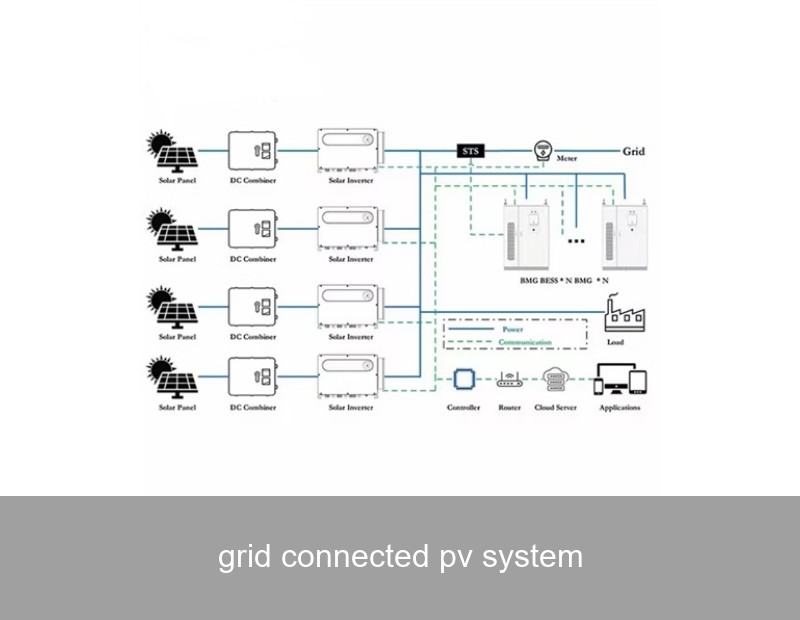
Table of Contents
If you're considering solar panels for your home, you've likely heard the term "grid-connected PV system." But what does it really mean for your energy bills, your carbon footprint, and your day-to-day life? Simply put, a grid-connected photovoltaic (PV) system is the most common and practical way for homeowners to harness the sun's power. It allows you to generate your own clean electricity while staying seamlessly connected to the traditional utility grid—giving you the best of both worlds: energy independence with a reliable safety net.
What is a Grid-Connected PV System?
A grid-connected PV system, often called a grid-tied system, consists of solar panels on your roof, an inverter, and a connection to your local public electricity grid. During sunny days, your panels generate electricity for your home. Any excess power you don't use immediately is fed back into the grid. At night or during cloudy periods, you simply draw power from the grid as needed. This bidirectional flow is managed intelligently, often resulting in credits on your utility bill through mechanisms like net metering.
The Energy Revolution Phenomenon: From Passive Consumer to "Prosumer"
Across neighborhoods in Europe and the United States, a quiet revolution is visible on rooftops. Homeowners are no longer just passive consumers of electricity. They have become "prosumers"—both producing and consuming energy. The driver? A desire for control. Rising and volatile energy prices, increased frequency of extreme weather events affecting grid stability, and a genuine push towards sustainable living have made the grid connected PV system a mainstream home upgrade, not just a niche eco-statement.
Data Powering the Shift
The numbers tell a compelling story. According to the International Energy Agency (IEA), solar PV is set to become the largest source of installed electricity capacity globally by 2027. In the U.S. alone, residential solar installations continue to break records year after year. But here's a critical insight: the modern home energy solution isn't just about panels anymore. The real value and resilience come from integrating storage with your grid-connected system.
Consider this table comparing a basic vs. an advanced grid-connected setup:
| Feature | Basic Grid-Tied PV System | Grid-Tied PV System + Battery Storage |
|---|---|---|
| Energy Self-Consumption | Moderate (use solar as it's produced) | High (store solar for use anytime) |
| Backup Power During Grid Outage | None (system shuts off for safety) | Yes (seamless backup for essential loads) |
| Reliance on Grid & Net Metering Policies | High | Reduced |
| Overall Energy Independence | Low to Medium | High |
Case Study: The Martinez Family, Sacramento, California
Let's look at a real-world example. The Martinez family installed a standard 8 kW grid-connected PV system in 2020, significantly cutting their electricity bills. However, during the 2022 wildfire season, Public Safety Power Shutoffs (PSPS) left them without grid power for over 36 hours, rendering their solar panels useless during the outage—a common point of confusion for many homeowners.
In 2023, they upgraded their system by integrating a Highjoule HES-10 Home Energy Storage unit. The results were transformative:
- Energy Bill Reduction: Increased self-consumption of solar power from 35% to over 80%, reducing their net electricity cost to near zero.
- Resilience: During a subsequent 12-hour grid outage, their home's essential circuits (refrigeration, lighting, internet) operated uninterrupted on stored solar energy.
- ROI: Combined with state incentives, they project a full system payback period of under 7 years.
This case highlights the evolution of the grid connected pv system from a cost-saving tool to a comprehensive resilience and independence solution.

Image Source: Unsplash - Representative image of a modern home with a solar installation.
Key Components of a Modern, Intelligent System
Today's high-performance systems go beyond panels and a simple inverter:
- High-Efficiency Solar Panels: Convert sunlight into DC electricity.
- Smart Hybrid Inverter: The brain. Converts DC to AC for home use, manages battery charging/discharging, and ensures grid synchronization.
- Lithium-Ion Battery Storage: The heart of resilience. Stores excess solar energy for later use.
- Energy Management System (EMS): The nervous system. Intelligently directs energy flow based on usage patterns, weather forecasts, and tariff rates to maximize economics.
The Highjoule Difference: Intelligence Meets Storage
Since 2005, Highjoule has been at the forefront of this evolution. We understand that a truly smart grid connected PV system is an integrated ecosystem. Our solutions for residential and commercial applications are designed to maximize return on investment and peace of mind.
Our flagship product, the Highjoule HES Series, is more than just a battery. It's an all-in-one energy storage system featuring a built-in hybrid inverter and our proprietary Adaptive Energy OS. This software learns your household's energy habits and can be configured to prioritize self-consumption, cost savings (by avoiding peak grid prices), or backup readiness—all from a simple smartphone app.
For larger properties or commercial operations, our Modular Industrial Storage (MIS) platforms offer scalable capacity. This means businesses can start with a core system and expand storage as their needs grow, future-proofing their investment. Highjoule systems are designed and tested for the rigorous standards of both the European and North American markets, ensuring safety, reliability, and compliance.

Image Source: Unsplash - Representative image of a sleek home battery storage installation.
Making the Right Choice for Your Home
Choosing the right system involves a few key considerations:
- Your Energy Goals: Is your primary driver bill savings, backup power, or environmental impact?
- Local Regulations & Incentives: Net metering rules, grid connection fees, and available tax credits or rebates (like the U.S. federal Investment Tax Credit) vary greatly. A reputable installer will guide you.
- System Sizing & Scalability: Your system should be sized for your current and foreseeable future consumption. Opt for a scalable storage solution like Highjoule's to adapt to changing needs, such as adding an electric vehicle.
We always recommend consulting with certified installers who can assess your home's specific solar potential and energy profile. They can provide a tailored design that integrates seamlessly with your roof and electrical panel.
A Note on Grid Services and the Future
Innovative grid connected PV systems with storage are beginning to play a role in grid stability. In some regions, utilities offer programs where they can call upon a network of home batteries (a "virtual power plant") to support the grid during peak demand. Homeowners are compensated for this service, turning their energy asset into a potential revenue stream. This is the future of a decentralized, resilient energy grid, and Highjoule's technology is built to participate in these smart grid initiatives.
As you contemplate joining the energy prosumer movement, what will be the deciding factor for you—is it the immediate comfort of energy security during a storm, the long-term financial benefit, or the contribution to a more sustainable energy grid for your community?
 Inquiry
 Online Chat