


Solar Packages with Battery: Your Complete Guide to Energy Independence
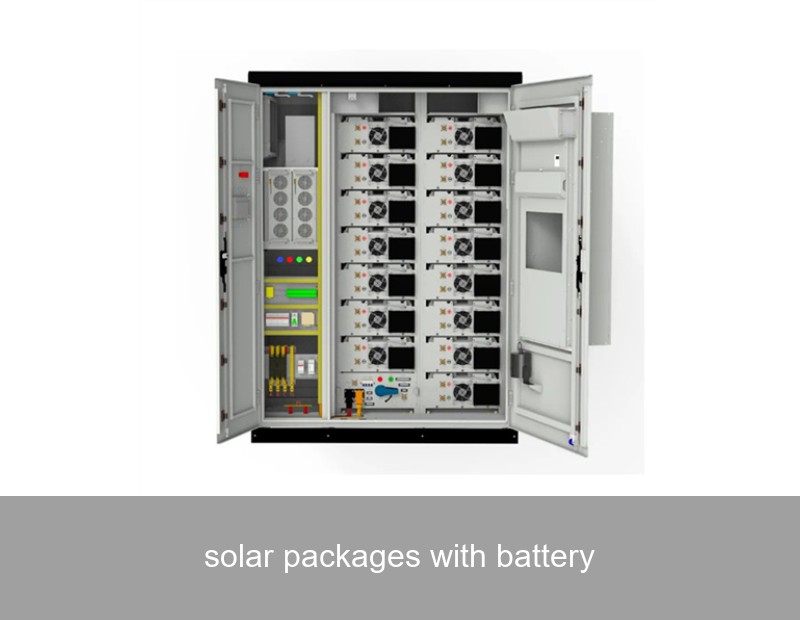
Have you ever looked at your electricity bill on a sunny day and wondered, "Why am I still paying so much when I could be using free power from the sun?" You're not alone. Across Europe and the US, homeowners and businesses are making a pivotal shift: moving from just solar panels to integrated solar packages with battery storage. This isn't just an upgrade; it's a complete rethinking of how we consume energy. Let's explore why this combination is becoming the new standard for clean, resilient, and intelligent power.
Table of Contents
- The Phenomenon: From Solar Panels to Power Stations
- The Data: Why Storage is the Missing Link
- Key Components of a Modern Solar & Battery Package
- A Real-World Case Study: Resilience in California
- The Highjoule Solution: Intelligent Energy Integration
- Making the Right Choice for Your Home or Business
The Phenomenon: From Solar Panels to Power Stations
For years, solar panels were a one-way street. They generated power during the day, often sending excess back to the grid for a small credit (net metering). But the energy landscape is changing. Grid instability, increasing electricity rates, and a desire for true energy independence are driving a new demand. People no longer want just to generate energy; they want to control it. A solar package with a battery transforms your property into a personal microgrid. You capture the sun's energy, store what you don't use immediately, and deploy it exactly when you need it—day or night, during a blackout or during peak rate hours.

Image: A modern home equipped with a complete solar and battery storage system. Credit: Unsplash.
The Data: Why Storage is the Missing Link
The numbers paint a compelling picture. According to the U.S. Department of Energy's Solar Futures Study, solar could provide up to 40% of the nation's electricity by 2035, but this requires a significant expansion of energy storage to manage the intermittent nature of solar power. Let's break down the key benefits data reveals:
- Self-Consumption Boost: Without a battery, typical solar systems might allow you to use 30-50% of your solar generation directly. With a battery, you can increase that self-consumption to 70% or more, drastically reducing reliance on the grid.
- Bill Savings Maximization: In regions with Time-of-Use (TOU) rates—common in California and parts of Europe—electricity can cost 2-3 times more during evening peak hours. A battery lets you avoid buying expensive grid power during these periods.
- Backup Power Assurance: With climate-related grid outages increasing, the value of resilience is quantifiable. For a homeowner, a single prolonged outage can mean hundreds in spoiled food, lost work, or relocation costs.
Key Components of a Modern Solar & Battery Package
Not all packages are created equal. A high-quality system integrates several key technologies seamlessly:
- High-Efficiency Solar Panels: The energy harvesters. Modern monocrystalline panels offer efficiencies over 22%.
- Smart Hybrid Inverter: The system's brain. It manages DC power from panels and batteries, converts it to AC for your home, and can island your home from the grid during an outage.
- Lithium-Ion Battery Storage: The energy reservoir. Lithium Iron Phosphate (LFP) chemistry is now the leader for safety, longevity (often 10+ year warranties), and daily cycling capability.
- Energy Management System (EMS): The intelligent controller. This software learns your usage patterns, optimizes charging/discharging based on weather and tariff schedules, and gives you full visibility via a user-friendly app.
A Real-World Case Study: Resilience in California
Let's look at a concrete example from Sonoma County, California, an area prone to Public Safety Power Shutoffs (PSPS) due to wildfire risk. A medium-sized winery installed a 50 kW solar array paired with a 60 kWh battery storage system in 2022.
| Metric | Before System | After System Installation |
|---|---|---|
| Grid Electricity Purchased | ~85,000 kWh/year | ~15,000 kWh/year |
| Monthly Energy Cost (Avg.) | $1,800 | $250 |
| Vulnerability to Outages | High. Lost refrigeration threatened entire vintages. | Critical operations can run for 18+ hours autonomously. |
| Carbon Footprint | ~60 metric tons CO2e/year | ~10 metric tons CO2e/year |
The system paid for itself in under 7 years through savings and available incentives. More importantly, it provided business continuity assurance that was previously unattainable. This mirrors what homeowners seek: peace of mind.
The Highjoule Solution: Intelligent Energy Integration
This is where Highjoule's expertise comes into play. Since 2005, we've evolved from a component provider to a global architect of intelligent energy ecosystems. We understand that a solar package with a battery is more than hardware—it's a tailored energy strategy.
Our HES (Highjoule Energy System) Series for residential and commercial applications is designed for this integrated future. The system features our proprietary HarmonyOS™ energy management platform, which intelligently orchestrates solar production, battery storage, grid interaction, and even electric vehicle charging. For homeowners, this means the system doesn't just react; it predicts. It knows a storm is coming and will ensure the battery is 100% charged. It sees a peak rate period approaching and will pre-cool your home using solar power.

Image: A sleek, modern battery storage unit like those in Highjoule's HES Series. Credit: Unsplash.
For businesses and microgrids, our solutions scale seamlessly. We provide not just the equipment but the full lifecycle support: feasibility analysis, custom design, installation partnership, and 24/7 remote monitoring. Our systems are built with interoperability in mind, complying with grid standards in both the EU and North America, such as VDE-AR-N 4105 in Germany and UL 9540 in the USA.
Making the Right Choice for Your Home or Business
So, how do you navigate this important decision? Ask these key questions:
- What are my primary goals? (Maximize savings, ensure backup power, reduce carbon footprint?)
- What is my energy consumption profile? Review your hourly or monthly usage from your utility.
- What local incentives are available? In the US, the federal Investment Tax Credit (ITC) now includes standalone storage. In Europe, programs vary by country, like the EU's support for renewable integration.
- Does the provider offer a cohesive, intelligent system? Avoid piecemeal components that don't communicate optimally.
Your Energy Future is a Conversation
The transition to a personal energy ecosystem is one of the most impactful decisions a homeowner or business leader can make today. It's a financial decision, an environmental decision, and a resilience decision all in one. With the right solar package with battery, you're not just installing equipment; you're gaining a partner in energy management for the next decade and beyond.
What would energy independence look like for your daily life? Imagine a future where power outages are a minor inconvenience, where your biggest energy decisions are managed by an intelligent system, and where your home or business actively contributes to a more stable, sustainable grid. The technology is here, proven, and ready. What's the first question you need answered to take the next step?
 Inquiry
 Online Chat