


Grid Forming ESS Control: The Intelligent Heart of a Stable Renewable Grid
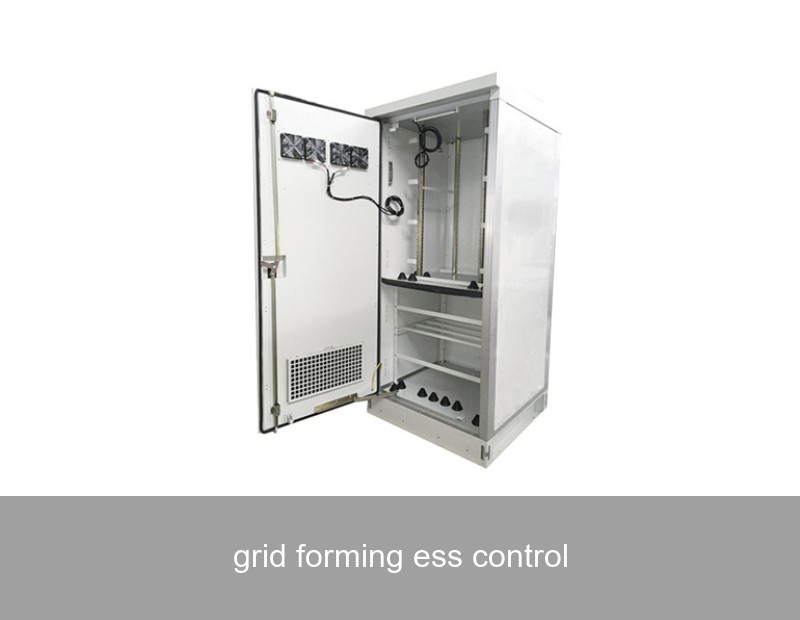
Have you ever wondered how a power grid, traditionally reliant on massive spinning turbines, can maintain its stability when the primary energy sources—like solar farms and wind turbines—are inherently intermittent and don't naturally provide grid stability? This is the central challenge of the energy transition. The answer increasingly lies in a sophisticated technology: Grid Forming Energy Storage System (ESS) Control. Unlike conventional "grid-following" inverters that simply feed in power, grid forming control empowers battery storage systems to act as the new foundational pillars of the grid, creating a stable voltage and frequency "heartbeat" that keeps everything in sync. For businesses, communities, and grid operators navigating the shift from fossil fuels, mastering this technology is no longer optional; it's critical for resilience and continuity.
Table of Contents
- The Silent Shift: From Spinning Mass to Digital Inertia
- What is Grid Forming ESS Control? (Beyond Following Orders)
- Data & Dynamics: The Technical Edge of Grid Forming
- Case Study: Grid Forming in Action - Texas Microgrid Resilience
- The Highjoule Approach: Intelligent Grid Forming for Every Application
- The Future Grid: A Network of Intelligent, Forming Nodes
The Silent Shift: From Spinning Mass to Digital Inertia
Traditional power plants use synchronous generators—enormous, spinning masses of metal. This physical rotation provides inherent "inertia," a natural resistance to changes in grid frequency. When demand spikes, the drag on these generators is minimal and slow, giving operators time to respond. The grid, in essence, had a built-in shock absorber.
Now, envision a grid where over 30% of its power comes from renewables like PV and wind, a reality in many parts of Europe and the United States. Solar panels and wind turbines connect via power electronic inverters. Most are "grid-following." They need to see a strong, stable grid signal from a traditional source to sync up and inject power. It's a follower, not a leader. So, what happens on a cloudy, calm day when the last traditional plant is offline? Who sets the rhythm? This is the phenomenon known as the "inertia gap," and it's a top concern for grid engineers worldwide.

Visualizing the difference: Grid-following inverters require an external signal, while grid-forming inverters can establish and maintain grid parameters independently. (Image source: NREL)
What is Grid Forming ESS Control? (Beyond Following Orders)
Grid Forming (GFM) control is a paradigm shift in power electronics. It transforms a battery energy storage system from a passive contributor into an active grid citizen—a "virtual synchronous machine." Here’s the core principle:
Grid-Following Control: Waits, detects the grid's voltage and frequency, and synchronizes to it before injecting current. It acts as a current source. If the grid disappears (a blackout), it shuts down for safety.
Grid-Forming Control: Immediately establishes a stable voltage and frequency waveform, acting as a voltage source. It creates the reference signal for others to follow. During disturbances, it can provide high short-circuit current, absorb or inject power dynamically, and essentially "hold the grid up" on its own or as part of a network.
Key capabilities enabled by advanced GFM control include:
- Black Start Capability: The ability to restart a grid from a complete blackout without external power.
- Frequency Stability & Inertia Emulation: Mimicking the inertial response of spinning masses to slow frequency changes.
- Voltage Regulation: Actively maintaining voltage levels within strict limits, crucial for sensitive industrial equipment.
- Islanded Operation: Seamlessly forming and maintaining a stable "island" microgrid if disconnected from the main utility.
Why Grid Forming Matters Now More Than Ever
The push for decarbonization is accelerating grid transformation. In the US, the Federal Energy Regulatory Commission (FERC) Orders 2222 and 2023 are actively breaking down barriers for distributed energy resources (DERs) to participate in wholesale markets. In Europe, the EU's grid code requirements are increasingly mandating capabilities that only GFM can provide at scale. The data is clear: a grid dominated by inverter-based resources (IBRs) needs a foundation of grid-forming intelligence to remain reliable. According to a International Energy Agency (IEA) report, achieving net-zero emissions globally will require a tenfold increase in global grid-forming capacity by 2030.
Data & Dynamics: The Technical Edge of Grid Forming
Let's look at a comparative table to understand the operational advantages:
| Grid Scenario | Grid-Following ESS Response | Grid-Forming ESS Response | Impact on Grid Stability |
|---|---|---|---|
| Sudden Loss of a Generator | May trip offline due to frequency/rate-of-change limits; worsens the deficit. | Instantly increases power output and provides synthetic inertia to arrest frequency drop. | GFM prevents cascading outages and enables faster recovery. |
| Fault (Short-Circuit) | Current-limited; may not contribute enough "fault current" for protective devices to detect and clear the fault. | Can deliver high, controlled fault current, ensuring protective relays operate correctly. | GFM enhances system protection coordination, a major grid operator concern. |
| 100% IBR Grid (e.g., solar + storage) | Cannot operate—there is no grid signal to follow. | Establishes the grid voltage and frequency, enabling a fully renewable grid. | GFM is the enabling technology for decarbonized, standalone power systems. |
Case Study: Grid Forming in Action - Texas Microgrid Resilience
A compelling real-world example comes from a Texas-based industrial facility that partnered with Highjoule. Following the grid instability events of recent winters, the facility sought to ensure continuous operation for its critical processes. Their challenge was twofold: reduce demand charges and create a resilient "island" capable of surviving prolonged main grid outages.
The Solution: Highjoule deployed a 2.5 MW / 5 MWh containerized battery energy storage system featuring our proprietary Adaptive Grid Forming (AGF) Control software. This system was integrated with the site's existing 1 MW solar PV array.
- Economic: The system manages peak load, achieving a 22% reduction in monthly demand charges.
- Resilience Test: During a planned grid disconnection test, the AGF control seamlessly formed a stable island microgrid in under 20 milliseconds. The facility operated for 8 hours solely on solar+storage, with voltage and frequency deviations held within 0.5% of nominal values—far exceeding typical industry standards.
- Grid Services: When connected, the system provides fast frequency response (FFR) to the Texas ERCOT grid, generating additional revenue for the facility.
This case demonstrates that grid forming control isn't just a theoretical grid-scale tool; it's a practical, commercially viable technology for end-users seeking energy independence and financial returns today.

Highjoule's containerized ESS with Grid Forming capabilities provides resilience and revenue for industrial clients. (Image source: Highjoule)
The Highjoule Approach: Intelligent Grid Forming for Every Application
At Highjoule, we believe grid intelligence should be scalable and accessible. Our HARMONI™ platform is the core of this philosophy. It's not just a battery management system; it's an integrated energy management and grid-interactive control platform where advanced Grid Forming functionality is a native feature, not an afterthought.
Our GridSynch™ GFM Control Suite, part of the HARMONI™ platform, offers:
- Adaptive Mode Switching: Automatically transitions between grid-following, grid-forming, and islanded modes based on real-time grid conditions.
- Multi-Port Control: Manages hybrid systems combining solar, wind, storage, and traditional generators under a single, forming control umbrella.
- Cybersecurity by Design: Built to meet the latest UL 9540 and IEC 62443 standards, ensuring resilience extends to digital threats.
Whether it's a commercial building looking to optimize self-consumption of solar, an industrial plant requiring flawless power quality, or a utility-scale microgrid project, Highjoule's solutions are engineered with the grid-forming intelligence needed for the future, operational today. Our global experience across Europe and North America allows us to tailor systems to specific regional grid codes and market opportunities.
The Future Grid: A Network of Intelligent, Forming Nodes
The endgame is a decentralized, self-healing grid architecture. Imagine not one, but hundreds of thousands of distributed assets—from utility-scale storage farms to residential solar-plus-storage clusters—all equipped with grid-forming capabilities. This network of "intelligent nodes" could collaboratively maintain stability, reroute power around faults, and maximize local renewable consumption. Research from institutions like the National Renewable Energy Laboratory is actively modeling this very future.
The technology is proven. The economic case is strengthening. The regulatory framework is evolving. The question for energy decision-makers is no longer if grid-forming control will be necessary, but when and how to implement it. As you evaluate your organization's energy strategy for resilience, sustainability, and cost control, are you considering how an intelligent, grid-forming storage system could become the cornerstone of your power infrastructure?
What is the first step your organization should take to assess its vulnerability to grid instability and its readiness for grid-forming technology?
 Inquiry
 Online Chat