


Grid Hybrid Solar System: The Smart Bridge to Energy Resilience and Savings
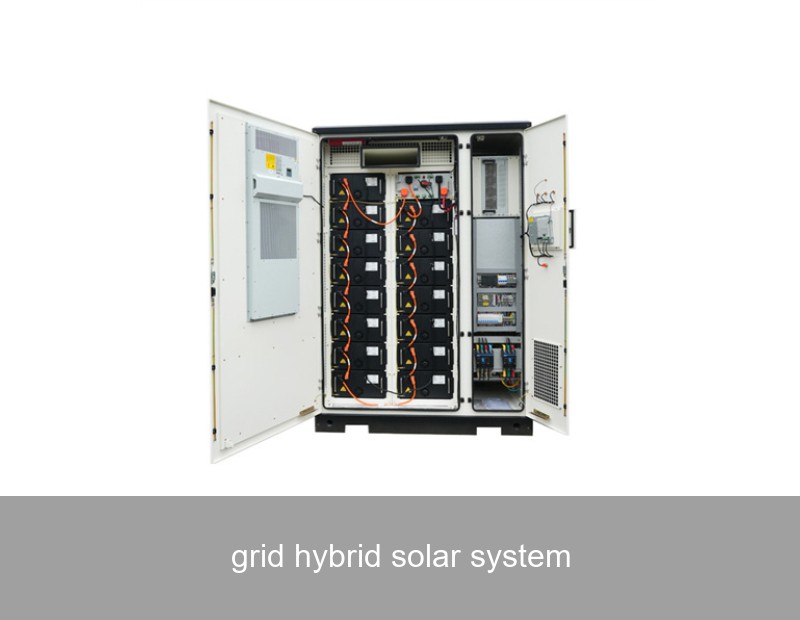
You've likely heard the buzz: solar panels are a great way to cut electricity bills and reduce your carbon footprint. But what happens when the sun goes down, or the grid goes offline? This is where the conversation gets truly powerful, moving from simple solar to an intelligent grid hybrid solar system. This isn't just an add-on; it's a strategic upgrade that transforms how you interact with energy. As a product technology expert at Highjoule, I've seen firsthand how this technology is reshaping energy independence for homeowners and businesses across Europe and the US. Let's dive into why a hybrid system might be the most intelligent energy decision you can make.
The Energy Paradox: Phenomenon
Here's a common scenario we hear from prospective customers: "I have solar panels, but I still get a hefty bill at night," or "My solar system shuts off during a blackout, leaving me in the dark." This is the solar paradox. A traditional grid-tied system sends excess solar energy to the utility grid (often for a credit) and pulls energy back when solar production is low. It's a one-way relationship that leaves you vulnerable to utility rate hikes and power outages. The moment the grid fails, safety regulations require your system to shut down—a feature called anti-islanding—to protect utility workers. So, even with a roof full of panels, you're powerless during an outage.
Image Source: Unsplash. A home with solar panels, but without storage, remains reliant on the grid after sunset.
The Data Reality
The financial and reliability drivers for hybrid systems are backed by compelling data. In the US, the average duration of a power outage has been increasing, with major events causing disruptions that last for hours or even days (U.S. Energy Information Administration). Meanwhile, electricity prices in Europe and many US states have seen significant volatility and steady increases. For instance, according to data from Eurostat, household electricity prices in the EU have risen substantially over the past decade.
A grid hybrid solar system directly addresses these pain points. By intelligently storing excess solar energy in a battery, you can:
- Increase Self-Consumption: Use 60-80% of the solar energy you produce, compared to 30-50% with a grid-tie-only system.
- Avoid Time-of-Use Charges: Power your home from the battery during expensive peak-rate periods.
- Ensure Backup Power: Keep critical loads running seamlessly during grid outages.
A Real-World Case Study: A California Winery's Hybrid Success
Let's look at a concrete example from California's Napa Valley, a region prone to Public Safety Power Shutoffs (PSPS) due to wildfire risk. A medium-sized winery faced crippling challenges: spoilage risk for temperature-sensitive fermentation tanks, lost sales during tasting room blackouts, and soaring demand charges from their utility.
Their solution was a customized grid hybrid solar system. The installation included:
- A 250 kW solar array on production facility roofs.
- A 500 kWh containerized battery energy storage system (BESS).
- An advanced energy management system (EMS) for intelligent dispatch.
| Metric | Outcome |
|---|---|
| Grid Energy Independence | Increased from 40% to 92% during daylight hours |
| Demand Charge Reduction | Peak grid draw reduced by 85%, saving over $2,500 monthly |
| Outage Resilience | Critical operations sustained through 4 PSPS events (longest: 36 hours) |
| ROI Timeline | Projected payback period of 5.2 years, factoring in state incentives |
This case illustrates the triple win: financial savings, operational resilience, and sustainability. The winery is now a net producer of clean energy for most of the year, turning an operational cost center into a strategic asset.
Key Components of a Robust Grid Hybrid Solar System
Understanding the anatomy of a high-performance system is crucial. It's more than just panels plus a battery.
1. The Intelligent Inverter: The System's Brain
Unlike standard inverters, a hybrid inverter (or a compatible setup) can manage three power flows simultaneously: from solar panels, to/from the battery, and to/from the grid. It makes millisecond decisions to optimize for cost, consumption, or backup.
2. The Battery Storage: Your Energy Insurance Policy
Lithium-ion batteries, particularly Lithium Iron Phosphate (LFP), are the standard for their long lifespan, safety, and depth of discharge. Capacity is key—it must be sized to cover your critical loads during outages and your nightly consumption.
3. Advanced Energy Management Software (EMS)
This is the secret sauce. A smart EMS can learn your usage patterns, forecast weather, and integrate with utility rate schedules. It decides when to charge the battery (from solar or cheap grid power) and when to discharge it, maximizing economic return automatically.

Image Source: Unsplash. Modern battery storage units are compact, wall-mounted, and intelligently managed.
Highjoule: Your Partner in Energy Independence
At Highjoule, we've been engineering solutions for this exact energy challenge since 2005. Our approach isn't about selling generic components; it's about designing integrated grid hybrid solar systems that are intelligent, efficient, and built to last.
Our flagship product for residential and commercial applications, the Highjoule H-Series Integrated Energy System, embodies this philosophy. It combines a high-efficiency hybrid inverter, modular LFP battery packs (scalable from 10 kWh to over 100 kWh), and our proprietary JouleMind AI energy management platform into a single, sleek solution. JouleMind AI actively manages your energy ecosystem, allowing you to set preferences like "maximize savings," "ensure full backup," or "optimize for green energy."
For larger commercial and industrial or microgrid projects, our Highjoule Matrix BESS provides containerized or skid-mounted storage solutions that integrate seamlessly with existing solar farms or as standalone assets for peak shaving and grid services. Our global team of technical experts provides end-to-end support, from initial feasibility and financial modeling to grid compliance, installation, and remote monitoring.
The Future is Hybrid: An Open Question for You
The transition from a passive energy consumer to an active energy manager is no longer a futuristic concept. With volatile energy markets and an increasingly unpredictable climate, the grid hybrid solar system represents a pragmatic, future-proof investment. It provides control in an uncontrollable energy landscape.
So, here's a question to ponder: What is the true cost of *not* having control over your power—be it the next unexpected outage, or the next spike in your electricity bill?
We invite you to explore what a tailored Highjoule energy solution could look like for your home or business. The bridge to resilience and savings is ready to be built.
 Inquiry
 Online Chat