


Unlocking Energy Independence: Your Guide to the Electric Solar Energy Storage Cabinet
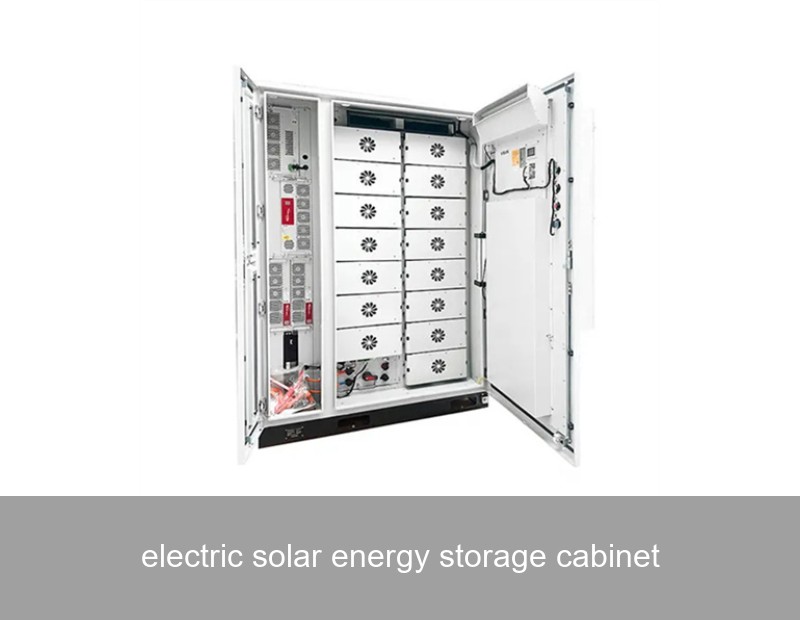
the sun beats down on your rooftop solar panels, generating more power than your home or business can use. Instead of sending that excess electricity back to the grid for a minimal credit, what if you could store it, like money in a bank, and use it precisely when you need it most? This is no longer a futuristic dream—it's the practical reality enabled by the electric solar energy storage cabinet. This intelligent system is rapidly becoming the cornerstone of a modern, resilient, and self-sufficient energy strategy for homeowners and businesses across Europe and the United States.
Why the Surge in Demand? The Grid's New Reality
For years, the relationship with solar power was simple: generate during the day, use some, sell the rest. But the energy landscape is shifting dramatically, driven by two powerful phenomena.
First, grid instability is becoming more common. From heatwaves in California straining capacity to extreme winter storms in Texas, traditional grids are under stress. The North American Electric Reliability Corporation (NERC) consistently warns of growing reliability risks due to the retirement of conventional power plants and the variable nature of some renewables. Second, net metering policies are evolving. Many utilities are reducing the compensation for solar energy fed back into the grid, a process known as "net metering." In some regions, the payback rate is now a fraction of the retail price you pay to buy power.
The result? A compelling financial and practical case for storing your solar energy on-site. An electric solar energy storage cabinet transforms your solar array from a daytime saver into a 24/7 power asset. It allows you to maximize self-consumption, shield yourself from peak electricity rates (often in the early evening when solar production falls but demand is high), and provide crucial backup power during outages.

Image Source: Unsplash - A modern home integrating solar with a wall-mounted storage cabinet.
Inside the Cabinet: Key Components Explained
Think of the storage cabinet as the intelligent command center for your personal energy ecosystem. It's far more than just a box for batteries. Here’s what you’ll typically find inside a high-quality system:
- Battery Modules: The core energy reservoir, using Lithium-Ion (often Lithium Iron Phosphate or LFP) chemistry for safety, longevity, and density.
- Battery Management System (BMS): The "brain" of the battery. It monitors cell voltage, temperature, and state of charge to ensure safety, optimize performance, and maximize lifespan.
- Hybrid or DC-Coupled Inverter: This critical component manages the flow of electricity. It converts the DC power from your solar panels and batteries into AC power for your home. In a DC-coupled system, it can directly charge the batteries with solar DC power, which is often more efficient.
- Thermal Management System: A cooling (and sometimes heating) system to keep the batteries within their ideal temperature range, crucial for performance and safety in all climates.
- Safety Disconnects & Monitoring: Integrated safety switches and a user-friendly monitoring platform (often via a smartphone app) that shows your energy production, consumption, and storage levels in real-time.
This integrated approach is where companies like Highjoule excel. Since 2005, we've engineered our H-Series Commercial & Industrial and Nexus Home storage cabinets to be more than the sum of their parts. Our systems feature advanced AI-driven energy management software that learns your usage patterns, automatically optimizing for self-consumption or cost savings based on your local utility rates. For us, the cabinet is a seamless, smart, and sustainable power solution.
The Heart of the System: Battery Technology Deep Dive
All batteries are not created equal. The choice of chemistry directly impacts safety, cycle life, and total cost of ownership.
| Chemistry | Typical Cycle Life | Key Advantage | Consideration |
|---|---|---|---|
| Lithium Iron Phosphate (LFP) | 6,000+ cycles | Exceptional safety, long lifespan, stable chemistry | Slightly lower energy density than NMC |
| Nickel Manganese Cobalt (NMC) | 3,000 - 5,000 cycles | High energy density, compact size | Thermal management is critically important |
For residential and most commercial applications, LFP has become the industry-preferred choice. Its inherent stability significantly reduces thermal runaway risk—a crucial factor for systems installed on or in buildings. According to a 2021 NREL report, LFP chemistry is noted for its robust safety profile and declining cost trajectory. Highjoule's commitment to safety is why our standard chemistry across product lines is LFP, engineered into modular packs that can be scaled to meet exact energy (kWh) and power (kW) requirements.
From Blueprint to Reality: A California Case Study
Let's move from theory to tangible results. Consider a mid-sized winery in Sonoma County, California. Their challenges were clear: high operational energy costs, critical need for temperature-controlled storage, and frequent brief grid interruptions during Public Safety Power Shutoff (PSPS) events that threatened their inventory.
Their solution was a 250 kW solar canopy paired with a Highjoule H-200 electric solar energy storage cabinet, providing 400 kWh of stored energy. The system was programmed for peak shaving (reducing draw from the grid during expensive peak hours) and seamless backup power for critical loads.
The data after one year was compelling:
- Energy Bill Reduction: 72% reduction in monthly demand charges and a 68% decrease in overall energy costs.
- Reliability: The system provided uninterrupted power during 14 separate grid outages, the longest lasting 9 hours, preserving thousands of gallons of wine in fermentation tanks.
- ROI: The projected payback period, factoring in state incentives (like SGIP), is under 5 years.
This case exemplifies the triple win: financial savings, operational resilience, and sustainability. The storage cabinet wasn't just an add-on; it was the key that unlocked the full value of their solar investment.

Image Source: Unsplash - Solar installation at an agricultural business, a prime use case for storage.
Choosing Your System: A Practical Guide
So, how do you select the right electric solar energy storage cabinet? Ask these key questions:
- What are my goals? Is it pure backup power, maximizing financial ROI, or achieving energy independence?
- What is my critical load? Calculate the essential appliances and circuits you need to power during an outage (refrigeration, lighting, well pump, etc.). This determines your needed power (kW) rating.
- How long do I want to backup? This, combined with your load, determines your needed energy capacity (kWh).
- Is it scalable? Can you add more battery modules later if your needs change? Highjoule's modular design is built for this very purpose.
- What does the warranty cover? Look for a performance warranty that guarantees the battery retains a certain capacity (e.g., 70%) after a specified number of cycles or years.
The Future Horizon of Solar Storage
The evolution of the electric solar energy storage cabinet is tied to software as much as hardware. We're moving towards virtual power plants (VPPs), where thousands of distributed storage systems are aggregated to act as a single, grid-stabilizing resource. Homeowners may soon earn significant revenue by allowing their utility to use a small portion of their stored energy to balance regional demand, a concept already active in parts of the EU and California.
Furthermore, integration with electric vehicle (EV) charging is the next frontier. Your storage cabinet could manage your EV's charging schedule, using the cheapest or cleanest energy available, preventing your car from overloading your home's electrical panel.
At Highjoule, we see the cabinet as the essential node in the future decentralized energy grid. Our ongoing R&D focuses on enhancing grid-service capabilities and bidirectional EV charging integration, ensuring our customers are not just prepared for today's energy challenges, but are active participants in tomorrow's energy marketplace.
Your energy is valuable. Are you ready to take full control of it, and explore what a tailored electric solar energy storage cabinet could do for your home or business's bottom line and resilience?
 Inquiry
 Online Chat