


Navigating the Landscape: Your Guide to Top-Tier Solar Power Plant Suppliers in China
If you're planning a utility-scale solar project in Europe or the United States, you've likely encountered a pivotal question: should we consider solar power plant suppliers in China? The global energy transition is in full swing, and China's role as a manufacturing and technological powerhouse in photovoltaics (PV) is undeniable. But beyond the well-known panel brands lies a complex ecosystem of EPC (Engineering, Procurement, and Construction) contractors and system integrators. Choosing the right partner is not just about cost; it's about reliability, technological edge, and long-term performance. In this deep dive, we'll explore what makes a leading supplier, the critical role of energy storage, and how companies like Highjoule complement these global supply chains to deliver complete, bankable power solutions.
Table of Contents
The Phenomenon: China's Solar Dominance in Numbers
Let's start with the data, because it's staggering. According to the International Energy Agency (IEA), China is expected to account for almost 85% of the world's new solar manufacturing capacity from 2023 to 2026 (IEA, 2023). This isn't just about volume; it's about vertical integration. Leading Chinese suppliers control the entire silicon-based PV value chain—from polysilicon and wafers to cells and modules. This scale drives down costs and accelerates innovation, making solar the most affordable electricity source in history in many regions. For project developers in the West, this presents a compelling value proposition, but one that requires careful navigation.

Modern utility-scale solar plants are complex engineering feats. Sourcing from experienced suppliers is key.
Beyond Panels: Understanding the Full Supplier Ecosystem
When we talk about "solar power plant suppliers in China," we're often referring to integrated companies that offer far more than just hardware. The true leaders provide turnkey EPC services. This means they handle:
- Design & Engineering: Site assessment, system layout, electrical design, and grid connection studies.
- Procurement: Sourcing not only PV modules but also inverters, mounting systems, transformers, and cabling—often from a certified network of sub-suppliers.
- Construction & Commissioning: Civil works, installation, grid integration, and performance testing.
- O&M (Operations & Maintenance): Long-term service agreements to ensure yield and ROI.
The expertise lies in integrating these components into a high-yield, reliable asset. Key evaluation criteria should include bankability (track record of financed projects), technological portfolio (e.g., expertise in bifacial panels, trackers), and international project references.
The Storage Imperative: Why Your Solar Plant is Incomplete Without It
Here's the crucial insight for today's market: a solar plant without storage is like a sports car with only one gear. It generates power when the sun shines, but that's often out of sync with peak demand (the famous "duck curve"). This limits revenue potential and can strain the grid. The modern benchmark is the solar-plus-storage hybrid plant.
This is where the narrative expands. While Chinese suppliers excel at the solar generation side, pairing that infrastructure with world-class, intelligent battery energy storage systems (BESS) creates a truly dispatchable and valuable power asset. Storage allows you to:
- Shift Energy: Store midday solar surplus for evening peak pricing.
- Provide Grid Services: Participate in frequency regulation or capacity markets.
- Enhance Stability: Smooth out solar intermittency for a cleaner grid feed-in.
This integrated approach is where global collaboration shines. A top-tier Chinese EPC might build the PV array, while a specialized BESS provider like Highjoule delivers the storage brain and brawn.
Highjoule: The Intelligent Storage Partner for Global Solar Projects
Founded in 2005, Highjoule has established itself as a global leader in advanced, software-defined energy storage solutions. For developers working with solar power plant suppliers in China, Highjoule acts as the perfect complementary partner. We provide:
- Utility-Scale BESS: Containerized, pre-integrated systems from 1MW to hundreds of MW, featuring high-cycling, safety-certified lithium-ion batteries.
- Advanced Energy Management System (EMS): The true "brain" that optimizes the entire hybrid plant. Our AI-driven platform decides in milliseconds whether to store or discharge energy based on weather forecasts, market prices, and grid signals.
- Grid-Forming Inverter Technology: This allows a solar-plus-storage plant to "form" a grid, providing essential stability services that are becoming critical as renewable penetration grows.
- Global Support & Services: With a footprint in key markets, we offer local commissioning, long-term performance guarantees, and remote monitoring to ensure your hybrid asset performs for decades.
Case Study: A 50MW Hybrid Plant in Spain – Data in Action
Let's look at a real-world example to see this synergy at work. A 2022 project in southern Spain involved a major European developer who contracted a reputable Chinese EPC for a 50MW solar plant. From the outset, the developer planned for storage to maximize the plant's value in Spain's dynamic power market.
| Project Component | Specification | Supplier/Role |
|---|---|---|
| PV Array | 50MWp, bifacial modules on single-axis trackers | Chinese EPC Supplier |
| Battery Storage System | 10MW / 40MWh (4-hour duration) | Highjoule |
| System Integration & EMS | Fully integrated control via Highjoule's Apex EMS | Highjoule + EPC Joint Commissioning |
The Results? The Highjoule BESS, seamlessly integrated with the solar plant's controls, enables multiple revenue streams. It captures over €120/MWh price arbitrage during evening peaks (compared to near-zero midday prices), provides frequency containment reserve (FCR) services to the Spanish grid operator, and reduces curtailment losses to near zero. The internal rate of return (IRR) for the project increased by an estimated 3.5 percentage points compared to a standalone PV plant, fundamentally changing the project's bankability. This case exemplifies how the combination of cost-effective solar infrastructure and intelligent storage creates a superior asset.

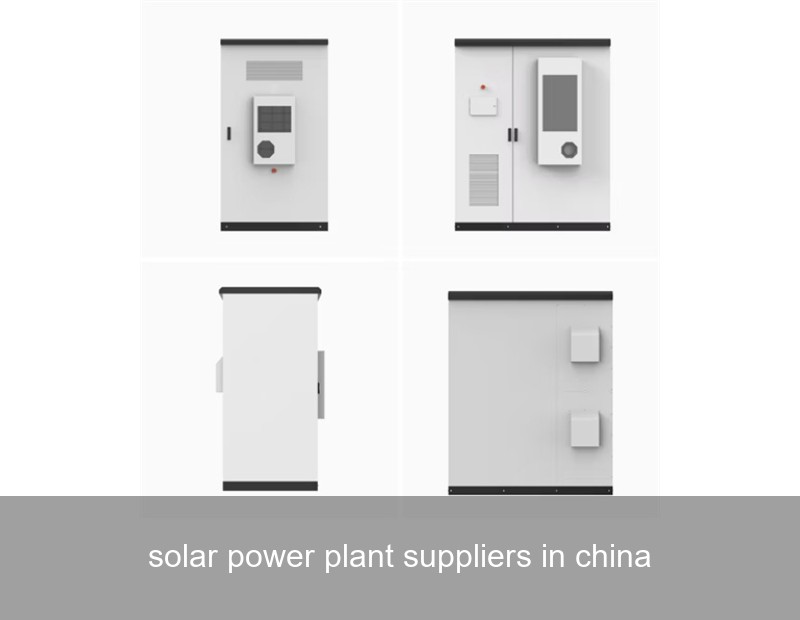
Integrating battery storage, like Highjoule's containerized BESS, is key to maximizing solar ROI.
Highjoule's Role in the Global Value Chain
For developers and asset owners in Europe and the U.S., the path isn't about choosing between Chinese solar expertise and Western storage technology. It's about harnessing the best of both. Highjoule works alongside international EPCs, including leading solar power plant suppliers from China, as the storage domain expert. We ensure that the storage component is not an afterthought but a core, optimized part of the plant's design from the early stages. Our solutions are hardware-agnostic and designed for easy integration with any major PV inverter and SCADA system, making collaboration smooth and efficient. This partnership model de-risks projects and ensures the final hybrid plant meets the strict technical and safety standards required by European and American grid operators and financiers.
Choosing Your Partner Wisely: Key Questions to Ask
As you evaluate potential solar power plant suppliers in China for your next project, consider expanding the conversation. Ask them—and yourself—these critical questions:
- What is your experience with solar-plus-storage hybrid projects in my target market?
- How do you model storage economics, and who are your preferred BESS technology partners?
- Can you provide a reference project where storage was integrated, and what was the measured increase in CAPEX vs. the uplift in IRR?
- What is your strategy for meeting local grid codes (like UL 9540 in the U.S. or Grid Code Compliance in the EU) for the entire hybrid system?
The answers will quickly separate commodity suppliers from true, future-proof partners.
Looking Ahead: The Future is Hybrid and Intelligent
The next frontier isn't just adding batteries; it's about creating fully autonomous, revenue-maximizing power plants. Imagine a system where predictive analytics forecast solar output and market prices a week in advance, where the EMS automatically bids the plant's capacity into multiple energy markets, and where the hardware is so robust it comes with a 20-year performance guarantee. This is the level of sophistication that the energy transition demands, and it requires deep specialization in both generation and storage technologies.
So, as you map out your 100MW solar project in Texas or your community microgrid in Germany, how will you architect the storage intelligence to ensure it's not just a clean energy source, but also a resilient and profitable grid asset for decades to come?
 Inquiry
 Online Chat