


Grid-Tie Solar Kit with Battery Backup: Your Complete Guide to Energy Independence
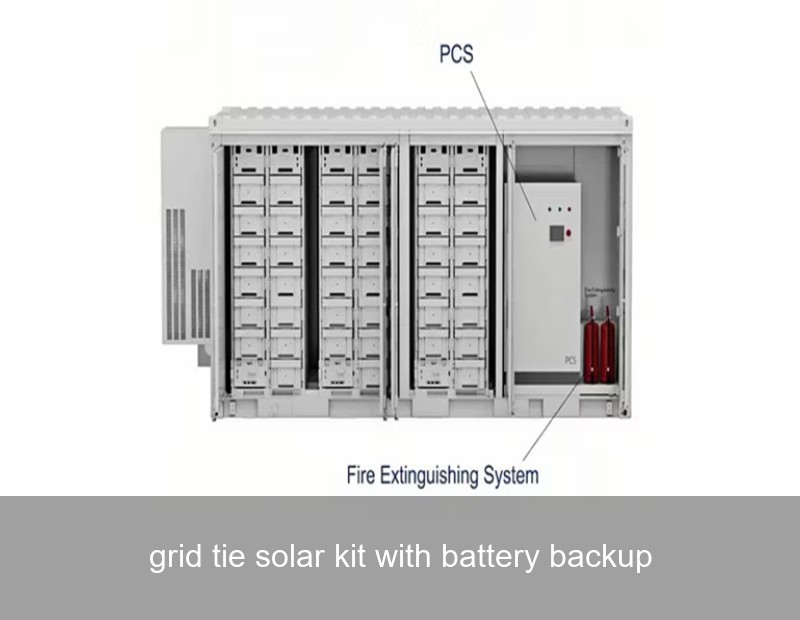
Have you ever watched your solar panels pump energy back to the grid on a sunny afternoon, only to draw power from that same grid (and pay for it) when the sun goes down or during a blackout? It's a common frustration for solar homeowners. This is where the modern grid-tie solar kit with battery backup comes in—a game-changing system that blends the best of both worlds. It allows you to enjoy the financial benefits of net metering while securing your home against outages, effectively turning your solar array into a personal power station. As a leader in advanced energy storage since 2005, Highjoule specializes in designing intelligent systems that make this seamless energy independence a reality for homes and businesses across Europe and the US.
Table of Contents
What is a Grid-Tie Solar Kit with Battery Backup?
Let's break it down. A standard grid-tied solar system is connected directly to the utility grid. It reduces your bill by offsetting your usage but offers no power during an outage (for safety reasons, it shuts off). A grid-tie solar kit with battery backup adds a crucial layer: a battery storage system and a smart inverter. This hybrid setup allows you to store excess solar energy instead of sending it all to the grid. When the grid fails, the system automatically isolates your home (in a "microgrid") and powers critical loads from the batteries, all without interrupting your Netflix stream.

Image Source: Unsplash - Representative image of a home solar and storage installation.
How Does It Work? The Seamless Switch
The magic lies in the intelligent energy management. Think of your system as having three primary modes of operation:
- Normal Operation (Grid Connected): Solar powers your home first. Any excess charges the battery. Once the battery is full, surplus energy is exported to the grid for credits. If your demand exceeds solar generation (e.g., at night), you draw from the battery, minimizing grid imports.
- Grid Outage (Backup Mode): Within milliseconds of detecting a grid failure, the system disconnects safely. The inverter then draws power solely from the solar panels and batteries to keep your lights on. Highjoule's systems are designed for a seamless transition, often with less than a 20-millisecond gap—faster than the blink of an eye.
- Peak Shaving (Cost Savings): In regions with time-of-use rates, the system can be programmed to use stored battery energy during expensive peak hours (like early evening), even if the grid is available, dramatically lowering your energy costs.
Key Benefits: Beyond Just Backup
While blackout protection is the most dramatic benefit, the advantages run much deeper:
| Benefit | Description | Impact |
|---|---|---|
| Energy Resilience | Protection from increasing grid instability and extreme weather events. | Peace of mind and continuity for home offices, medical equipment, and security systems. |
| Maximized Self-Consumption | Using your own solar energy instead of buying from the grid. | Can increase the value derived from your solar panels by up to 50% or more, depending on local rates. |
| Financial Optimization | Arbitraging energy prices with time-of-use management. | Significant reduction in utility bills by avoiding peak tariffs. |
| Grid Support | Reducing peak demand on the community grid. | Contributes to a more stable and sustainable energy infrastructure for everyone. |
A Real-World Case Study: The Smith Residence, California, USA
Let's look at concrete data. The Smith family in Northern California installed a 10kW solar array with a 13.5kWh Highjoule EverSafe Home Battery System in early 2022. Their goals were to offset high TOU rates and ensure backup for frequent Public Safety Power Shutoffs (PSPS).
- Pre-Installation (2021): Annual electricity cost: $2,850. Experienced 5 outages totaling 60 hours.
- Post-Installation (2023): Annual electricity cost: $312 (minimal grid service charges). Experienced 8 outages totaling 98 hours with zero disruption.
The system's smart software prioritized charging the battery with midday solar surplus and then discharging during the 4-9 pm "peak" period when rates exceeded $0.50/kWh. During outages, the system powered essential circuits for over 24 hours on a single charge. The project achieved a simple payback period of under 7 years, factoring in the federal Investment Tax Credit (ITC), which also applies to battery storage when paired with solar (U.S. Department of Energy).
Choosing the Right System: Key Components
Not all kits are created equal. A robust grid-tie solar kit with battery backup consists of several integrated components:
- Solar Panels: The primary energy source.
- Hybrid Inverter or Inverter/Charger: The brain. It manages DC-AC conversion, battery charging/discharging, and the grid connection. It must be UL 1741 SB (US) or equivalent certified for safe anti-islanding.
- Battery Bank: The energy reservoir. Lithium Iron Phosphate (LiFePO4) batteries, like those used in Highjoule systems, are the industry standard for safety, longevity (often 6000+ cycles), and depth of discharge.
- Smart Energy Management System (EMS): The strategy. This software learns your usage patterns and optimizes energy flow for cost or resilience.
- Critical Loads Panel (Optional but Recommended): A dedicated sub-panel that ensures your backup power is focused on essential circuits, extending backup duration.

Image Source: Unsplash - Representative image of a residential battery storage system.
How Highjoule Powers Smarter Energy Management
At Highjoule, we don't just sell components; we engineer integrated solutions. Our EverSafe Home and PowerStack Commercial systems are designed from the ground up for the hybrid grid-battery environment. What sets our grid-tie solar kit with battery backup solutions apart?
- Scalable & Modular Design: Start with a base capacity and add more battery modules as your needs or budget grow. Our systems are compatible with most existing solar installations.
- Advanced AI-Powered Software: The Highjoule Energy OS predicts weather, your consumption, and utility rates to autonomously make the most economical decision every minute of the day.
- Unmatched Reliability: With a focus on industrial-grade components and rigorous testing, our systems are built for the long haul, backed by industry-leading warranties. We provide comprehensive support from design and permitting to installation and monitoring.
- Global Standards Compliance: Our products meet and exceed all relevant safety and grid interconnection standards in both the European and North American markets, ensuring a smooth permitting process.
For a deeper understanding of how battery storage integrates with modern grids, the International Energy Agency's reports provide excellent context on the technology's global role.
The Future of Home Energy
The trajectory is clear. As electricity prices fluctuate and renewable penetration grows, the static, one-way flow of energy is becoming obsolete. The home of the future is an active node in a dynamic grid—generating, storing, and managing its own energy intelligently. A grid-tie solar kit with battery backup is the foundational step toward this future. It transforms your relationship with energy from one of passive consumption to active control.
With evolving policies like virtual power plants (VPPs), your system could soon earn revenue by providing grid services. Imagine being paid by your utility to allow your battery fleet to help balance regional demand during a heatwave. This isn't science fiction; it's happening now in pilot programs across the U.S. and Europe (NREL Report on VPPs).
Ready to Take Control?
The journey to energy resilience starts with a clear understanding of your home's energy profile. What are your top three priorities: eliminating bill surprises, ensuring an uninterrupted power supply for a home business, or future-proofing your property against an uncertain energy landscape? How would your daily life change with the certainty that your power stays on, no matter what happens outside your walls?
 Inquiry
 Online Chat