


Your Complete Guide to Choosing the Right Off Grid Solar Kit with Batteries
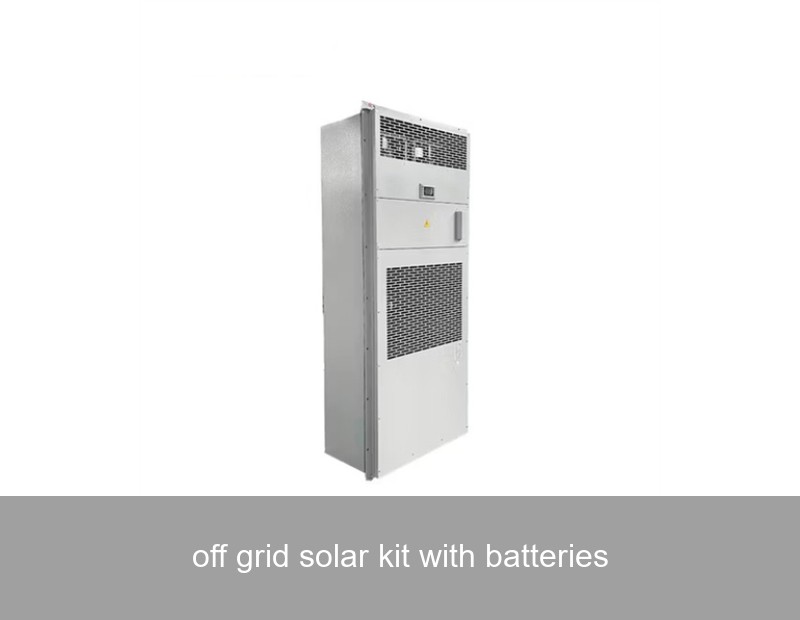
Imagine a life where your power is truly your own—unaffected by grid outages, rising electricity rates, or remote locations. This is the promise of an off grid solar kit with batteries. But moving from reliance on the traditional grid to complete energy independence is a significant step. It's not just about buying panels and a battery; it's about designing a resilient, efficient, and reliable power ecosystem for your home, cabin, or business. This guide will walk you through everything you need to know, from core components to real-world performance, helping you make an informed decision for your energy future.
Table of Contents
Beyond the Panels: What Makes a True Off-Grid System?
An off grid solar kit with batteries is a self-contained power plant. Unlike grid-tied systems that shut down during blackouts, an off-grid system must supply 100% of your electricity, 24/7. This demands a carefully balanced combination of key components:
- Solar Panels: Capture sunlight and convert it to direct current (DC) electricity.
- Charge Controller: Regulates the voltage and current from the panels to safely charge the batteries, preventing overcharging.
- Battery Bank: The heart of the system. It stores excess solar energy for use at night or during cloudy days.
- Inverter: Converts the DC electricity from the batteries into the alternating current (AC) that powers your household appliances.
- Backup Generator (Optional but Recommended): A fuel-based generator for extended periods of poor weather, ensuring uninterrupted power.
The magic isn't in any single part, but in their intelligent integration. A high-quality kit ensures these components communicate seamlessly for maximum efficiency and longevity.
The Data: Why Off-Grid Living is More Viable Than Ever
The dream of off-grid living is being propelled by powerful trends. Let's look at the numbers.
| Trend | Data Point | Implication for Off-Grid |
|---|---|---|
| Falling Solar & Storage Costs | The cost of lithium-ion batteries has fallen by over 90% since 2010. | Makes robust, long-lasting battery banks economically accessible. |
| Grid Instability | In the US, major power outages have increased by approximately 67% since 2000. | Drives demand for resilient, backup-independent power solutions. |
| Energy Independence | Over 250,000 homes in the US are fully off-grid, a number growing at ~10% annually. | Shows a proven, scalable model for residential energy self-sufficiency. |
This data paints a clear picture: the technology is ready, the economics are favorable, and the desire for control is stronger than ever. But what does this look like in practice?
A Real-World Case Study: The Mountain Cabin in Colorado, USA
Consider the Johnson family's cabin near Telluride, Colorado. At 9,500 feet, grid connection was prohibitively expensive (quotes exceeded $120,000). Their goal was year-round weekend use, with power for lighting, a well pump, a refrigerator, and essential electronics.
Their Challenge: Harsh winters with heavy snow, variable sunlight, and temperatures often dropping below -20°C. A standard, off-the-shelf kit risked battery failure and system shutdown.
The Solution: They installed a custom-designed off grid solar kit with batteries featuring:
- 8.5 kW of cold-weather rated solar panels.
- A 25 kWh lithium iron phosphate (LFP) battery bank, chosen for its superior performance in cold climates and longer cycle life.
- An intelligent hybrid inverter/charger with integrated MPPT charge controllers.
- A propane backup generator with an automatic transfer switch.
- Energy Independence: 94% of annual power from solar. The generator ran only 65 hours total, primarily during a historic December snowstorm.
- Reliability: Zero unexpected power outages. The system automatically managed loads and generator engagement.
- Economic Payback: Compared to the cost of grid extension, the $45,000 system provides a full return on investment in the form of avoided costs.

This case highlights that success depends on professional design that accounts for location, climate, and usage patterns—not just the sum of the components.
Key Considerations for Your Off-Grid Kit
Before you choose a kit, you must answer these foundational questions:
1. What is Your True Energy Load?
This is the most critical step. List every appliance, its wattage, and hours of use. Don't guess—use an energy monitor or appliance labels. An undersized system will leave you in the dark; an oversized one is a needless capital expense.
2. Battery Chemistry: The Heart of the Matter
Your choice dictates performance, lifespan, and safety.
- Lithium Iron Phosphate (LFP): The modern standard for off-grid. Offers longer lifespan (6,000+ cycles), enhanced safety, better performance across temperatures, and higher usable depth of discharge. This is what we use in Highjoule systems.
- Lead-Acid: Lower upfront cost but shorter lifespan, requires maintenance, and offers less usable capacity. Often a false economy for primary power systems.
3. Days of Autonomy: Your "Bad Weather" Buffer
How many consecutive cloudy days should your system handle? In sunnier climates, 2-3 days may suffice. In the Pacific Northwest or Nordic winters, you may need 5+ days, which significantly increases battery bank size. A backup generator can economically extend this buffer.
Highjoule's Integrated Approach to Off-Grid Power
At Highjoule, we view an off grid solar kit with batteries not as a commodity product, but as a mission-critical power asset. Since 2005, we've engineered solutions that prioritize intelligence, durability, and seamless user experience.
Our Everlast Off-Grid Series is built around this philosophy. It features our proprietary LFP battery packs, known for their industry-leading cycle life and robust battery management system (BMS) that protects each cell. Paired with our smart hybrid inverters, the system forms a unified brain that:
- Dynamically Optimizes Energy Flow: Prioritizes solar charging, intelligently engages backup generation, and manages loads to conserve power.
- Provides Remote Monitoring & Control: Via a user-friendly app, you can track production, consumption, and battery state-of-charge from anywhere in the world.
- Ensures Scalability: Start with what you need. Our modular design allows you to easily add more solar panels or battery capacity as your needs grow.
For commercial and microgrid applications, our engineering team provides full turnkey services—from custom design and simulation to installation support and long-term performance auditing. We don't just sell hardware; we deliver guaranteed power resilience.

Questions to Ask Before You Invest
Embarking on your off-grid journey is exciting. To ensure you partner with the right provider and get a system that lasts for decades, here are crucial questions to ask:
- Do you provide detailed, site-specific energy modeling and system design, or are you just selling a standard kit?
- What is the expected cycle life of the battery at my typical depth of discharge, and what does the warranty actually cover?
- How does the system handle peak loads (like starting a well pump) that exceed the inverter's continuous rating?
- Can the system be easily expanded in the future, or am I locked into a single configuration?
- What ongoing maintenance or monitoring is required from me, and what do you handle remotely?
Your answers will separate the box-shifters from the true energy solution providers.
So, as you contemplate true energy independence, what is the one critical load—be it a medical device, a deep-freezer, or your home office—that makes reliable, off-grid power non-negotiable for you?
 Inquiry
 Online Chat