


Powering Progress: Your Guide to Off-Grid Inverters in Sri Lanka
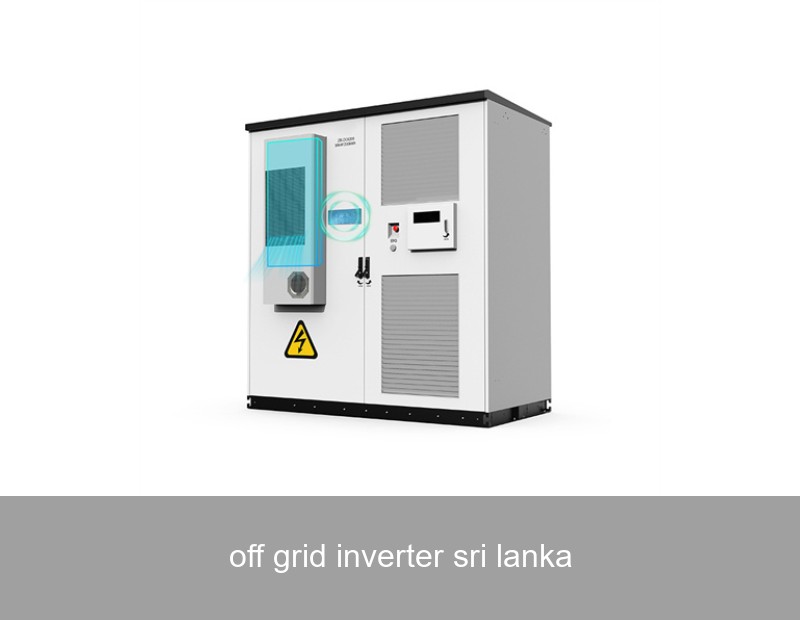
Imagine a home or business in the beautiful, sun-drenched landscapes of Sri Lanka, completely energy independent. No more worrying about the next power cut or rising electricity bills. This isn't a distant dream; it's a reality made possible by a critical piece of technology: the off-grid inverter. For communities and enterprises across Sri Lanka, from the tea estates of Nuwara Eliya to the coastal villages in the South, off-grid inverters are the intelligent heart of a self-sufficient power system. They convert stored solar or battery energy into usable AC power, enabling a reliable electricity supply entirely separate from the national grid. As a global leader in advanced energy storage, Highjoule understands that choosing the right off-grid solution is not just about equipment—it's about empowering resilience, sustainability, and economic growth.
Table of Contents
- The Sri Lankan Context: Why Off-Grid Power is More Than a Backup
- What is an Off-Grid Inverter? The Brain of Your Independent Power System
- Key Features to Look for in a Robust Off-Grid Inverter
- A Real Case Study: Securing a Tea Drying Factory in Hatton
- Highjoule's Tailored Solutions for Sri Lankan Resilience
- Planning Your Off-Grid System: Steps to Success
- The Future of Energy in Sri Lanka
The Sri Lankan Context: Why Off-Grid Power is More Than a Backup
For many in Europe and the US, off-grid living might be a conscious choice for sustainability. In Sri Lanka, the drivers are often more immediate and critical. The country has faced significant challenges in its power sector, including fuel shortages, grid instability, and the need to electrify remote areas. According to a 2023 report by the Asian Development Bank, Sri Lanka aims to achieve 70% renewable energy generation by 2030, a goal that heavily relies on decentralized solutions. This is where off-grid inverter systems become transformative. They are not merely backup units; they are the foundation for primary power for rural homes, agricultural operations, tourist hotels, and small industries. They provide energy security, allowing businesses to operate continuously and families to have stable access to lighting, communication, and education.
What is an Off-Grid Inverter? The Brain of Your Independent Power System
Let's break it down simply. An off-grid inverter is the core component in a system that includes solar panels, a battery bank, and a charge controller. Its primary job is to convert the direct current (DC) electricity stored in your batteries into the alternating current (AC) that powers your appliances. But a modern inverter does much more—it's the system's brain. It manages energy flow, protects batteries from over-discharge, and can integrate with generators for hybrid setups. Unlike grid-tied inverters that shut down during a blackout for safety, off-grid inverters are designed to always be "the grid," providing uninterrupted power from the moment the sun goes down or the public grid fails.
The Core Components of an Off-Grid System
- Solar Panels: Capture sunlight and generate DC electricity.
- Charge Controller: Regulates the flow of power from panels to batteries, preventing damage.
- Battery Bank: Stores the DC electricity for use when needed.
- Off-Grid Inverter: Converts stored DC from batteries to usable AC power for your home/business.
- Optional Generator: Provides backup charging during prolonged periods of low sunlight.
Key Features to Look for in a Robust Off-Grid Inverter
Not all inverters are created equal, especially in demanding environments. When selecting an off-grid inverter for Sri Lanka, consider these crucial features:
| Feature | Why It Matters for Sri Lanka |
|---|---|
| High Efficiency (>95%) | Maximizes every bit of precious solar energy, reducing system size and cost. |
| Pure Sine Wave Output | Ensures safe and smooth operation for sensitive electronics like laptops, medical equipment, and appliance motors. |
| Robust Battery Management | Extends the life of your costly battery bank with programmable charging profiles for lead-acid or lithium. |
| Scalable & Parallel Capable | Allows you to start with a smaller system and expand power as your needs grow—perfect for a growing business. |
| Grid & Generator Charging Support | Offers flexibility to use available grid power or a generator to top up batteries during monsoon seasons. |
| Durable Build & Wide Temperature Range | Withstands the heat and humidity of the Sri Lankan climate for reliable, long-term operation. |
A Real Case Study: Securing a Tea Drying Factory in Hatton
Let's look at a tangible example. A medium-sized tea drying factory in the Hatton region faced crippling daily power cuts, jeopardizing the entire drying process. A batch of tea left half-dried could spoil, resulting in significant financial loss. Their existing diesel generator was expensive and unreliable.
The Solution: A turnkey off-grid solar system with a 25kW high-efficiency off-grid inverter at its core, paired with a 40kWh lithium-ion battery bank and a 50kWp solar array on the factory roof.
The Outcome:

The system now provides 95% of the factory's daytime power and 100% during evening grid outages. Diesel consumption has dropped by 90%. The project paid for itself in under 4 years through fuel savings and prevented product loss. Most importantly, the factory can now operate on a predictable schedule, meet export orders reliably, and protect the livelihoods of its workers. This case underscores how the right off-grid inverter is an investment in business continuity, not just an expense.
Highjoule's Tailored Solutions for Sri Lankan Resilience
At Highjoule, we've been engineering robust energy storage solutions since 2005 for markets worldwide that face challenges similar to Sri Lanka's. Our approach is not just to sell an inverter, but to deliver a complete, intelligent power ecosystem. For Sri Lankan clients, our H-Power Cube Off-Grid Series is particularly relevant. These all-in-one units integrate a high-precision MPPT solar charge controller, a pure sine wave inverter, and advanced battery management in one rugged chassis. They are pre-configured for seamless integration with both lithium and advanced lead-acid batteries, simplifying installation and maintenance—a key advantage in remote locations.
Furthermore, our systems are designed with scalability in mind. A small guesthouse can start with a single H-Power Cube unit and, as tourism grows, add more units in parallel to increase capacity without replacing the entire system. This modularity, combined with remote monitoring via our Highjoule Energy Cloud platform, gives our customers—whether a homeowner in Jaffna or a factory manager in Colombo—unprecedented control and insight into their energy production and consumption. We partner with certified local installers to ensure every system is designed for Sri Lanka's specific climate and usage patterns.
Highjoule Services for the Sri Lankan Market
- Feasibility & System Design: Custom engineering to match your load profile and site conditions.
- Technology Supply: Provision of our certified, high-efficiency H-Power Cube inverters and compatible battery solutions.
- Partner Network Support: Training and technical support for our network of local installation partners.
- Remote Monitoring & Support: Ongoing system performance tracking and proactive maintenance alerts.
Planning Your Off-Grid System: Steps to Success
Thinking of going off-grid? Here's a practical roadmap:
- Audit Your Energy Use: List all appliances, their wattage, and hours of use. This determines your daily energy consumption in kilowatt-hours (kWh).
- Consult a Professional: Engage with a qualified installer (like our Highjoule partners) to assess your site's solar potential and design a system that meets your needs with a safety margin.
- Choose Quality Core Components: Prioritize a high-efficiency, reliable off-grid inverter and batteries from a reputable manufacturer. This is the foundation of your system's lifespan.
- Consider Future Expansion: Plan your system layout so you can easily add more solar panels or batteries later.
- Understand Maintenance: While modern systems are low-maintenance, periodic checks of connections and battery health are essential.
For more on global best practices in off-grid system design, you can refer to this guide from the International Renewable Energy Agency (IRENA).
The Future of Energy in Sri Lanka
The trajectory is clear. Distributed, renewable energy systems powered by intelligent inverters will play a starring role in Sri Lanka's energy future. As battery technology advances and costs continue to fall, we will see more microgrids—clusters of homes and businesses sharing a local renewable grid—enhancing community-wide resilience. The question is no longer if off-grid and hybrid systems are viable, but how quickly they can be deployed to empower economic activity, improve quality of life, and help the nation meet its ambitious climate goals. The technology is here, proven, and ready.
What does energy independence look like for your home, business, or community in Sri Lanka? What's the first load you would secure with a reliable, solar-powered off-grid inverter system?
 Inquiry
 Online Chat