


Unlocking Energy Resilience: The Essential Guide to Grid-Tied Micro Energy Storage Cabinets
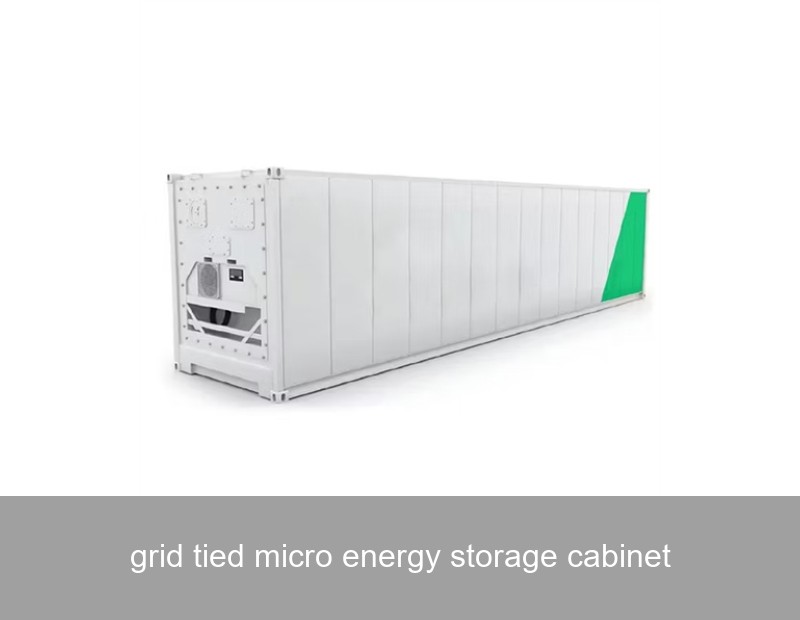
Imagine a power solution that acts as a personal energy manager for your home or business—seamlessly integrating with the public grid, storing excess solar power, and providing a cushion during outages or peak rate periods. This isn't futuristic speculation; it's the reality offered by a grid tied micro energy storage cabinet. For homeowners and business operators across Europe and the U.S., this compact, intelligent system is becoming the cornerstone of modern energy independence. But what exactly is it, and why is it shifting from a niche product to a mainstream necessity? Let's explore.
The Grid Pressure Phenomenon
You've likely felt the effects, even if indirectly. Rolling blackouts in California, volatile energy prices in Europe exacerbated by geopolitical tensions, and increasing strain on aging grid infrastructure during heatwaves or cold snaps. The traditional, centralized "one-way" grid is struggling under new pressures: the explosive growth of intermittent renewables like solar and wind, rising demand from electrification (think EVs and heat pumps), and more frequent extreme weather events. This creates a paradox—we're generating more clean energy than ever, but managing it efficiently and reliably is a growing challenge.

The result? Consumers are left vulnerable to outages and price spikes, while utilities scramble to balance supply and demand, often relying on expensive and polluting "peaker" plants. This phenomenon is the primary driver behind the search for decentralized, intelligent solutions.
Data: The Rising Tide of Decentralization
The numbers paint a clear picture of the energy transition's direction. According to the U.S. Energy Information Administration (EIA), small-scale solar capacity in the U.S. has grown dramatically, with a significant portion being paired with storage. In Europe, the European Commission's REPowerEU plan aggressively targets energy independence, fueling massive investments in rooftop solar and storage. A report by Wood Mackenzie indicates the global market for front-of-the-meter and behind-the-meter energy storage is set to multiply fifteen-fold by 2030.
This data underscores a critical insight: the future grid is bidirectional and distributed. Energy will flow from millions of points—homes, businesses, and community hubs—not just from a few large power plants. The grid-tied micro energy storage cabinet is the enabling technology at this individual node level.
Key Components of an Intelligent System
So, what's inside these sleek cabinets? It's more than just a battery.
- High-Density Battery Modules: Typically using advanced Lithium Iron Phosphate (LFP) chemistry for safety, longevity, and stable performance over thousands of cycles.
- Hybrid Inverter/Charger: The brain of the operation. It converts DC power from solar panels or the battery to AC for your home, manages charging from the grid or solar, and ensures seamless switching during an outage.
- Integrated Energy Management System (EMS): This software intelligence continuously monitors energy production, consumption, grid conditions, and electricity tariffs. It automatically optimizes when to store, use, or sell energy to maximize savings and resilience.
- Grid Interface & Safety Systems: Certified components that ensure safe, code-compliant connection to the utility grid, including anti-islanding protection to keep utility workers safe during outages.
Case Study: A California Microgrid in Action
Let's look at a real-world application. A medium-sized craft brewery in San Diego, California, faced two major issues: crippling demand charges from the utility (fees based on their highest 15-minute power draw each month) and the constant threat of Public Safety Power Shutoffs (PSPS) during wildfire season, which would spoil batches and halt production.
Their solution was a grid-tied micro energy storage cabinet system integrated with their existing rooftop solar. The system included a 100 kWh storage capacity cabinet with a sophisticated EMS.
| Metric | Before Installation | After Installation |
|---|---|---|
| Monthly Demand Charges | ~$1,800 | ~$400 (78% reduction) |
| Grid Energy Consumption | ~8,000 kWh | ~3,200 kWh (60% reduction) |
| Outage Vulnerability | High - Full shutdown | Low - Critical operations for 8+ hours |
| ROI Timeline | N/A | Estimated 4.5 years |
The EMS was programmed to "peak shave"—discharging the battery during the brewery's high-demand operational periods (like refrigeration compressors kicking on) to flatten their power draw from the grid. During a PSPS event last fall, the system automatically islanded from the grid, powering critical refrigeration and lighting for over 10 hours, preventing tens of thousands of dollars in lost inventory. This case exemplifies the dual financial and operational resilience benefits.
Highjoule's Nexus Series: Your Intelligent Energy Node
At Highjoule, with nearly two decades of expertise since 2005, we've engineered our Nexus Series Micro Storage Cabinet to be the definitive answer to these modern energy challenges. Designed for the specific demands of the European and North American markets, the Nexus isn't just a product; it's a comprehensive, intelligent energy platform.

What sets the Nexus Series apart?
- Adaptive AI-Driven EMS: Our proprietary system goes beyond simple scheduling. It learns your consumption patterns, integrates real-time weather forecasts for solar production, and can connect to dynamic utility rate signals (like Time-of-Use rates) to autonomously make the most economical decision every minute of the day.
- Modular & Scalable Design: Start with a 10 kWh unit and seamlessly expand to 30 kWh or more as your needs grow—whether you add an EV charger, a heat pump, or expand your business. This future-proofs your investment.
- Utility-Grade Safety & Grid Support: Built with UL 9540 and IEC 62619 certifications at its core, the Nexus Series offers optional grid-support functions like frequency regulation, providing value back to the grid and opening potential revenue streams.
- Global Monitoring & Support: Our cloud-based platform, Highjoule Horizon, gives you full visibility and control of your energy ecosystem from any device, backed by our global technical support network.
Beyond Backup: The Multifaceted Benefits
The value proposition of a system like the Nexus Series extends far beyond emergency backup power.
- Maximize Solar Self-Consumption: Store your excess midday solar generation to use in the evening, increasing your independence from the grid from ~30% to 70% or more.
- Demand Charge Management: For commercial and industrial users, this is often the fastest path to ROI, dramatically reducing a major line item on the utility bill.
- Energy Arbitrage: In regions with variable pricing, charge your cabinet when grid electricity is cheap (often at night) and use it when prices are high.
- Grid Services Participation: In some markets, aggregated storage systems can provide valuable services to stabilize the grid, creating a potential new income source.
Future-Proofing Your Energy Independence
The integration of distributed energy resources (DERs) like grid-tied micro energy storage cabinets is fundamental to building a resilient, low-carbon energy future. As noted by the International Energy Agency (IEA) in their innovation report on battery storage, these technologies are key to unlocking higher shares of renewables and enhancing grid flexibility. They empower you, the consumer, to become an active participant in the energy market—a "prosumer."
Choosing a system is an investment in stability, sustainability, and long-term cost control. It requires partnering with a provider that offers not just hardware, but deep system integration expertise and reliable, long-term support.

Is your home or business ready to transform from a passive grid consumer into an active, resilient energy hub? What would energy security and predictable costs mean for your peace of mind and operational continuity?
 Inquiry
 Online Chat