


Vistra Battery Storage California: A Blueprint for the Future of Grid Resilience
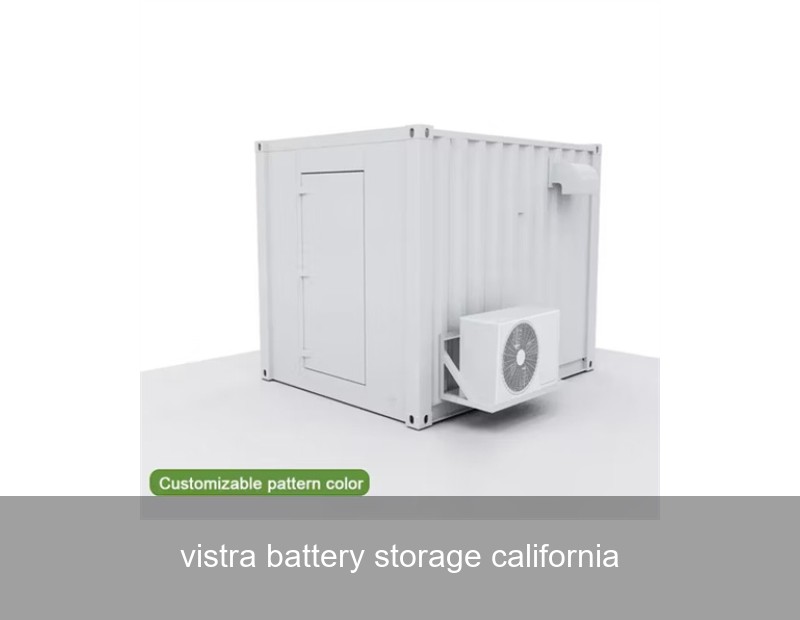
If you've been following the energy landscape in California, or indeed across the U.S. and Europe, you've likely heard about the Vistra battery storage California projects. They're not just power facilities; they've become symbols of a profound shift. They represent the moment when large-scale battery energy storage systems (BESS) moved from promising pilot projects to indispensable, grid-scale pillars of reliability and renewable integration. But what makes these projects so pivotal, and what can commercial, industrial, and utility stakeholders learn from them? Let's unpack the phenomenon, the data, and the future it signals for our energy systems.
Table of Contents
- The Phenomenon: Why California is Betting Big on Batteries
- By the Numbers: The Staggering Scale of Vistra's Moss Landing
- Case Study: The Moss Landing Energy Storage Facility
- Key Insights for Energy Decision-Makers
- The Highjoule Approach: Scalable Intelligence for Diverse Needs
The Phenomenon: Why California is Betting Big on Batteries
The drive towards the Vistra battery storage California model is born from a perfect storm of necessity and ambition. California has aggressive renewable portfolio goals, aiming for 100% clean electricity by 2045. However, the inherent intermittency of solar and wind power creates a well-documented challenge: the "duck curve," where net demand plummets during sunny afternoons and then ramps up extremely rapidly as the sun sets. This creates grid instability and risks of blackouts, especially during heatwaves. The state needed a solution that could act like a massive shock absorber—soaking up excess renewable generation and releasing it precisely when needed. Utility-scale battery storage emerged as the most agile and effective answer.
By the Numbers: The Staggering Scale of Vistra's Moss Landing
To understand the impact, we must look at the data. The Vistra Moss Landing Energy Storage Facility in Monterey County is the largest of its kind in the world, a title that underscores California's leadership in this space.
| Metric | Phase I & II | Phase III (Planned/Under Construction) |
|---|---|---|
| Total Power Capacity (MW) | 400 MW | Up to 350 MW additional |
| Total Energy Capacity (MWh) | 1,600 MWh | 1,400 MWh additional |
| Duration at Full Power | 4 hours | 4 hours |
| Enough to Power | ~300,000 homes for 4 hours | ~250,000+ additional homes |
These figures are monumental. For context, 1,600 MWh is enough energy to fully charge over 25,000 average electric vehicles. This scale is critical for providing what grid operators call "inertia" and "frequency regulation," services traditionally provided by fossil-fuel plants. The California Energy Commission has been instrumental in tracking and supporting this growth, with the state's storage capacity exploding from a few hundred MW a decade ago to several thousand MW today.

Image: A utility-scale battery storage installation. (Source: Unsplash, representative image)
Case Study: The Moss Landing Energy Storage Facility
Let's apply the PAS framework to the Moss Landing project itself.
Problem: California's grid faced increasing volatility due to renewable intermittency and extreme weather events, threatening reliability and slowing the clean energy transition.
Agitation: Grid operators like CAISO were forced to use inefficient, often fossil-fuel-powered "peaker" plants for short-term demand spikes, undermining emissions goals. The risk of public safety power shutoffs (PSPS) during high-fire-risk conditions also loomed large.
Solution: Vistra, in partnership with technology providers, repurposed the site of a retired natural gas plant to deploy a lithium-ion battery storage system of unprecedented scale. The facility connects directly to the grid at a key transmission node. It performs multiple revenue-generating and grid-stabilizing functions:
- Energy Arbitrage: Charging with low-cost solar power during the day and discharging during high-price, high-demand evening hours.
- Ancillary Services: Providing critical frequency regulation to keep the grid's heartbeat steady.
- Resource Adequacy: Contracting as a guaranteed capacity resource to ensure the grid has enough power to meet peak demand, directly replacing the need for a gas peaker plant.
The result? A proven, multi-functional asset that enhances grid resilience, integrates gigawatts of renewables, and provides a profitable, sustainable business model. During the September 2022 heatwave, California's battery fleet, led by facilities like Moss Landing, discharged a record 3.4 GW of power at peak times, single-handedly preventing rolling blackouts.
Key Insights for Energy Decision-Makers
The success of the Vistra battery storage California initiative offers crucial lessons for businesses and communities worldwide:
- Location is Strategic: Siting storage at existing grid interconnection points (like retired power plants) drastically reduces cost and complexity.
- Stacking Value Streams is Key: Economic viability depends on combining multiple applications—energy shifting, grid services, and capacity payments.
- Intelligence is Non-Negotiable: The real magic lies in the software. Advanced energy management systems (EMS) that use AI and machine learning to optimize charge/discharge cycles in real-time for maximum value are what separate a simple battery bank from a smart grid asset.
- Scalability Starts with Design: Modular architecture, like containerized battery systems, allows for phased expansion as needs and economics evolve.
The Highjoule Approach: Scalable Intelligence for Diverse Needs
At Highjoule, we've taken these core insights to heart in designing our own advanced storage solutions. While our scale may differ, our philosophy aligns: smart, modular, and multi-functional storage is the cornerstone of a resilient and efficient energy future. For our commercial and industrial (C&I) clients across Europe and the U.S., this means deploying systems that do more than just backup power.
Our H-Series C&I Battery Systems are engineered with the same principles that make grid-scale projects successful. They feature:
- AI-Powered Energy Management: Our Horizon EMS platform automatically optimizes for self-consumption, peak shaving, and participation in demand response programs, maximizing ROI.
- Modular & Scalable Design: Start with what you need and expand seamlessly, much like the phased approach at Moss Landing.
- Utility-Grade Safety & Reliability: Built with the same rigorous standards expected of the largest grid assets, ensuring safe operation for decades.
Whether it's a manufacturing plant in Germany looking to cap its demand charges, a data center in Texas seeking uninterruptible clean power, or a microgrid for a community in Southern Europe, Highjoule provides the intelligent hardware and software platform to make storage a central, value-generating asset. We enable businesses to build their own, smaller-scale "Moss Landing" strategy—turning energy cost centers into strategic, resilient, and sustainable advantages.

Image: A technician monitoring a modern battery energy storage system control panel. (Source: Unsplash, representative image)
What Does Your Organization's Energy Resilience Blueprint Look Like?
The story of Vistra battery storage California is more than a news headline; it's a live demonstration of the next energy era. It proves that technology, when deployed at scale with intelligent design, can solve our most pressing energy challenges. The question is no longer *if* battery storage is viable, but *how* and *when* it will be integrated into your energy strategy.
Is your business or community prepared to harness the power of intelligent storage to reduce costs, ensure operational continuity, and contribute to a more stable grid? The blueprint is now clear. The tools are available. What's the first step you will take to build your resilience?
 Inquiry
 Online Chat