


GWP Greenwood Power GmbH and the Rise of Community-Owned Energy
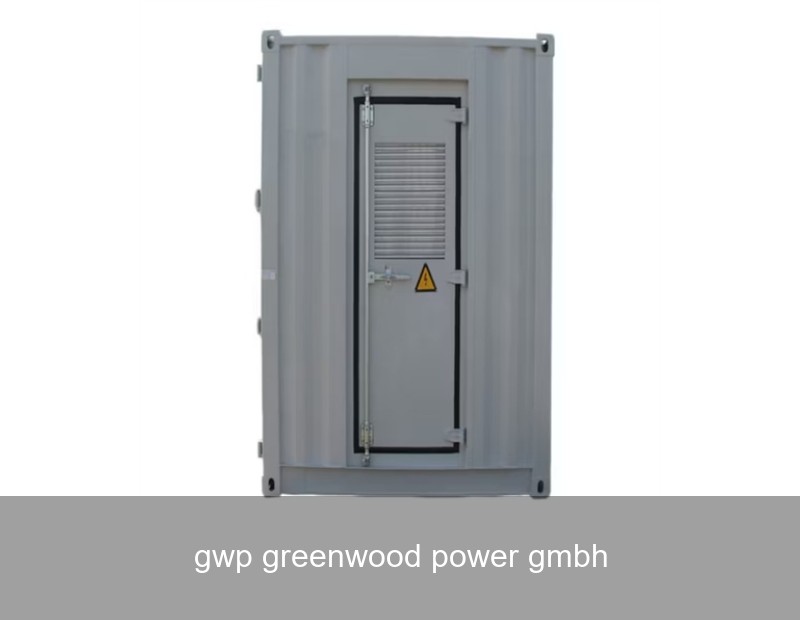
Imagine a small town where the electricity powering homes, local businesses, and streetlights isn't sourced from a distant fossil-fuel plant but is generated, stored, and managed by the community itself. This isn't a futuristic fantasy; it's a reality being pioneered by citizen-led initiatives across Europe and North America. At the forefront of this movement are entities like GWP Greenwood Power GmbH (GWP), a German energy cooperative demonstrating how collective action can build a resilient, sustainable, and democratic power grid. But what makes such a model technically and economically viable today? The answer lies in the sophisticated integration of renewable generation with advanced Battery Energy Storage Systems (BESS).
GWP Greenwood Power GmbH: A Community Blueprint
Founded in 2011, GWP Greenwood Power GmbH is a citizen-owned energy cooperative based in North Rhine-Westphalia, Germany. Its mission is simple yet powerful: to enable local citizens to actively participate in the Energiewende (energy transition) by owning and operating renewable energy assets. Instead of being passive consumers, members become "prosumers"—investing in, benefiting from, and having a say in their energy future.
The Phenomenon: Communities face two major hurdles: the intermittent nature of renewables like solar and wind, and the complexity of integrating them into the grid. Without a solution, excess energy is wasted, and supply can't meet demand when the sun isn't shining or the wind isn't blowing.
The Data & Case: GWP's portfolio is impressive. By 2023, the cooperative had grown to over 550 members and had invested more than €18 million in renewable energy projects. Their assets include several photovoltaic (PV) parks with a combined capacity exceeding 5 MWp. One flagship project is their 750 kWp solar farm in Heiden, which directly feeds clean power into the regional grid. However, the real challenge and opportunity lay in optimizing this output. Like many community projects, GWP initially had to navigate feed-in tariffs and grid congestion issues. The fluctuating solar generation meant they couldn't fully maximize the financial and operational potential of their assets. This is a common pain point for cooperatives and commercial renewable operators alike—how to store the midday sun for use during the evening peak.

Image Source: Unsplash (Representative of community solar installations)
The Cornerstone: Intelligent Battery Energy Storage Systems (BESS)
This is where technology catches up with ambition. A Battery Energy Storage System is far more than just a big battery. It's an integrated, smart solution that stores electrical energy for later use. For a cooperative like GWP Greenwood Power GmbH, deploying a BESS transforms their solar farms from simple generators into flexible, grid-supporting assets.
How a Modern BESS Works for Community Energy
- Energy Time-Shifting (Arbitrage): Stores excess solar energy produced at noon and dispatches it during high-price evening hours, increasing revenue.
- Grid Services: Advanced inverters can provide frequency regulation, helping to stabilize the local grid—a valuable service that grid operators often compensate.
- Peak Shaving: For communities with on-site consumption (like a local industrial park), the BESS can power loads during peak times, avoiding expensive demand charges.
- Backup Power: Enhances local energy resilience, providing critical power during outages.
The global BESS market is exploding, with projections from BloombergNEF suggesting installations will hit 1,200 GW/3,580 GWh by 2030. This growth is driven by plummeting lithium-ion battery costs, which have fallen over 90% in the last decade, making systems economically viable for projects of all scales.
Highjoule: Empowering Community Projects with Advanced Storage
For energy cooperatives and commercial renewable operators, choosing the right BESS partner is critical. The system must be safe, efficient, long-lasting, and intelligently managed. This is where Highjoule enters the story. With nearly two decades of experience since 2005, Highjoule specializes in designing and deploying smart, integrated storage solutions that turn renewable energy projects into robust, profitable power assets.
For a project akin to what GWP operates, Highjoule would provide a comprehensive, containerized BESS solution. Our HJ Cube Commercial system, for example, is a pre-engineered, all-in-one unit housing battery racks, a thermal management system, fire suppression, and Highjoule's proprietary NeuroGrid energy management software (EMS). This brain of the operation uses AI-driven algorithms to decide the most profitable and efficient moments to charge or discharge, considering weather forecasts, electricity prices, and grid conditions.
The Highjoule Advantage for Sustainable Communities
| Challenge for Cooperatives | Highjoule's Solution | Outcome |
|---|---|---|
| Maximizing ROI on member investments | NeuroGrid EMS for optimized revenue stacking (arbitrage, grid services) | Higher, more stable returns for members, accelerating payback. |
| Ensuring long-term system safety and durability | Cell-to-system level safety architecture & active liquid cooling for extended battery life. | Lower operational risk, 20+ year design life, protecting community capital. |
| Technical complexity and grid compliance | Turnkey solution with grid-forming capabilities and seamless inverter integration. | Plug-and-play operation, meeting strict grid codes (like UL 9540 in the US, VDE-AR-E 2510-50 in EU). |

Image Source: Unsplash (Representative of a containerized BESS installation)
By partnering with a provider like Highjoule, an initiative like GWP Greenwood Power GmbH could add a crucial layer of intelligence and flexibility to its solar parks. Imagine their Heiden solar farm coupled with a 1 MWh Highjoule BESS. The system could store hundreds of megawatt-hours of otherwise curtailed solar energy annually, dispatching it when most valuable, while also providing primary frequency response to the German grid—creating a new, stable revenue stream from the German electricity balancing market.
Beyond Germany: A Model for the US and Europe
The success of GWP Greenwood Power GmbH is not an isolated case. In the United States, community choice aggregation (CCA) programs in California and community solar policies in New York and Massachusetts are creating similar opportunities. For instance, the National Renewable Energy Laboratory (NREL) highlights how pairing storage with community solar can increase the value of solar by 20-40% for subscribers. Whether it's a German Energiegenossenschaft or a US community solar LLC, the equation is the same: renewables + smart storage = greater resilience, autonomy, and economics.
Highjoule's solutions are designed for this global landscape. Our systems comply with both European and North American standards, and our NeuroGrid software can be configured for diverse market rules, from the German intraday market to California's Self-Generation Incentive Program (SGIP).
Your Energy Future: A Question of Ownership
The story of GWP Greenwood Power GmbH proves that the energy transition is as much about social innovation as it is about technological innovation. The tools—advanced, intelligent BESS technology from companies like Highjoule—are now accessible and economically sound. The question shifts from "Can we do this?" to "How will we shape our community's energy future?"
Are you part of a renewable energy cooperative, a commercial developer, or a municipality looking to leverage local solar or wind resources to their fullest potential? What is the first step your community could take towards owning not just your power generation, but also its intelligence and storage?
 Inquiry
 Online Chat