


Beyond Generators: Why Modern Heavy Duty Power Stations Are Reshaping Energy Resilience
a critical manufacturing line grinds to a halt, a data center's hum falls silent, or a remote community faces another blackout. For decades, the immediate answer was the roar of a diesel generator—a reliable but often noisy, polluting, and expensive stopgap. Today, a quiet revolution is underway. The term "heavy duty power station" no longer conjures images solely of smoke-belching engines. It now represents integrated systems of lithium-ion batteries, sophisticated power electronics, and intelligent software, delivering not just backup, but strategic energy management and sustainability. This shift is driven by a global push for decarbonization and the undeniable economics of renewable energy. As a senior product technology expert at Highjoule, a global leader in advanced energy storage since 2005, I've witnessed this transformation firsthand. The modern heavy-duty power station is a cornerstone of energy resilience for businesses, industries, and communities worldwide.
Table of Contents
- The Phenomenon: The Limits of Traditional Backup
- The Data: The Rising Cost of Downtime and the Fall in Storage Prices
- The Core: What Makes a Modern Heavy Duty Power Station?
- The Case Study: Port of Antwerp-Bruges, Belgium
- The Highjoule Advantage: Engineered for Demanding Applications
- The Future: Beyond Backup to Grid Services and Revenue
The Phenomenon: From Reactive Backup to Proactive Power Hub
The traditional model is reactive. The grid fails, a generator auto-starts. It's a binary state: on-grid or off-grid. Modern heavy duty power stations, particularly those built around Battery Energy Storage Systems (BESS), enable a proactive approach. They continuously interact with the grid and on-site generation (like solar PV), managing energy flow in milliseconds. This shift addresses several critical pain points: the volatility of renewable energy sources, soaring demand charges on commercial electricity bills, and the increasing frequency of grid instability due to extreme weather events. The goal is no longer just to "have backup," but to optimize energy usage 24/7, reduce costs, and ensure seamless power quality.
The Data: The Staggering Cost of Interruptions & The Storage Tipping Point
Let's talk numbers. In the United States, the Department of Energy estimates that power outages cost the economy tens of billions of dollars annually[1]. For a single data center, an hour of downtime can exceed $250,000. In Europe, industrial energy prices have seen unprecedented volatility, making fixed-cost energy management a top financial priority.
Concurrently, the cost of lithium-ion batteries has plummeted by over 90% in the last decade, according to BloombergNEF[2]. This convergence—high cost of failure and low cost of storage solutions—has created the perfect economic catalyst. A modern heavy duty power station based on BESS isn't an expense; it's an investment with a clear, calculable return on investment through demand charge reduction, arbitrage (buying cheap/store, using during expensive periods), and backup assurance.

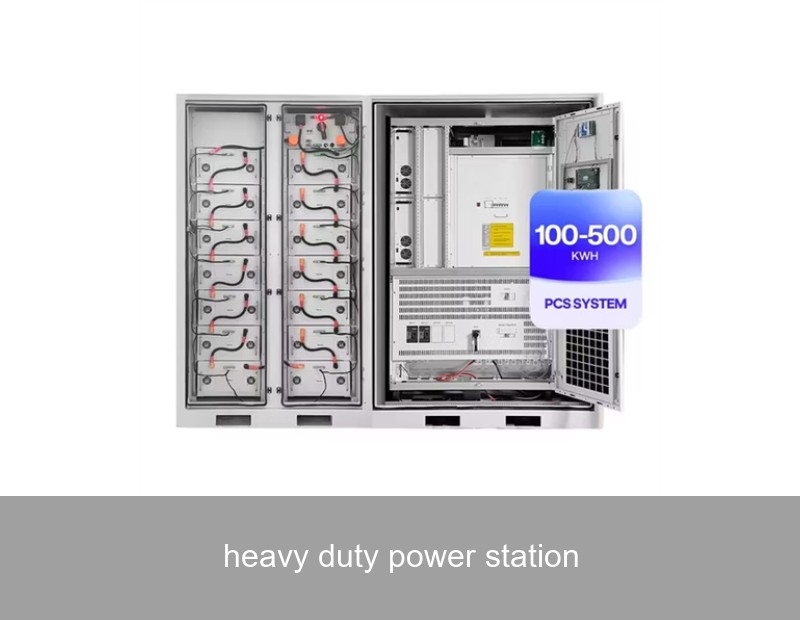
Modern containerized BESS units, like those deployed by Highjoule, provide scalable, plug-and-play power stations for industrial sites.
The Core Components of a Modern Heavy Duty Power Station
So, what's inside these systems? It's a sophisticated ensemble:
- Battery Racks (The Muscle): High-density, cycle-life-optimized lithium-ion phosphate (LFP) cells are now the standard for safety and longevity. Unlike older generators, they have no moving parts, require minimal maintenance, and operate silently.
- Power Conversion System (PCS - The Heart): This bidirectional inverter is the brain's executor. It converts DC battery power to AC for the facility and can also rectify AC to DC for charging. Its speed and precision are what enable sub-cycle response to grid disturbances.
- Energy Management System (EMS - The Brain): This is the intelligence core. Using AI and forecasting algorithms, the EMS decides when to charge, discharge, or hold based on electricity prices, grid signals, and load patterns. It turns raw storage into a strategic asset.
- Thermal Management & Safety Systems (The Protector): A robust, redundant cooling system is non-negotiable for performance and safety. Coupled with multi-layer fire suppression and gas detection, it ensures the system's integrity in all conditions.
Comparison: Traditional Generator vs. Modern BESS Power Station
| Feature | Diesel Generator | Modern BESS Heavy Duty Power Station |
|---|---|---|
| Response Time | Seconds to minutes | Milliseconds |
| Operational Noise & Emissions | High (noise, NOx, CO2) | Virtually silent, zero onsite emissions |
| Primary Fuel Source | Diesel (volatile price) | Grid/ Renewable Energy (stable cost) |
| Maintenance Needs | High (fluid changes, part wear) | Low (remote monitoring, periodic checks) |
| Revenue Generation | None (pure cost center) | Yes (demand response, frequency regulation) |
The Case Study: Port of Antwerp-Bruges, Belgium - A European Lighthouse
Ports are energy-intensive microgrids, making them ideal candidates for heavy duty power stations. At the Port of Antwerp-Bruges, a large-scale BESS was deployed to provide grid stability and backup for critical port infrastructure. The system, integrated with local renewable sources, has a capacity of over 4 MWh and a power output of 2.5 MW.
The Results? The port's BESS provides instantaneous frequency regulation services to the Belgian national grid, creating a new revenue stream. It also shaves peak loads, reducing the port's grid dependency and energy costs. During grid fluctuations, it maintains power quality for sensitive crane and logistics operations, preventing costly operational hiccups. This project exemplifies the triple win: enhanced resilience, new income, and a lower carbon footprint. It's a blueprint for industrial energy users across Europe and North America.

Major industrial hubs like ports require resilient, high-power solutions to avoid massive economic disruption.
The Highjoule Advantage: Engineered for the Most Demanding Applications
At Highjoule, our expertise since 2005 has been focused on translating this technology into reliable, turnkey solutions. Our H-Series Industrial BESS is the embodiment of a modern heavy duty power station. Designed for commercial, industrial, and microgrid applications, it features:
- Modular & Scalable Architecture: Start from 500 kWh and scale to multi-megawatt-hour installations seamlessly. This future-proofs your investment.
- Highjoule Sentinel™ EMS: Our proprietary brain uses predictive analytics to maximize your financial return, whether through energy arbitrage, demand charge management, or participation in grid service markets like FFR (Fast Frequency Response).
- All-Climate Resilience: Engineered with an IP55 rating and advanced liquid cooling, our systems perform reliably from -30°C to 50°C, crucial for diverse geographies from Scandinavia to the Southern US.
- Comprehensive Service Lifeline: We provide more than hardware. Our offering includes remote monitoring, performance guarantees, and lifecycle support, ensuring your power station delivers value for its entire 15+ year lifespan.
For a large hospital in Bavaria, we deployed an H-Series system paired with their existing solar array. It now manages their peak loads, provides UPS-grade backup for surgical wings, and has reduced their annual energy costs by over 18%, paying for itself in under 6 years.
The Future: Your Power Station as a Grid Citizen and Revenue Generator
The evolution continues. The next frontier for heavy duty power stations is their role as active "grid citizens." Through Virtual Power Plant (VPP) software aggregators, thousands of distributed systems can be pooled to act as a single, large power plant, providing capacity to grid operators during times of peak demand or emergency. This isn't science fiction; it's happening now in California, Texas, and across the EU.
This means your on-site energy asset could generate significant annual revenue by simply being available to support the wider community grid when called upon. The line between energy consumer and producer is blurring.
Is your organization still viewing backup power as a cost center, rather than a strategic, revenue-capable asset?
What would the impact be on your operational budget and sustainability goals if your next power outage was not a cost, but an event your energy system was seamlessly designed to manage—and even profit from during normal operations? The conversation around energy resilience has fundamentally changed. The question is no longer "if" but "how" and "when" to integrate a modern heavy duty power station into your energy strategy.
 Inquiry
 Online Chat