


How to Calculate Solar Panels and Batteries for Your Energy Independence
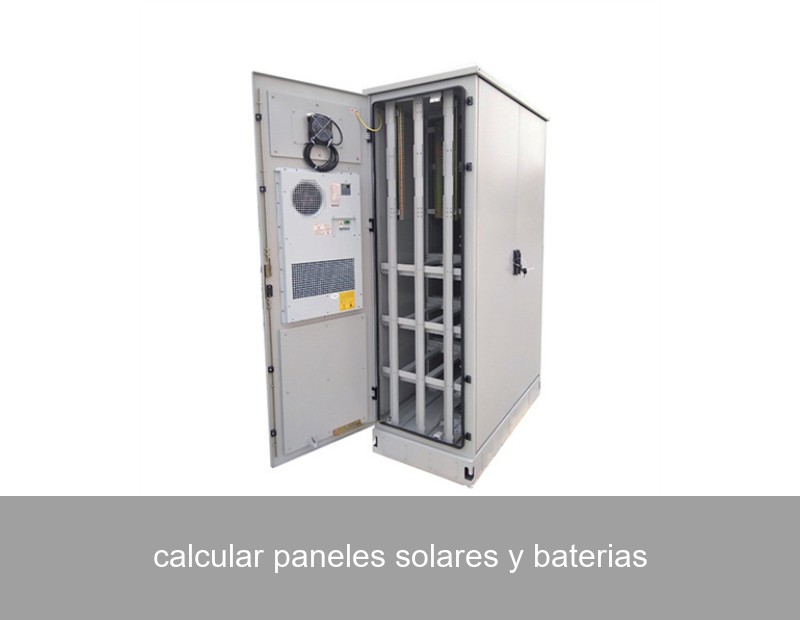
So, you've decided to take control of your energy bill and embrace clean power. "Calcular paneles solares y baterias" – or calculating the right number of solar panels and batteries – is the critical first step. Get it right, and you enjoy decades of low-cost, reliable energy. Get it wrong, and you might face unexpected costs or insufficient power. This guide will walk you through the process, transforming a complex calculation into a clear path toward energy independence.
Why Accurate Calculation is Your First Step to Savings
Imagine buying shoes without knowing your size. That's what investing in a solar-plus-storage system without proper calculations can feel like. An undersized system leaves you reliant on the grid, while an oversized one strains your budget with unnecessary upfront costs. The goal is a "Goldilocks" system: perfectly sized for your unique energy consumption, location, and goals. For a family in sunny California or a small business in Germany, the variables differ, but the principle remains: knowledge is power, literally and financially.
A Step-by-Step Guide to Calculate Your Solar and Battery Needs
Let's break down the calculation into two main parts: solar panels for generation, and batteries for storage and backup.
Part 1: Calculating Your Solar Panel Array
Solar panel calculation hinges on your energy consumption and available sunlight.
- Step 1: Analyze Your Annual Energy Usage. Find your total kilowatt-hour (kWh) consumption from utility bills. A typical U.S. home uses about 10,400 kWh annually (U.S. EIA). For a more precise picture, look at monthly variations.
- Step 2: Determine Your Peak Sun Hours. This is location-specific. While Southern Spain might average 5.5 peak sun hours daily, Northern Germany might see 2.8. Resources like the Global Solar Atlas provide precise data.
- Step 3: Do the Math. Use this formula:
System Size (kW) = Annual kWh Usage / (365 days * Peak Sun Hours)
Example for a 10,400 kWh home in a 4.5 sun-hour region: 10,400 / (365*4.5) ≈ 6.3 kW system. - Step 4: Calculate Number of Panels. Divide system size by panel wattage. A 6.3 kW system using 400W panels needs about 16 panels (6,300W / 400W).
Part 2: Sizing Your Battery Storage
Battery sizing depends on your backup goals: running essentials during an outage or maximizing self-consumption.
- Step 1: Identify Critical Loads. List appliances you must power during an outage (e.g., fridge, lights, modem, medical equipment) and note their wattage and estimated daily run time.
- Step 2: Calculate Daily Backup Energy Need. Sum the watt-hours of your critical loads. For example: Refrigerator (150W x 8h) + Lights (100W x 5h) = 1,700 Wh or 1.7 kWh.
- Step 3: Account for Depth of Discharge and Efficiency. To prolong battery life, don't drain it completely. If you choose a battery with a 90% Depth of Discharge (DoD) and 95% efficiency, the formula is:
Battery Usable Capacity (kWh) = Daily Need / (DoD * Efficiency)
For our 1.7 kWh need: 1.7 / (0.90 * 0.95) ≈ 2.0 kWh of usable capacity required.

Image: Precise calculation and design are key to optimal system performance. Source: Unsplash
From Spreadsheet to Reality: A Real-World Case Study
Let's look at a concrete example. A medium-sized dairy farm in Bavaria, Germany, wanted to reduce its grid dependence and secure power for its cooling systems.
- Phenomenon: High afternoon energy demand for milking and cooling, misaligned with solar peak generation. Nighttime refrigeration was entirely grid-powered.
- Data & Calculation: Annual usage: 48,000 kWh. Peak sun hours: 2.8. Solar system needed: ~48 kW. Critical load for 12-hour backup (cooling, ventilation): 25 kWh daily.
- Solution & Outcome: The farm installed a 50 kW solar array paired with a modular battery system offering 30 kWh of usable storage. The system was designed not just for peak shaving but for intelligent energy shifting. The result? Grid energy consumption was reduced by 78%, and the farm now operates its critical cooling completely autonomously overnight. The battery provides seamless backup during grid fluctuations, protecting thousands of liters of milk.
Beyond the Basics: Key Factors That Impact Your Calculation
The core math is a foundation, but real-world performance depends on more.
| Factor | Impact on Calculation | Consideration |
|---|---|---|
| Roof Angle & Shading | Can reduce panel efficiency by 10-25% | Requires a professional site assessment. |
| Future Energy Needs | Adding an EV or heat pump increases demand. | Oversize your system by 15-20% for future-proofing. |
| Climate & Seasons | Winter production can be half of summer's. | Size batteries for winter self-sufficiency if that's a goal. |
| Inverter Efficiency | Typically 95-98%; losses affect total yield. | Choose high-quality, matched components. |
The Highjoule Solution: Precision Engineering for Your Energy Plan
This is where the journey moves from manual calculation to optimized reality. At Highjoule, we've spent nearly two decades refining this process. Our approach goes beyond simple formulas.
For our residential and commercial clients across Europe and the U.S., we start with our proprietary energy assessment platform. It analyzes not just your bills, but granular load profiles, local weather patterns decades into the future, and even electricity rate structures. This data feeds into the design of our integrated systems, like the Highjoule H-Series Home Ecosystem or the Vertex Commercial Energy Platform.
The key differentiator is intelligence. Our battery systems, such as the Highjoule Ionic Hub, aren't just storage tanks. Their integrated energy management system (EMS) constantly learns and adapts, deciding when to store solar energy, when to power your home, and when to sell back to the grid for maximum profit. This dynamic optimization can squeeze 15-20% more value from the same hardware compared to a statically calculated system. We handle the complex calculus of degradation rates, tariff changes, and usage patterns, so you don't have to.

Image: A fully integrated solar and storage system enables true energy independence. Source: Unsplash
You've now seen the roadmap to "calcular paneles solares y baterias." The numbers give you power and clarity. But the final question remains: Are you ready to translate your calculations into a tailored, intelligent system that not only meets your numbers but exceeds your expectations for reliability and savings?
 Inquiry
 Online Chat