


Unlocking the Potential of High Power Lithium Battery Systems for Modern Energy Needs
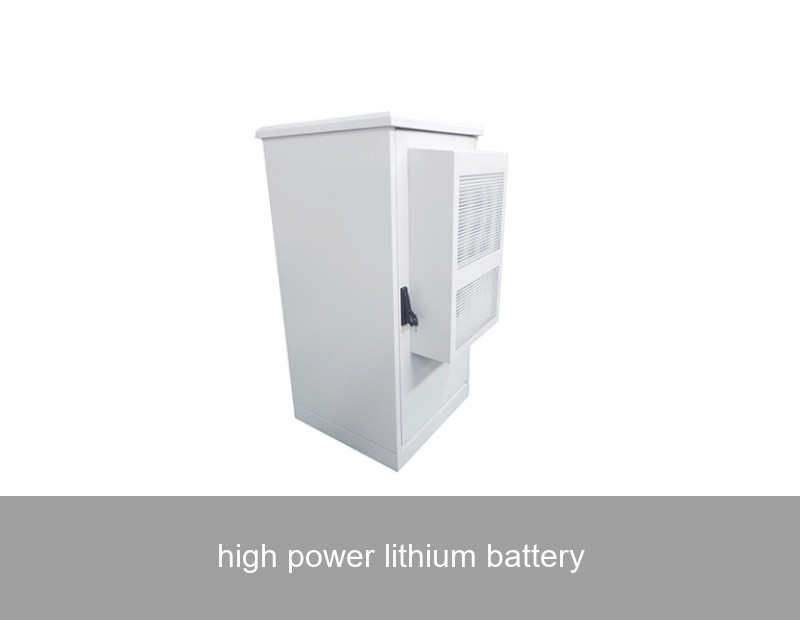
Have you ever wondered what powers the rapid acceleration of an electric bus, stabilizes a grid during a sudden demand spike, or keeps a hospital running seamlessly during a power outage? The answer increasingly lies in a remarkable technology: the high power lithium battery. These aren't your everyday energy storage units; they are the high-performance athletes of the battery world, engineered to deliver massive bursts of energy quickly and reliably. As industries and grids worldwide push for decarbonization and resilience, understanding the role of high-power lithium solutions becomes crucial. This article delves into how this technology is reshaping energy management and why it's a cornerstone of a sustainable, electrified future.
Table of Contents
- What Exactly is a High Power Lithium Battery?
- The Driving Forces Behind the High-Power Surge
- Key Applications: Where High Power Makes the Difference
- A Real-World Case Study: Grid Stability in Germany
- Choosing the Right System: Beyond Just Power
- Highjoule's Approach to Advanced High-Power Storage
- The Future Landscape of High-Power Energy Storage

Image Source: Unsplash - Representative image of a contemporary battery energy storage system.
What Exactly is a High Power Lithium Battery?
Let's break it down. In battery terminology, "power" and "energy" are distinct. Energy density (measured in kWh) is about capacity—how long a battery can supply power. Power density (measured in kW or MW), on the other hand, is about the rate—how *fast* a battery can deliver or absorb energy. A high power lithium battery is specifically designed to excel at the latter. It prioritizes rapid charge and discharge capabilities, often delivering 3C to 5C or higher discharge rates. This means a 100 kWh high-power battery could theoretically deliver 300-500 kW of power in short, intense bursts. This is achieved through advanced cell chemistry (like LFP - Lithium Iron Phosphate, known for its safety and power), innovative electrode design, and sophisticated thermal management systems to handle the heat generated during such intense operation.
The Driving Forces Behind the High-Power Surge
The shift towards high-power solutions isn't accidental. It's a direct response to several global phenomena:
- Renewable Integration: Solar and wind are intermittent. When a cloud bank covers a solar farm, output can plummet in seconds. High-power batteries can inject electricity into the grid almost instantaneously, filling these "ramp" gaps and maintaining grid frequency.
- Electrification of Transport: Commercial electric vehicles (EVs), like buses and trucks, require immense power for acceleration and regenerative braking. Fast-charging stations also rely on high-power battery buffers to avoid overloading the local grid.
- Grid Ancillary Services: Modern grids pay for services that keep them stable, such as frequency regulation and voltage support. High-power batteries are ideal assets for this, responding to signals in milliseconds.
- Industrial Resilience: For a data center or manufacturing plant, even a brief voltage dip can cause millions in losses. High-power systems provide near-instantaneous backup to bridge the gap until generators start.
Key Applications: Where High Power Makes the Difference
| Application | Power Need | Benefit of High-Power Lithium |
|---|---|---|
| Frequency Regulation | Extremely fast charge/discharge cycles (sub-second response). | Stabilizes grid frequency, replaces fossil-fuel "spinning reserve." |
| Industrial UPS & Power Quality | Instantaneous discharge to prevent micro-outages. | Protects sensitive equipment, prevents costly downtime. |
| EV Fast Charging Hubs | High discharge to supplement grid supply during peak charging. | Enables ultra-fast charging without costly grid upgrades. |
| Peak Shaving for C&I | Short, high-power discharges to cap demand charges. | Significantly reduces commercial electricity bills. |
A Real-World Case Study: Grid Stability in Germany
Let's look at a concrete example from Europe. Germany's "Energiewende" (energy transition) has led to a high penetration of renewables, sometimes causing grid frequency volatility. To combat this, transmission system operators like TenneT have increasingly turned to battery storage for primary frequency control.
The Data: A 2023 report by the Fraunhofer ISE highlighted that battery storage systems in Germany provided over 700 MW of power for primary control reserve. One specific project, a 15 MW / 7.5 MWh battery storage system in Bavaria, is designed explicitly for high-power, short-duration service. Its sole purpose is to absorb or release power within seconds to correct frequency deviations, performing hundreds of partial cycles daily. This system, based on high power lithium battery technology, demonstrates an impressive round-trip efficiency of over 95% in this application, making it far more efficient and responsive than conventional alternatives.
The Insight: This case shows that the economic and operational value of a high-power battery isn't solely tied to its energy capacity (MWh). Its true worth lies in its power rating (MW) and its ability to perform rapid, reliable cycles. This creates a compelling revenue stream from grid services while directly enabling higher renewable integration.

Image Source: Unsplash - Visualizing the grid integration challenge for renewables.
Choosing the Right System: Beyond Just Power
Selecting a high power lithium battery system requires a holistic view. Power rating is critical, but it's only one factor. You must also consider:
- Cycle Life & Degradation: High-power cycling is stressful. What is the expected cycle life at the desired power profile, and how does the warranty reflect this?
- Thermal Management: Robust liquid cooling is often essential for high-power systems to maintain performance, safety, and longevity.
- Safety & Chemistry: LFP chemistry has become the dominant choice for stationary high-power applications due to its superior thermal and chemical stability.
- System Intelligence: The battery management system (BMS) and energy management system (EMS) must be capable of executing complex, high-speed control algorithms.
Highjoule's Approach to Advanced High-Power Storage
At Highjoule, with nearly two decades of experience since 2005, we've engineered our HPS Series (High-Power Stack) to meet these exacting demands. Designed for commercial, industrial, and grid-support applications, the HPS Series isn't just a battery; it's an integrated power solution.
Our systems are built around LFP chemistry for inherent safety and long life. What sets them apart is the Dynamic Power Core™ technology, which optimizes cell grouping and management to sustain exceptionally high discharge rates without excessive degradation. Coupled with our patented liquid cooling loop, the system maintains optimal temperature even during the most demanding frequency regulation or peak shaving duties.
Furthermore, Highjoule's GridSync™ EMS platform allows these high-power assets to seamlessly participate in multiple value streams simultaneously—like combining peak shaving for on-site bill savings with frequency response for grid revenue—all managed through an intuitive interface. For a manufacturing plant facing high demand charges or a renewable developer needing grid compliance, our solutions provide the precise power performance and intelligence required.
The Future Landscape of High-Power Energy Storage
The trajectory is clear. As grids get greener and electricity demand grows, the need for instantaneous power balancing will only intensify. We are moving towards hybrid systems that combine high-power and high-energy storage in one footprint, and towards even faster-responding technologies. The continued innovation in solid-state batteries and advanced lithium chemistries promises even greater power densities and safety profiles in the coming decade. The question is no longer *if* high-power storage will be a grid staple, but how quickly its deployment will scale.
Is your business or project facing challenges that require not just energy, but instant, reliable *power*? How might integrating a high-power lithium battery system transform your operational resilience and economic model today?
 Inquiry
 Online Chat