


Heavy Duty Lithium Battery: The Engine of Modern Energy Resilience
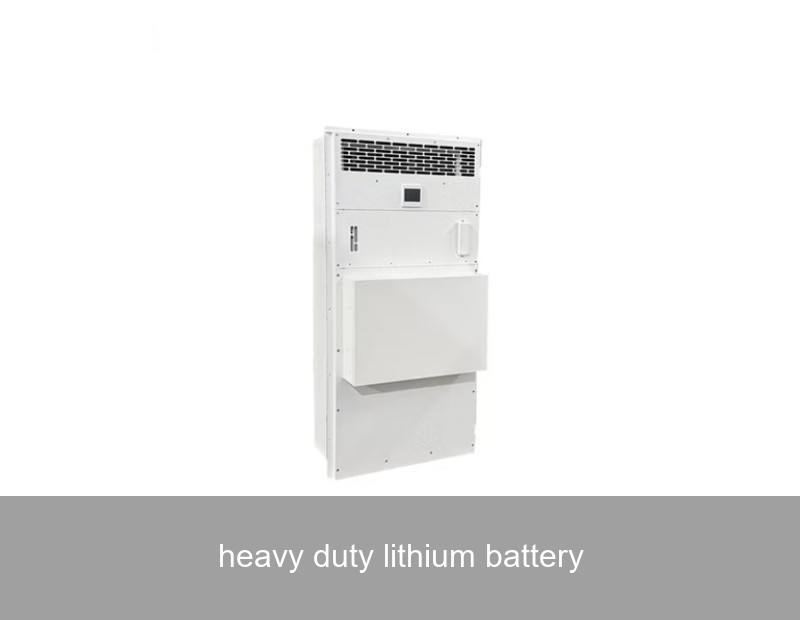
In today's demanding world, power is everything. From keeping a hospital's critical systems online during a storm to ensuring a factory line runs 24/7, the need for reliable, robust, and long-lasting energy storage has never been greater. This is where the heavy duty lithium battery steps in—not as a mere backup, but as the intelligent, high-capacity engine for true energy resilience. For businesses and communities, understanding this technology is key to unlocking operational continuity, cost savings, and a sustainable future. Companies like Highjoule, a global leader in advanced energy storage since 2005, are at the forefront, engineering these powerful systems to meet the toughest challenges.
Table of Contents
- What Makes a Battery "Heavy Duty"?
- The Data: Why Lithium Dominates Heavy-Duty Applications
- Real-World Power: A Case Study from California
- Beyond Backup: The Intelligent Ecosystem
- Choosing the Right Heavy-Duty Partner
What Makes a Battery "Heavy Duty"?
Think of a standard lithium-ion battery in your phone or even an electric car. Now, imagine a battery system designed for a different league entirely: one that powers entire buildings, supports massive industrial equipment, or stabilizes a community microgrid. That's the realm of the heavy duty lithium battery. But what exactly sets it apart?
- Extended Cycle Life: These batteries are built for thousands of deep charge and discharge cycles—often 6,000+ to 80% depth of discharge (DoD)—whereas consumer batteries degrade significantly faster under similar strain.
- Enhanced Thermal Stability & Safety: They incorporate advanced Battery Management Systems (BMS) and thermal controls to operate safely in a wide range of environments, from freezing winters to scorching summers, a non-negotiable for outdoor or industrial settings.
- High Power & Energy Density: They deliver both high instantaneous power (for starting large motors) and high energy capacity (for long-duration backup), often in modular, scalable formats.
- Robust Construction: Designed for 15-20 year lifespans, they feature industrial-grade components and enclosures rated for harsh conditions, be it dust, humidity, or vibration.
At Highjoule, our H-Series Industrial Battery Systems embody this definition. Engineered for commercial, industrial, and microgrid applications, they utilize lithium iron phosphate (LFP) chemistry, renowned for its safety and longevity. We don't just sell batteries; we provide integrated, smart power solutions that include advanced monitoring and grid-service capabilities.
The Data: Why Lithium Dominates Heavy-Duty Applications
The shift from traditional lead-acid to lithium-ion in demanding roles isn't just a trend—it's a data-driven evolution. Let's look at the compelling numbers.
| Metric | Traditional Lead-Acid (Industrial) | Heavy-Duty Lithium (LFP) |
|---|---|---|
| Cycle Life (to 80% DoD) | ~1,500 cycles | ~6,000+ cycles |
| Round-Trip Efficiency | ~80% | ~96% |
| Lifespan | 5-8 years | 15-20 years |
| Maintenance Needs | Regular watering, equalization | Virtually maintenance-free |
This table tells a clear story. The higher efficiency means less energy is wasted as heat, directly lowering electricity costs. The dramatic increase in cycle life and lifespan translates to a lower total cost of ownership (TCO), despite a higher initial investment. Furthermore, lithium batteries offer greater flexibility, capable of partial state-of-charge operation without damage, a critical feature for applications like solar microgrids where the battery is constantly cycling.

Credit: A modern industrial battery installation, similar to Highjoule's modular systems, designed for scalability and clean integration. (Image from Unsplash)
Real-World Power: A Case Study from California
Data is convincing, but real-world application is king. Consider the challenge faced by a mid-sized fruit packing and cold storage facility in California's Central Valley.
Phenomenon: The facility faced two major issues: crippling utility demand charges (peaking during intense cooling cycles) and the constant threat of grid outages during wildfire season, which could spoil millions of dollars worth of perishable goods.
Action: In 2022, the facility partnered with Highjoule to deploy a 1.2 MWh heavy duty lithium battery system integrated with their existing rooftop solar. The system was designed for dual purposes: daily "peak shaving" to cut demand charges and providing seamless backup power for critical refrigeration.
Solution & Data: The Highjoule H-Series system, managed by our intelligent energy platform, was configured to automatically discharge during the facility's short periods of highest grid consumption. The results after one year were substantial:
- 32% Reduction in Monthly Demand Charges: This translated to annual savings of over $45,000.
- 100% Backup for Critical Loads: The system successfully bridged four grid outages, the longest being 5 hours, with zero interruption to cold storage operations.
- Increased Solar Self-Consumption: By storing excess midday solar energy, the facility increased its on-site renewable usage by an estimated 22%.
This case exemplifies the multi-functional value of a modern heavy duty lithium battery system. It's not sitting idle; it's working daily to improve the bottom line while standing guard as an energy insurance policy. You can explore more about how microgrids enhance resilience from sources like the National Renewable Energy Laboratory (NREL).
Beyond Backup: The Intelligent Ecosystem
The true power of a contemporary heavy duty lithium battery lies in its intelligence. It's the core component of a smart energy ecosystem. At Highjoule, we view our systems as dynamic assets that can participate in a variety of value streams.
- Grid Services: In many markets, aggregated batteries can provide frequency regulation or voltage support to the utility grid, creating a new revenue stream for the owner.
- Energy Arbitrage: Intelligently buying (storing) electricity when rates are low and using (or selling) it when rates are high.
- Renewable Integration: As seen in our case study, they are the essential buffer that makes solar and wind power dispatchable and reliable, smoothing out intermittency.
Our Highjoule Energy Operating System (EOS) is the brain that makes this possible. It doesn't just monitor voltage and temperature; it analyzes weather forecasts, utility rate schedules, and facility load patterns to make autonomous, cost-optimizing decisions every minute of the day. This transforms a static storage unit into a proactive financial and operational asset.

Credit: Advanced energy management software, similar to Highjoule's EOS, visualizing and optimizing power flows. (Image from Unsplash)
Choosing the Right Heavy-Duty Partner
Selecting a heavy duty lithium battery system is a significant capital decision. The technology itself is vital, but the partner you choose is equally important. Here are key considerations:
- Proven Track Record & Safety: Look for a provider with a long history and certified safety standards (like UL 9540 in the US). Highjoule's 18+ years of experience across thousands of global installations is a testament to this.
- System Intelligence: Ensure the software platform is robust, user-friendly, and capable of adapting to future utility programs and your evolving needs.
- Full-Service Support: Does the provider offer comprehensive services from design and financing to installation, maintenance, and performance monitoring? A true partner is with you for the long haul.
- Technology Agnosticism: A good partner designs the system around your needs, seamlessly integrating with your existing solar, generators, or other infrastructure.
We believe in building solutions, not just selling products. Our team works closely with clients to conduct detailed energy audits, model financial returns, and design a system that meets both today's needs and tomorrow's ambitions. For deeper insights into battery safety and standards, organizations like the Energy Storage News provide ongoing industry analysis.
Ready to Power Your Future?
The question for any business or community leader is no longer "Do we need energy storage?" but rather "How can we leverage a heavy duty lithium battery system to build resilience, control costs, and support our sustainability goals?" What is the single biggest energy challenge your operation faces that a smart, always-on power asset could solve?
 Inquiry
 Online Chat