


Perovskite Solar Cell Suppliers: Powering the Next Generation of Solar Energy
Have you noticed how solar panels are becoming more efficient, more versatile, and frankly, more exciting? For years, the solar industry was dominated by a single technology. But now, a new contender is capturing the imagination of researchers, investors, and energy experts alike: perovskite solar cells. These aren't just incremental improvements; they represent a potential leap forward. But what does this mean for you, whether you're a homeowner, a business leader, or an energy project developer? The answer lies in understanding the innovators behind the tech—the perovskite solar cell suppliers who are turning lab breakthroughs into real-world power. This evolution towards higher efficiency and new applications perfectly aligns with the mission of companies like Highjoule, a global leader in advanced energy storage systems since 2005, to integrate the most promising generation technologies with intelligent storage for a truly sustainable energy future.
Table of Contents
- The Perovskite Promise: Beyond Silicon's Limits
- Key Criteria for Evaluating Perovskite Solar Cell Suppliers
- Market Leaders and Innovators
- Real-World Case Study: A European Pilot Project
- The Critical Link: Integration with Energy Storage
- The Road Ahead: Challenges and Opportunities
The Perovskite Promise: Beyond Silicon's Limits
Let's start with the "why." Why is there so much buzz around perovskite? Traditional silicon solar panels, while reliable, are approaching their theoretical efficiency limit. They're also rigid, heavy, and require high-purity silicon, which is energy-intensive to produce. Perovskite solar cells, named for their unique crystal structure, offer a compelling alternative.
Think of it this way: if silicon is the sturdy pickup truck of solar, perovskite is the agile, customizable sports car. Their advantages are multi-fold:
- Rapidly Soaring Efficiency: In just over a decade, perovskite cell efficiency has skyrocketed from around 3% to over 25% in lab settings, rivaling silicon's decades of development. Tandem cells, which layer perovskite on top of silicon, have even surpassed 33% efficiency (NREL, 2023).
- Flexibility and Lightweight: They can be made using liquid inks and printed onto flexible surfaces like plastic or metal foil. This opens doors for applications on curved roofs, vehicle-integrated PV, or even portable chargers.
- Better Low-Light Performance: They often perform better than silicon in cloudy or indirect light conditions, generating more energy throughout the day in variable climates like those in Northern Europe.
- Potential for Lower Cost: The manufacturing process is potentially simpler and less energy-intensive, promising a lower cost trajectory once scaled.

Image: Research into flexible perovskite solar films holds promise for novel applications. (Source: Unsplash, representative image)
Key Criteria for Evaluating Perovskite Solar Cell Suppliers
With such potential, it's no wonder new players are emerging. But not all perovskite solar cell suppliers are at the same stage. When evaluating them, especially for commercial or industrial projects, consider these key pillars:
| Criteria | What to Look For | Why It Matters |
|---|---|---|
| Technology Stage | Lab-scale, pilot production, or commercial volume. | Determines availability, cost, and proven reliability for your project timeline. |
| Stability & Lifetime Data | Published results from independent tests (e.g., IEC 61215 standards). | Early perovskite cells faced durability issues. Suppliers must demonstrate long-term performance under real-world conditions. |
| Module Efficiency & Form Factor | Certified power conversion efficiency for saleable modules, not just small cells. | Translates directly to the energy yield and physical space required for your installation. |
| Manufacturing Scalability | A clear roadmap to gigawatt-scale production. | Ensures the supplier can meet future demand and drive down costs through economies of scale. |
| Application Focus | BIPV (Building-Integrated PV), utility-scale, consumer electronics, etc. | Aligns the supplier's expertise with your specific project needs and integration challenges. |
Market Leaders and Innovators
The landscape is a dynamic mix of pure-play startups and established solar giants hedging their bets. In the US and Europe, several names are frequently at the forefront. Companies like Oxford PV (UK) are pioneering perovskite-on-silicon tandem cells and have secured significant partnerships with manufacturing lines. In the US, startups are pushing the boundaries on flexible, lightweight perovskite films. Meanwhile, major Asian solar manufacturers are investing heavily in perovskite R&D to maintain their market dominance.
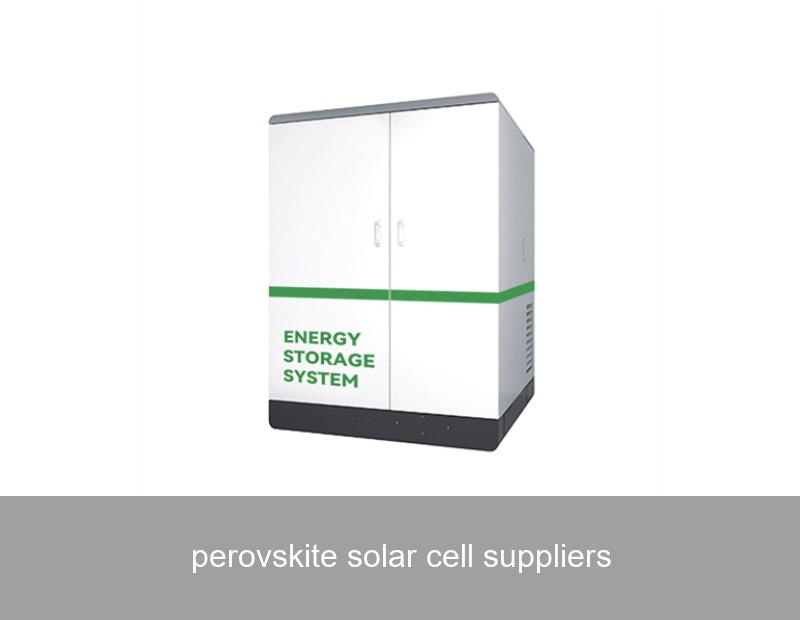
This innovation race is crucial for the entire energy ecosystem. As these suppliers progress, the role of system integrators and storage experts becomes even more vital. At Highjoule, we monitor these advancements closely because the inverter and storage system must be optimized for the unique electrical characteristics of emerging solar technologies. Our H-Joule Cube commercial battery storage system, for instance, is designed with advanced grid-forming capabilities and software that can adapt to variable input from high-efficiency, next-generation solar arrays, ensuring every kilowatt-hour generated is effectively stored and managed.
Real-World Case Study: A European Pilot Project
Let's move from theory to practice. A compelling example comes from a 2023 pilot project in southern Germany. A medium-sized agricultural cooperative wanted to test next-gen solar on their limited roof space without compromising their operations.
- Project Goal: Maximize energy yield per square meter on a historic barn roof with weight restrictions.
- Solution: Installation of lightweight, semi-transparent perovskite solar modules from a leading European supplier. These modules were integrated with a Highjoule H-Joule Home+ residential storage system, scaled for the cooperative's office and cold storage facilities.
- The Data: Over a six-month monitoring period, the perovskite arrays demonstrated a 15% higher specific yield (kWh/kWp) compared to standard silicon panels of equivalent rating would have in the same location, particularly on overcast days. The Highjoule system's high round-trip efficiency (over 96%) ensured minimal energy was lost in storage, allowing the cooperative to cover over 70% of the facility's daytime load with solar+storage.
- The Insight: This case shows that for space-constrained or aesthetically sensitive applications, the premium for early-adopter perovskite technology can be offset by higher performance and integration benefits. The key was pairing an innovative generation source with an intelligent, highly efficient storage system from the outset.

Image: Agricultural buildings are ideal candidates for high-efficiency, lightweight solar solutions. (Source: Unsplash, representative image)
The Critical Link: Integration with Energy Storage
Here's a crucial point often overlooked: the value of advanced solar technology is fully unlocked only when paired with smart storage. Perovskite cells, with their potentially higher and more diffuse generation profile, require storage systems that can handle rapid charging, deep cycling, and precise energy management. This is where choosing the right storage partner is as important as choosing your solar supplier.
Highjoule's expertise lies in creating this seamless synergy. Our Energy Management System (EMS) doesn't just react; it predicts. Using weather data and load forecasting, it optimizes when to store perovskite-generated energy, when to use it directly, and when to dispatch it back to the grid. For microgrid applications—increasingly popular in both remote US communities and European industrial parks—this intelligence is paramount. A microgrid powered by cutting-edge solar needs a storage backbone that guarantees reliability and stability. Highjoule's containerized Megawatt-scale BESS provides exactly that, with built-in black start capability and seamless integration with multiple generation sources.
The Road Ahead: Challenges and Opportunities
So, is it all smooth sailing for perovskite solar cell suppliers? Not quite. The community is actively working on challenges like long-term operational stability (ensuring panels last 25+ years), scaling up production with consistent quality, and navigating the complex supply chain for raw materials. Regulatory standards and certification pathways are also still evolving.
However, the pace of progress is staggering. With billions in investment flowing in, these hurdles are being addressed head-on. The opportunity is to build more powerful, ubiquitous, and beautiful solar energy harvesting into our environment. Imagine solar windows on skyscrapers, lightweight panels on electric vehicle roofs, or roll-out solar kits for emergency power—all becoming cost-effective realities.
Your Role in the Energy Transition
The evolution of solar technology reminds us that the clean energy transition is not static. It's a journey of continuous improvement and integration. As you consider your next energy project—whether it's making your home more resilient, cutting your business's energy costs, or developing a community microgrid—what questions will you ask your technology providers about how they plan for the future? Are you building a system that can adapt to and benefit from the breakthroughs that perovskite and other innovations will bring in the coming years?
 Inquiry
 Online Chat