


Understanding Energy Storage Cabinet Panel Price: A Smart Buyer's Guide
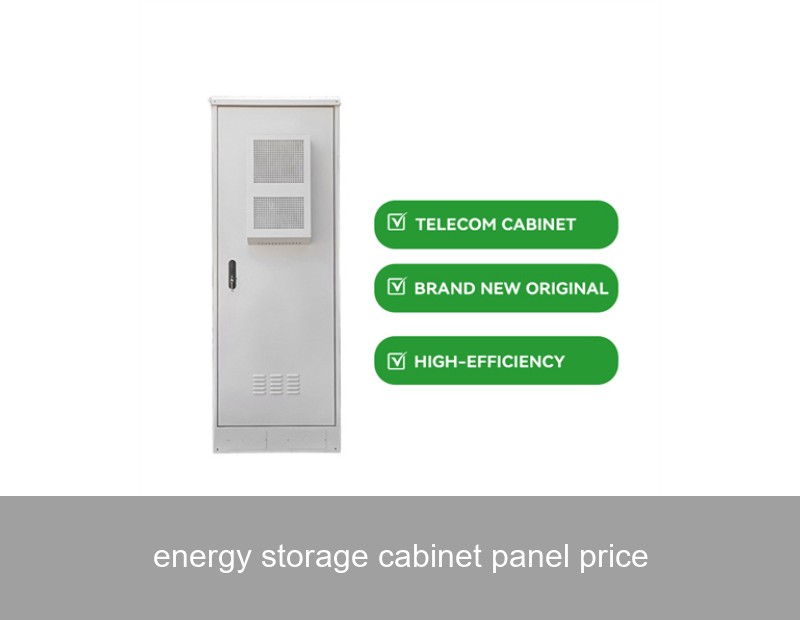
If you're researching energy storage for your business, factory, or community project, you've likely encountered a wide range for energy storage cabinet panel price. One quote might seem surprisingly low, while another is significantly higher. What drives this cost, and more importantly, what should you *really* be evaluating beyond the initial sticker price? As a leader in advanced energy storage since 2005, Highjoule is here to demystify the factors behind cabinet pricing and help you make an investment that delivers true long-term value.
Table of Contents
The Real Breakdown: What's Inside the Energy Storage Cabinet Panel Price?
Think of an energy storage cabinet not as a simple box, but as a sophisticated, integrated power plant. The panel price you see typically bundles several critical components:
- Battery Cells & Modules: The core energy storage medium. Chemistry (like Lithium Iron Phosphate - LFP), brand, cycle life, and energy density are major cost drivers.
- Battery Management System (BMS): The "brain" that ensures safety, balances cells, and prolongs lifespan. A superior BMS is a non-negotiable for reliability.
- Power Conversion System (PCS): This includes the inverter/charger that manages AC/DC conversion. Its efficiency rating directly impacts your energy savings.
- Thermal Management System: Cooling (liquid or air) is crucial for safety and performance, especially in demanding climates.
- Safety & Grid Integration Hardware: This encompasses switchgear, fire suppression, and protective relays compliant with local grid codes.
- Software & Intelligence: The energy management system (EMS) software that optimizes charging/discharging based on tariffs, weather, and usage patterns.
A lower initial energy storage cabinet panel price might compromise on any of these, particularly the BMS, cooling, or software, leading to higher costs down the line.
Key Factors Influencing Your System's Cost and Performance
Let's move beyond the component list. The true cost of ownership is shaped by how these parts are engineered together and what they deliver over 10-15 years.
1. Total Cost of Ownership (TCO) vs. Initial Purchase Price
The most critical concept is TCO. A cheaper cabinet might have a lower round-trip efficiency (e.g., 88% vs. 95%), meaning more energy is lost as heat each cycle. Over thousands of cycles, this wasted energy adds up. Similarly, a system rated for 6,000 cycles will outlast one rated for 4,000, delaying the costly battery replacement.

Image: Modern energy storage cabinets, like those from Highjoule, integrate advanced thermal management and safety systems that impact long-term value.
2. Scalability and Flexibility
Can you easily add more cabinets as your needs grow? Modular designs, like Highjoule's IntelliCube Commercial Series, allow you to start with what you need and scale seamlessly. This protects your initial investment and can offer a better long-term value than a cheaper, monolithic system that's difficult to expand.
3. Certifications and Grid Compliance
In markets like the EU and US, grid interconnection standards (like UL 9540 in the US, IEC 62619 in the EU) are stringent. Non-compliant systems face costly delays or rejection. Highjoule's cabinets are pre-certified for key global markets, ensuring a smoother, faster installation process—a hidden cost saver.
From Quote to Kilowatt: A Real-World European Case Study
Let's ground this in reality. A medium-sized dairy processing plant in Northern Germany faced volatile energy prices and sought to maximize its rooftop solar investment. They received three quotes for a 500 kWh / 250 kW storage system.
| Vendor | Quoted Cabinet Panel Price (EUR) | Key Specifications | Projected 10-Year ROI |
|---|---|---|---|
| Vendor A | ~95,000 | LFP cells, 88% efficiency, 4,500 cycle warranty, basic EMS | 18% |
| Vendor B | ~110,000 | LFP cells, 92% efficiency, 6,000 cycle warranty, advanced EMS with solar forecasting | 24% |
| Highjoule | ~115,000 | High-density LFP, 94.5% efficiency, 7,000+ cycle warranty, AI-driven Highjoule Neuron EMS platform, full UL/IEC certification package | 28% |
The plant chose Highjoule. Why? Our detailed analysis showed that the higher efficiency and longer-life cells would capture 15% more solar energy annually. Our integrated EMS's ability to predict solar generation and optimize against dynamic grid pricing signals added further value. Two years post-installation, the system is outperforming its ROI projections, providing critical backup during brief grid outages, and has seamlessly integrated with a second solar array expansion. The initial energy storage cabinet panel price was a part of the financial picture, not the defining factor.
The Highjoule Approach: Engineering Value Beyond the Price Tag
At Highjoule, we engineer resilience and intelligence into every cabinet. Our pricing reflects a philosophy of sustainable value.
- Proactive Safety & Longevity: Our proprietary multi-layer BMS and liquid cooling maintain optimal cell temperature, reducing degradation. This translates directly to more cycles and a longer system life, lowering your levelized cost of storage (LCOS).
- Software as a Core Component:The Highjoule Neuron Platform isn't an add-on; it's the central nervous system. It turns raw storage into an intelligent grid asset, enabling revenue streams like frequency regulation in some markets.
- Global Support with Local Expertise: We provide more than a cabinet; we provide a solution. From initial site assessment and financial modeling to commissioning and remote monitoring, our team ensures your project succeeds.

Image: Intelligent EMS software, such as Highjoule's Neuron platform, is critical for maximizing the financial return of an energy storage investment.
Asking the Right Questions for Your Project
When you receive a quote for an energy storage cabinet panel price, move the conversation forward with these questions:
- "Can you provide a detailed 10-year Total Cost of Ownership projection, including efficiency losses and degradation?"
- "What is the round-trip efficiency at the system level (not just the inverter) under my typical operating conditions?"
- "Are the cabinets certified for grid interconnection in my specific region (e.g., IEC, UL)?"
- "How does the EMS integrate with my existing or planned renewable generation?"
- "What is the scalability path, and what are the associated costs for future expansion?"
Ready to see how a system engineered for lifetime performance, not just a competitive upfront cost, can transform your energy resilience and bottom line? What specific energy challenge—peak shaving, solar self-consumption, or backup power—is driving your search for storage, and how can we help you model its true value?
 Inquiry
 Online Chat