


SPS Energy Storage Cabinet: The Smart Power Hub for Modern Energy Needs
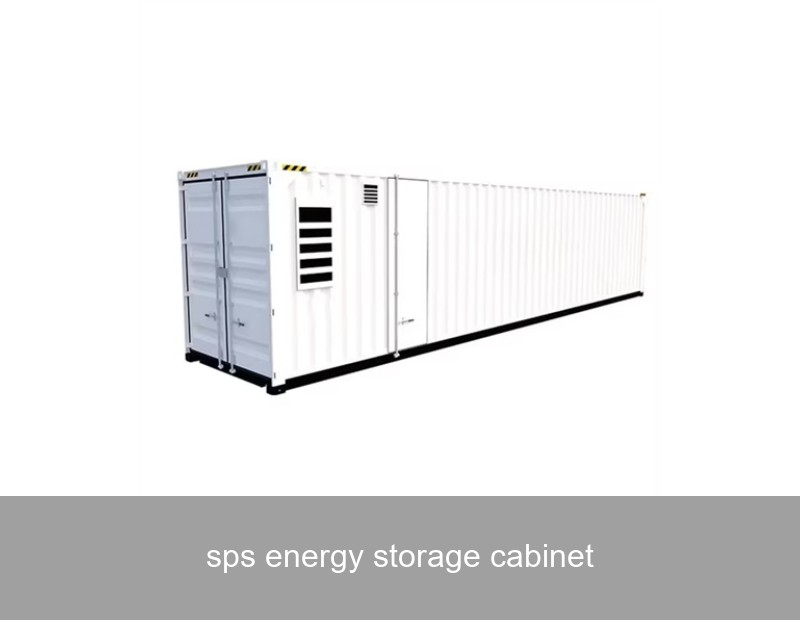
Imagine your business is hit by a sudden power outage. Critical operations halt, data is at risk, and productivity plummets. Now, imagine a seamless transition where your lights stay on and machines keep running, powered not by a noisy diesel generator, but by a silent, intelligent system in the background. This isn't magic; it's the reality enabled by advanced SPS (Smart Power Storage) energy storage cabinets. These systems are rapidly becoming the cornerstone of resilient and cost-effective energy management for businesses and communities across Europe and the United States. As a global leader in advanced energy storage since 2005, Highjoule is at the forefront of designing these intelligent power hubs, integrating cutting-edge battery technology with sophisticated software to deliver stability, savings, and sustainability.
Table of Contents
- What is an SPS Energy Storage Cabinet?
- The Urgency: Grid Instability and Rising Costs
- The Data Reality: Quantifying the Need for Storage
- Case in Point: A German Manufacturing Success Story
- The Highjoule Solution: More Than Just a Battery Box
- Key Components of a Modern SPS Cabinet
- Future Trends: Where SPS Technology is Headed
What is an SPS Energy Storage Cabinet?
Let's demystify the term. An SPS Energy Storage Cabinet is a fully integrated, containerized unit that houses all the critical components for storing electrical energy. Think of it as a highly sophisticated, plug-and-play power bank for your commercial or industrial facility. Unlike a simple battery rack, an SPS cabinet is a unified system comprising lithium-ion battery modules, a built-in battery management system (BMS), power conversion systems (PCS), thermal management, and safety controls—all in one robust, self-contained enclosure. Its primary job is to store electricity when it's cheap or abundant (like from your solar panels at midday) and discharge it when it's expensive or unavailable, providing you with unparalleled control over your energy profile.

Image Source: Unsplash - Representative image of advanced industrial energy storage systems.
The Urgency: Grid Instability and Rising Costs
The phenomenon is clear on both sides of the Atlantic. Our energy grids, many built decades ago, are under unprecedented strain. The transition to renewable sources like wind and solar, while essential, introduces intermittency—the sun doesn't always shine, and the wind doesn't always blow. This can lead to frequency fluctuations and localized instability. Compounding this is an increase in extreme weather events, from heatwaves in California to winter storms in Texas and Europe, causing more frequent and prolonged outages. For a factory, a data center, or even a grocery store, these interruptions are not just inconveniences; they are direct threats to revenue and operational continuity.
The Data Reality: Quantifying the Need for Storage
The numbers paint a compelling picture. According to the U.S. Energy Information Administration (EIA), the average U.S. electricity customer experienced just over 5 hours of outages in 2021, with major event days significantly impacting the figure. In the EU, the push for decarbonization is accelerating, with targets aiming for 45% renewable energy by 2030. This rapid integration requires massive grid flexibility that storage can provide. Financially, time-of-use (TOU) rates and demand charges can constitute up to 70% of a commercial electricity bill. An intelligently managed SPS cabinet can "peak shave," cutting those expensive demand spikes, leading to immediate and substantial cost reductions. The data shows that waiting for grid modernization is a costly strategy; proactive on-site storage is the smart business move.
Case in Point: A German Manufacturing Success Story
Let's look at a concrete example from Bavaria, Germany. A mid-sized automotive parts manufacturer faced two challenges: volatile energy prices and a corporate mandate to reduce its carbon footprint. Their existing rooftop solar PV system generated excess energy during lunch breaks and weekends, much of which was fed back to the grid at low feed-in tariffs. Simultaneously, they operated energy-intensive presses that created sharp demand peaks, resulting in high capacity charges.
The solution was the installation of a customized Highjoule SPS energy storage cabinet with a capacity of 240 kWh. Integrated with their existing solar array and building management system, the cabinet was programmed with Highjoule's AI-driven energy management software. The results after one year were striking:
| Metric | Before Installation | After Installation |
|---|---|---|
| Monthly Demand Charges | €8,500 (average) | €5,200 (average) |
| Solar Self-Consumption | 35% | 89% |
| Grid Dependency During Peak Hours | 100% | < 15% |
| Estimated CO2 Reduction | Baseline | 62 tonnes/year |
This case exemplifies the triple win: financial savings, enhanced sustainability, and greater energy independence. The SPS cabinet turned their solar investment from a partial solution into a comprehensive, optimized power asset.
The Highjoule Solution: More Than Just a Battery Box
At Highjoule, we understand that an SPS cabinet's value lies in its intelligence and reliability. Our HPS Series Commercial Storage Systems are engineered with this philosophy. They aren't just commodity containers; they are smart power hubs. Built with UL 9540 and IEC 62619 certified LiFePO4 battery cells, they offer superior safety and longevity. Our proprietary JouleBrain™ EMS is the true differentiator—it doesn't just react, it predicts. By analyzing weather forecasts, tariff schedules, and historical consumption patterns, it autonomously optimizes charge/discharge cycles to maximize your economic return.
Our services extend beyond delivery. We offer comprehensive Energy Resilience Audits, system design, and ongoing performance monitoring via our cloud-based platform. Whether for a commercial facility looking to cut costs, an industrial plant needing backup for critical processes, or a microgrid project requiring stable integration of renewables, Highjoule provides a tailored, future-proof solution. As the International Renewable Energy Agency (IRENA) highlights, storage is a key enabling technology for the energy transition, and we are committed to making it accessible and effective for our clients.

Image Source: Unsplash - Professional monitoring a smart energy management system interface.
Key Components of a Modern SPS Cabinet
To appreciate the engineering, let's break down what's inside a Highjoule HPS cabinet:
- High-Density LiFePO4 Battery Modules: The core storage medium, chosen for thermal stability, long cycle life (typically 6000+ cycles), and a wide operating temperature range.
- Integrated Battery Management System (BMS): Continuously monitors cell voltage, temperature, and state of charge for safety, balance, and performance.
- Bi-Directional Power Conversion System (PCS): The "translator" between AC grid power and DC battery storage, enabling seamless charging and discharging.
- Active Liquid Cooling & Thermal Management: Maintains optimal battery temperature, ensuring efficiency and extending lifespan in all climates.
- JouleBrain™ Energy Management System: The system's brain, using AI for predictive optimization and providing a user-friendly dashboard for control and reporting.
- Safety Enclosure & Fire Suppression: A robust, tamper-proof cabinet with integrated early warning and suppression systems for ultimate peace of mind.
Future Trends: Where SPS Technology is Headed
The evolution of SPS cabinets is moving towards greater grid interaction and value stacking. We are moving into an era of Virtual Power Plants (VPPs), where thousands of distributed storage units, like networked Highjoule cabinets, can aggregate to provide grid services like frequency regulation, effectively turning businesses into active participants in the energy market. Furthermore, advancements in battery chemistry, such as silicon-anode or solid-state technologies, promise even higher energy densities and faster charging. The integration of vehicle-to-grid (V2G) technology will see EV fleets interacting with stationary SPS systems, creating dynamic, hyper-local energy networks.
Given the clear trajectory towards decentralized, intelligent power networks, what is the first step your organization should take to assess its readiness for an SPS energy storage system and start building its energy resilience strategy today?
 Inquiry
 Online Chat