


Unlocking Solar Potential: Why Your Highbridge Solar Inverter is the Heart of the System
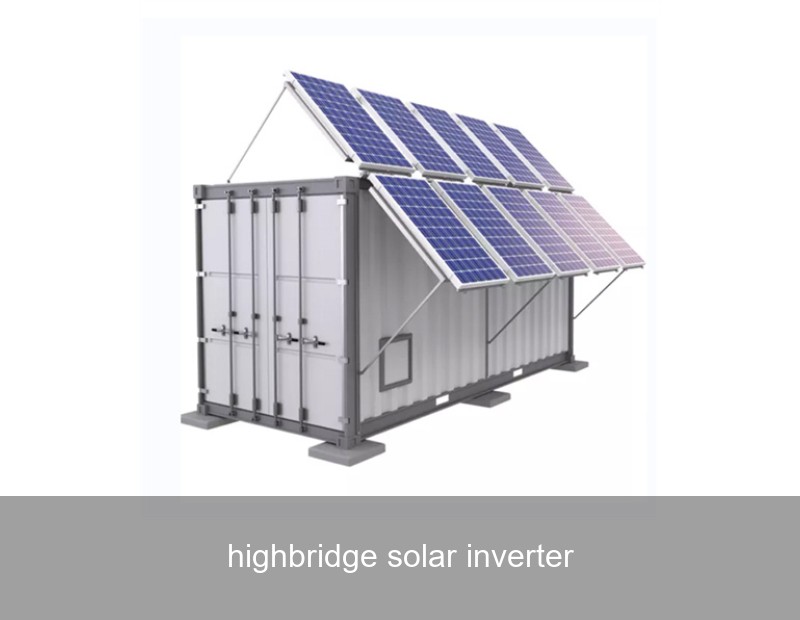
If you've invested in solar panels, you've taken a fantastic step towards energy independence. But here's something you might not have considered: the true brain and brawn of your solar array isn't just on the roof. It's the often-overlooked box on your wall—the solar inverter. For systems utilizing a Highbridge solar inverter, understanding its role is key to maximizing your return. This article dives deep into why the inverter matters more than you think, how pairing it with the right technology unlocks new value, and what the future holds for solar-powered homes and businesses.
Table of Contents
The Phenomenon: The Inverter as a Silent Performer
Your solar panels produce direct current (DC) electricity. Unfortunately, your home and the grid run on alternating current (AC). The Highbridge solar inverter’s primary job is this essential conversion—turning DC into usable AC power. Think of it as a sophisticated translator, ensuring the energy your panels create can power your fridge, lights, and devices. But modern inverters, especially reputable ones like Highbridge, do far more than just translate. They are constantly performing maximum power point tracking (MPPT), a complex dance of adjusting electrical characteristics to squeeze every possible watt from your panels under changing weather conditions. When it's cloudy, or a leaf casts a shadow, your inverter is working hard to mitigate losses.

Image Source: Unsplash - A modern solar inverter is the command center.
The Data: More Than Just Conversion
The efficiency of this conversion process is critical. While premium panels might have efficiencies over 22%, inverter efficiency determines how much of that DC power actually becomes AC. A high-quality Highbridge solar inverter typically boasts peak efficiencies of 98% or higher. What does that 2% loss mean in real terms? For a 10 kW system operating at peak sun, a 98% efficient inverter delivers 9.8 kW to your home, while a 95% efficient model delivers only 9.5 kW. Over a year, that small percentage difference can translate to hundreds of kilowatt-hours of lost energy—energy you paid for in panel costs but never get to use.
Furthermore, inverters provide critical system monitoring. They are your window into your solar plant's health, reporting on daily yield, identifying underperforming strings, and alerting you to faults. This data is invaluable for proactive maintenance and ensuring your 25-year investment performs for its full lifespan.
The Case Study: A German Bakery's Recipe for Resilience
Let's look at a real-world example from Bavaria, Germany. Bäckerei Schmidt (name changed for privacy) installed a 45 kW solar array with a Highbridge solar inverter in 2019. Their goal was to offset high daytime energy costs for ovens and refrigeration. The system performed well, covering about 40% of their daytime load. However, they faced two key issues:
- Evening & Morning Demand: Baking starts before sunrise and continues after sunset, times with no solar production.
- Grid Dependency: They remained 100% reliant on the grid during non-sunny hours, exposing them to volatile energy prices.
In 2022, seeking true energy autonomy, they partnered with Highjoule. We integrated a Highjoule HES-30 commercial battery storage system directly with their existing Highbridge inverter. The results, after one year of operation:
| Metric | Before Storage (Solar Only) | After Highjoule Storage Integration |
|---|---|---|
| Self-Consumption of Solar | 35% | 92% |
| Grid Energy Purchased | 65% of total need | 8% of total need |
| Bill Savings (Annual) | €5,200 | €14,800 |
| Backup Power | None | Critical loads supported for 10+ hours |
The Highjoule system, communicating seamlessly with the Highbridge inverter, stores excess midday solar and dispatches it during peak baking hours. This turned their solar installation from a partial solution into a comprehensive, cost-saving resilience hub.
The Insight: The Rise of the Hybrid Ecosystem
The bakery's story illustrates a pivotal shift in renewable energy: the move from standalone systems to integrated, hybrid ecosystems. A Highbridge solar inverter is a powerful component, but its potential is magnified exponentially when paired with intelligent storage and energy management.
This is where the concept of "AC-coupling" or "DC-coupling" comes in. Modern hybrid inverters or inverter-storage combos create a unified system. For existing systems with a capable inverter like Highbridge, adding a Highjoule battery system via AC-coupling is a brilliant, non-invasive upgrade. It allows the original solar system to operate optimally while the Highjoule unit manages storage, grid interaction, and backup power intelligently.
Image Source: Unsplash - A modern hybrid solar and storage ecosystem.
Highjoule's Role: Intelligent Storage for Intelligent Inverters
At Highjoule, we don't manufacture solar inverters. We specialize in what comes next: making the energy they produce truly work for you. Since 2005, we've focused on advancing battery energy storage systems (BESS) that complement and enhance high-performance components like the Highbridge solar inverter.
Our product philosophy is built on three pillars:
- Intelligence: Our systems feature advanced energy management software (EMS) that learns your consumption patterns, weather forecasts, and utility rate structures. It decides when to store, when to use, and when to potentially sell back—maximizing your economic benefit.
- Efficiency: Highjoule systems use lithium iron phosphate (LiFePO4) battery chemistry, known for its safety, longevity (10,000+ cycles), and high round-trip efficiency (over 96%), ensuring minimal energy is lost in the storage process.
- Scalability & Integration: Whether for a large home, a commercial operation like Bäckerei Schmidt, or an industrial microgrid, our modular systems scale to meet demand. They are designed for seamless integration with leading inverter brands, creating a future-proof energy asset.
For a homeowner with a Highbridge solar inverter, adding a Highjoule HES-10 residential unit transforms a daytime solar generator into a 24/7 personal power plant. It provides backup during outages, allows for time-of-use bill optimization, and increases self-reliance.
The Future: Grid Services and Beyond
The evolution continues. In regions like California, Texas, and across Europe, advanced inverters paired with storage are beginning to provide "grid services." This means your home or business system can help stabilize the local grid during times of stress (like a heatwave) by discharging stored energy, potentially earning you additional revenue. The Highbridge solar inverter, when part of a Highjoule-managed ecosystem, has the technical capability to participate in such virtual power plants (VPPs).
This points to a future where your energy system is not just an expense offset but an active, intelligent asset contributing to community resilience. It's a future built on the interoperability of best-in-class components.
Ready to see what your Highbridge solar inverter is truly capable of? Could your home or business be the next case study in energy independence and smart savings? Contact our Highjoule energy specialists today for a free, personalized system assessment. Let's explore how to unlock the full potential of your solar investment.
 Inquiry
 Online Chat