


Finding the Right Supplier of Solar Energy Storage Systems (SESS) for Your Energy Independence
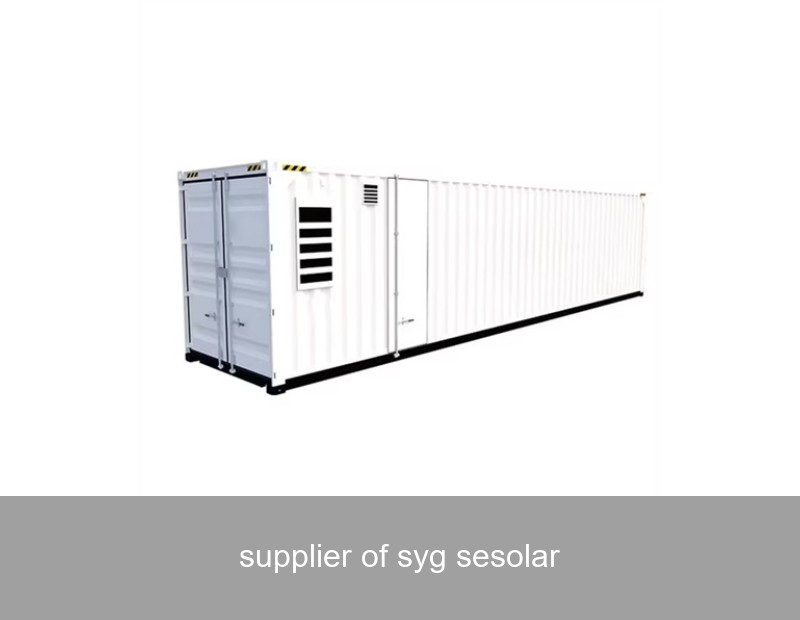
Have you ever looked at your solar panels on a bright, sunny day and wondered, "Where does all this extra power go?" The truth is, without a way to capture it, a significant portion of that self-generated, clean energy is fed back to the grid, often for minimal compensation. This is the modern energy dilemma: generating power doesn't equate to controlling it. The solution lies in a Solar Energy Storage System (SESS), and the choice of your supplier of SESS becomes the single most critical decision in your journey to true energy autonomy. It's not just about buying a battery; it's about partnering with a technology provider for the next 15-20 years.
Table of Contents
- The Energy Storage Gap: More Solar, More Complexity
- Beyond the Battery: 5 Criteria for Your Ideal SESS Supplier
- Case Study: A Berlin Bakery's Recipe for Resilience
- Highjoule: Engineered for Performance, Designed for Partnership
- Future-Proofing Your Investment: The Smart Grid Ready System
- Is Your Current Energy Setup Truly Optimized?
The Energy Storage Gap: More Solar, More Complexity
The phenomenon is clear across Europe and the U.S.: rooftop solar adoption is soaring. In 2023, the U.S. residential solar market installed over 6 GWdc of capacity, while the EU saw a staggering 56% increase in solar photovoltaic installations compared to 2022 (SEIA). Yet, this success story has an often-overlooked subplot: curtailment and inefficiency. When solar production exceeds immediate consumption and local grid capacity, the excess is wasted. This is where the promise of solar falls short of its potential.
The data is revealing. A typical residential solar system without storage might only directly consume 30-50% of the energy it produces, depending on household load patterns. The rest is exported. With declining feed-in tariffs, the financial return on that exported energy is shrinking rapidly. The logical step? Store it for use when the sun isn't shining. However, the market is flooded with products of varying quality, safety, and intelligence. Choosing a supplier of SESS based on price alone is a high-risk strategy. The real cost isn't the unit price; it's the total cost of ownership over decades, encompassing performance degradation, safety risks, and missed opportunities for grid services.

Image: A truly integrated solar and storage solution requires careful design and component matching. Source: Unsplash
Beyond the Battery: 5 Criteria for Your Ideal SESS Supplier
So, what separates a commodity vendor from a strategic partner? The best supplier of solar energy storage systems is defined by a holistic approach.
- System Intelligence & Software: The battery is the muscle; the software is the brain. Can the system learn your consumption patterns, automatically optimize for time-of-use rates, and provide real-time visibility and control via an intuitive app?
- Safety & Certification: This is non-negotiable. Look for UL 9540 (USA) and IEC 62619 (EU) certifications for the entire energy storage system, not just individual cells. Premium suppliers use robust battery chemistry (like Lithium Iron Phosphate - LFP) with built-in, multi-layer safety management.
- Scalability & Flexibility: Your energy needs will evolve. A modular design that allows you to easily add more storage capacity over time protects your initial investment and adapts to an electric vehicle or a home expansion.
- Grid Services & VPP Readiness: In the near future, aggregated home batteries will form Virtual Power Plants (VPPs), providing stability to the grid and earning revenue for owners. Your system should be hardware-ready for this future revenue stream.
- Local Support & Warranty: A 10-year warranty is standard, but what does the service network look like? Rapid, local technical support for installation and maintenance is crucial for long-term peace of mind.
Case Study: A Berlin Bakery's Recipe for Resilience with Highjoule
Let's make this concrete with a real-world example. Backstube Schmidt, a mid-sized artisan bakery in Berlin, faced a dual challenge: volatile energy costs threatening their thin margins and the critical need for uninterrupted refrigeration. A power outage would spoil inventory and halt production.
Their previous setup included a 50 kWp solar array, but over 60% of its daytime output was being exported. They partnered with Highjoule as their supplier of SESS for a comprehensive solution:
- System: A Highjoule H-Stack Commercial 100 kWh modular battery system, integrated with their existing solar inverters.
- Intelligence: Highjoule's Harmony OS software was configured to prioritize self-consumption, shifting bakery load (ovens, proofers) to solar hours where possible and keeping the batteries charged for nighttime operation and backup.
- Result (12-month period):
Metric Before Highjoule SESS After Highjoule SESS Solar Self-Consumption ~38% 92% Grid Energy Draw (Peak Hours) Reduced by 85% Reduced by 85% Estimated Annual Energy Cost Savings Baseline €11,200 Backup Power for Critical Loads None 18+ hours
The bakery now operates with predictable energy costs, enjoys a powerful marketing story as a "sustainable business," and has complete peace of mind regarding refrigeration. The system's payback period is projected to be under 5 years.
Highjoule: Engineered for Performance, Designed for Partnership
At Highjoule, we've spent nearly two decades redefining what it means to be a supplier of solar energy storage systems. We don't just sell hardware; we deliver a guarantee of performance and partnership. Our systems, from the residential H-Cube series to the industrial-scale H-Power line, are built on three pillars:
- Uncompromising Safety: Our proprietary LFP battery packs feature a cell-level fusing and liquid cooling architecture that maintains optimal temperature, extending lifespan and eliminating thermal runaway risk. Every unit is certified to the highest international standards.
- Adaptive Intelligence: The Highjoule Harmony OS platform is the core of our value. It doesn't just manage energy; it learns and forecasts. By integrating weather data, utility rate schedules, and your usage history, it makes thousands of micro-decisions daily to maximize your financial return and comfort.
- Seamless Integration: We understand that no two energy setups are identical. Our systems are designed to be AC-coupled, making them compatible with both new and existing solar installations from most major inverter brands. This flexibility saves our clients time and money on retrofits.

Image: Advanced monitoring and control software turns a static battery into a dynamic energy asset. Source: Unsplash
Future-Proofing Your Investment: The Smart Grid Ready System
The energy grid is transitioning from a one-way street to a collaborative network. Forward-looking regulations like FERC Order 2222 in the U.S. and various EU directives are enabling distributed resources to participate in energy markets. As a leading supplier of SESS, Highjoule builds this future capability into our products today.
When you install a Highjoule system, you are not just buying storage; you are acquiring an energy asset. Our systems are VPP-ready, meaning they can be aggregated (with your consent) to provide grid services like frequency regulation or peak shaving. This opens a potential future revenue stream, transforming your system from a cost-saving tool into a revenue-generating asset. It's the difference between buying a phone that only makes calls and one that connects to the entire app ecosystem.
Is Your Current Energy Setup Truly Optimized? Let's Find Out.
The journey to true energy independence starts with a clear assessment. You've invested in solar generation; the next logical step is to maximize its value. Ask yourself: How much of my solar energy do I actually use? What is my true cost of power during evening peaks and low-sunlight months? How vulnerable is my home or business to increasing grid instability?
As a global leader and your potential partner, Highjoule invites you to go beyond the basic specs. What specific energy challenge keeps you up at night, and how can a truly intelligent storage system be designed to solve it?
 Inquiry
 Online Chat