


Harnessing the Breeze: How the Horizontal Axis Wind Turbine Powers Our Future
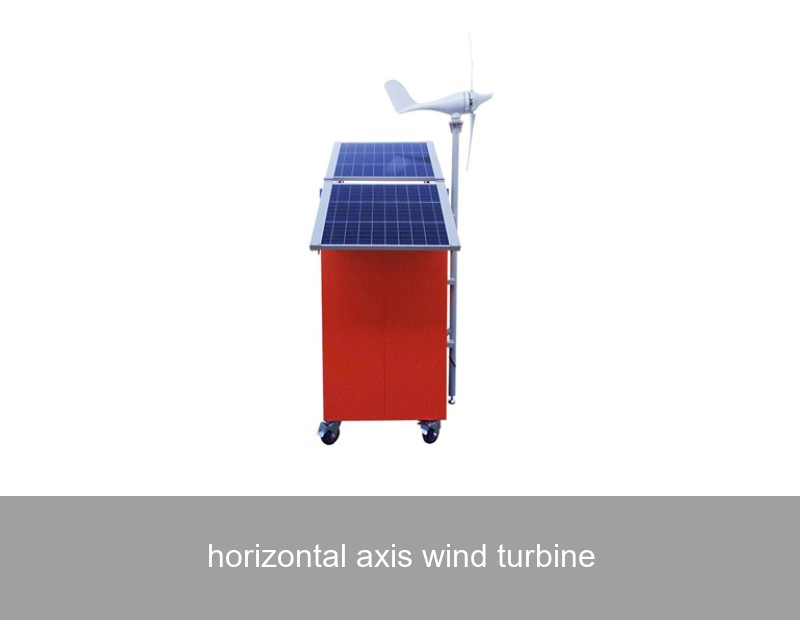
Look across a modern landscape, and you'll likely see them: elegant, white sentinels with three blades rotating gracefully against the sky. These are horizontal axis wind turbines (HAWTs), the workhorses of the global wind energy revolution. From sprawling wind farms in the Texas plains to offshore installations in the North Sea, HAWTs are a dominant symbol of clean, renewable power. But have you ever stopped to wonder how these giants actually work, or what happens when the wind doesn't blow? As we transition to a greener grid, understanding this technology and its perfect partner—advanced energy storage—is key.
How Does a Horizontal Axis Wind Turbine Work? The Science Simplified
At its heart, a horizontal axis wind turbine operates on a principle humans have used for centuries: capturing kinetic energy (wind) and converting it into mechanical energy, which is then transformed into electricity. The "horizontal axis" simply means the main rotor shaft is parallel to the ground. Here's the step-by-step journey of the wind through a HAWT:
- Wind Capture: The turbine's blades are designed like airplane wings. As wind flows over them, it creates a pressure difference, generating lift and causing the rotor to spin.
- Gearing Up: The rotor spins a low-speed shaft, typically at 10-20 revolutions per minute (RPM). This shaft is connected to a gearbox that increases the rotational speed to about 1,500-1,800 RPM, which is optimal for the generator.
- Generation: The high-speed shaft spins the generator, where the magic of electromagnetism converts the mechanical rotation into electrical energy.
- Transformation & Transmission: The electricity is then conditioned, transformed to a higher voltage, and fed into the electrical grid or a local microgrid.

Image Source: Wikimedia Commons (Creative Commons)
HAWT vs. VAWT: A Clear Comparison
While HAWTs are the most common, you might also hear about Vertical Axis Wind Turbines (VAWTs). What's the difference? The table below breaks it down:
| Feature | Horizontal Axis Wind Turbine (HAWT) | Vertical Axis Wind Turbine (VAWT) |
|---|---|---|
| Axis Orientation | Parallel to the ground | Perpendicular to the ground |
| Efficiency | Generally higher (40-50% aerodynamic efficiency) | Generally lower |
| Wind Direction | Requires a yaw mechanism to face the wind | Captures wind from any direction |
| Typical Scale | Utility-scale (100 kW to several MW) | Often smaller-scale, urban, or residential |
| Maintenance | Components are high up, requiring specialized access | Generator and gearbox at ground level for easier access |
This comparison explains why you see horizontal axis wind turbines dominating commercial wind farms—their superior efficiency at scale makes them the economic choice for large-scale power generation.
Key Components of a Modern HAWT
Today's HAWTs are feats of engineering. Key advancements include:
- Advanced Composite Blades: Made from fiberglass-reinforced epoxy, they are incredibly strong, lightweight, and designed with complex aerodynamics for maximum lift.
- Pitch and Yaw Control Systems: These are the turbine's "brain" for dealing with variable winds. Blades can pitch (rotate on their axis) to optimize angle or brake, while the entire nacelle yaws (rotates) to face the wind.
- Direct-Drive Generators: An innovation eliminating the heavy gearbox. Magnets spin directly around the generator coil, reducing moving parts and maintenance.
The Intermittency Challenge: Why Wind Needs a Partner
Here's the central paradox of wind and solar power: they are abundant and clean, but inherently variable. A horizontal axis wind turbine produces power only when the wind blows within a specific speed range (typically between 3-25 m/s). This intermittency poses a real challenge for grid operators who must balance supply and demand in real-time. According to the International Energy Agency (IEA), integrating high shares of variable renewables requires significant investment in grid flexibility.
So, what happens on a calm day or during a sudden gust that exceeds safe limits? The turbine sits idle, or worse, power is curtailed (wasted) because the grid cannot absorb it. This is where the story evolves from generation to integration.
Case Study: Stabilizing Wind Power in Texas with Battery Storage
Let's look at a real-world example. The U.S. state of Texas leads the nation in wind power generation. However, its grid operator, ERCOT, frequently faces challenges with volatility. In 2023, a project in West Texas provided a compelling solution.
A 100-megawatt (MW) wind farm paired with a 30 MW / 60 MWh battery energy storage system (BESS). Here's what the data showed over a 6-month period:
- Curtailment Recovery: The BESS captured over 15 GWh of wind energy that would have otherwise been curtailed during low-demand, high-wind periods.
- Grid Services: The system provided fast-frequency response, stabilizing the grid during sudden generation drops within milliseconds—something traditional power plants cannot do.
- Revenue Stacking: By storing cheap wind power and discharging it during peak evening hours, the project increased its overall revenue by an estimated 22%.
This case study, echoed by findings from the National Renewable Energy Laboratory (NREL), proves that pairing wind with storage isn't just about backup; it's about optimizing assets, enhancing grid reliability, and improving economics.

Image Source: Unsplash (Free to use)
Highjoule's Role: Making Wind Power Predictable and Profitable
This is precisely where Highjoule, as a global leader in advanced energy storage since 2005, steps in. We don't manufacture wind turbines, but we make their output far more valuable and reliable. For wind farm operators, commercial businesses relying on wind PPAs, or island communities with wind-powered microgrids, our intelligent battery storage systems are the missing link.
Our H-Series Commercial & Industrial (C&I) and Utility-Scale storage solutions are engineered to seamlessly integrate with renewable assets like horizontal axis wind turbines. Using our proprietary energy management system (EMS), we can:
- Smooth Output: Turn intermittent wind generation into a firm, dispatchable power source.
- Maximize Self-Consumption: For businesses, store on-site wind power for use anytime, drastically reducing demand charges from the grid.
- Provide Ancillary Services: Help stabilize the wider grid with frequency regulation and voltage support, creating new revenue streams.
- Ensure Backup Power: Maintain critical operations during grid outages, a key concern for industrial facilities.
Think of Highjoule's technology as a "power buffer" for wind energy. It ensures that every kilowatt-hour generated by those sweeping blades is captured, utilized, and monetized to its fullest potential.
The Future of HAWT Technology and Integration
The evolution continues. We're seeing trends toward larger, more efficient horizontal axis wind turbines, especially for offshore applications where winds are stronger and more consistent. Digital twin technology for predictive maintenance and AI-driven yield optimization are becoming standard. However, the most transformative trend is the inevitable and deepening marriage between wind generation and large-scale storage. The future grid won't be powered by standalone wind farms or solar parks; it will be powered by renewable-plus-storage hybrid plants.
As we push for net-zero targets, the question is no longer just about how many turbines we can install, but how intelligently we can manage and integrate their output. Is your business or community project ready to move beyond simple generation and harness the full, stable potential of the wind?
 Inquiry
 Online Chat