


Top 10 Solar Companies in Malaysia: A Gateway to Southeast Asia's Renewable Energy Boom
When you think of global solar energy leaders, countries like China, the United States, or Germany might spring to mind. But look closer, and you'll find a vibrant, rapidly growing market in Southeast Asia, with Malaysia shining particularly bright. The quest to identify the top 10 solar companies in Malaysia is about more than just a local directory; it's a window into a strategic renewable energy hub that is attracting international attention and investment. For businesses and communities in Europe and the US looking towards sustainable expansion or seeking parallels in market evolution, understanding Malaysia's solar landscape offers valuable insights. This article will guide you through the key players driving this green transition and explore how advanced energy storage is becoming the critical piece of the puzzle for maximizing solar's potential, both in Malaysia and globally.
Table of Contents
- The Malaysian Solar Phenomenon: More Than Just Sunshine
- The Leaders' Chart: Key Players in the Malaysian Solar Arena
- The Storage Imperative: Why Solar Alone Isn't Enough
- Case Study: A Malaysian Industrial Plant's Journey to Energy Independence
- A Global Perspective: Lessons from Malaysia for EU and US Markets
- The Future is an Intelligent, Stored Electron
The Malaysian Solar Phenomenon: More Than Just Sunshine
Malaysia's solar ascent isn't accidental. With an average of 4-6 hours of daily sunshine and strong government initiatives like the National Energy Transition Roadmap (NETR) and the Large Scale Solar (LSS) tender programs, the country has created a fertile ground for photovoltaic (PV) development. The target is ambitious: achieving 31% renewable energy capacity in the national mix by 2025 and 70% by 2050. This policy-driven demand has catalyzed the growth of a robust ecosystem of solar companies in Malaysia, ranging from large-scale project developers to innovative residential installers.
But here's a reality we see worldwide, from California to Bavaria: solar generation is intermittent. The sun doesn't shine at peak demand hours, and excess midday energy often goes to waste without a means to capture it. This is the universal challenge that follows the initial success of any solar rollout, and Malaysia is now facing it head-on. The next question for the top solar companies in Malaysia isn't just about installing more panels; it's about delivering reliable, dispatchable, and intelligent solar power. That's where the true innovation begins.
The Leaders' Chart: Key Players in the Malaysian Solar Arena
While we won't provide a static, ranked list (as the market is dynamic), we can categorize the types of leading entities that make up the top 10 solar companies in Malaysia landscape. These players are instrumental in shaping the market.
| Category | Description & Examples | Primary Focus |
|---|---|---|
| Utility-Scale Developers | Companies like Solarvest Holdings Berhad, Sunway Construction, and Malakoff Corporation Berhad. These are often winners of the government's LSS bids, developing massive solar farms that feed power directly into the national grid. | Large-scale PV plants (10MW to 500MW+). |
| Integrated Energy & Utility Giants | Players such as Tenaga Nasional Berhad (TNB) and Sime Darby Property. These established entities are leveraging their infrastructure and capital to invest heavily in solar projects, both for grid supply and own use. | Diversified energy generation, including large solar portfolios. |
| Commercial & Industrial (C&I) Specialists | Firms like GSPARX (a subsidiary of Tenaga Nasional) and Plus Solar Systems. They focus on rooftop and ground-mounted systems for factories, shopping malls, and businesses, helping them reduce electricity bills (via schemes like Net Energy Metering). | On-site solar solutions for businesses. |
| Technology & Manufacturing | This includes panel manufacturers with a presence in Malaysia, such as First Solar (which has a major manufacturing plant in Kulim), and inverter suppliers. They provide the core hardware for the industry. | Equipment manufacturing and supply. |
This ecosystem is driving impressive capacity growth. However, as these companies push the boundaries of solar penetration, a common theme emerges—the need to stabilize the grid and ensure solar power is available when needed, not just when it's generated.
The Storage Imperative: Why Solar Alone Isn't Enough
Imagine a state-of-the-art solar car with a tiny fuel tank. You can go fast when the sun is out, but you're stranded at night. Similarly, a solar system without storage has limited utility. For Malaysia's commercial and industrial (C&I) sector, this means high solar generation during midday might not align with their peak operational hours in the morning and evening. The excess energy is exported to the grid at lower rates, while they still draw expensive power during peak times.
This is the precise challenge that global advanced energy storage providers like Highjoule address. Since 2005, Highjoule has been at the forefront of designing intelligent Battery Energy Storage Systems (BESS) that transform solar arrays from intermittent generators into reliable, 24/7 power assets. Our systems do more than just store energy; they intelligently manage it. Using sophisticated energy management software, a Highjoule BESS can:
- Maximize Self-Consumption: Store excess solar generation for use during peak evening hours, dramatically increasing a site's energy independence.
- Provide Peak Shaving: Discharge stored energy during periods of highest grid demand (and highest tariffs), slashing electricity bills.
- Ensure Backup Power: Offer seamless, millisecond-switch transition to backup power during grid outages, critical for factories, data centers, and hospitals.
For the top solar companies in Malaysia looking to offer complete, bankable solutions to their C&I clients, integrating a partner like Highjoule is becoming a key differentiator. It elevates their proposal from a simple CAPEX/OPEX calculation to a strategic energy resilience and financial optimization platform.

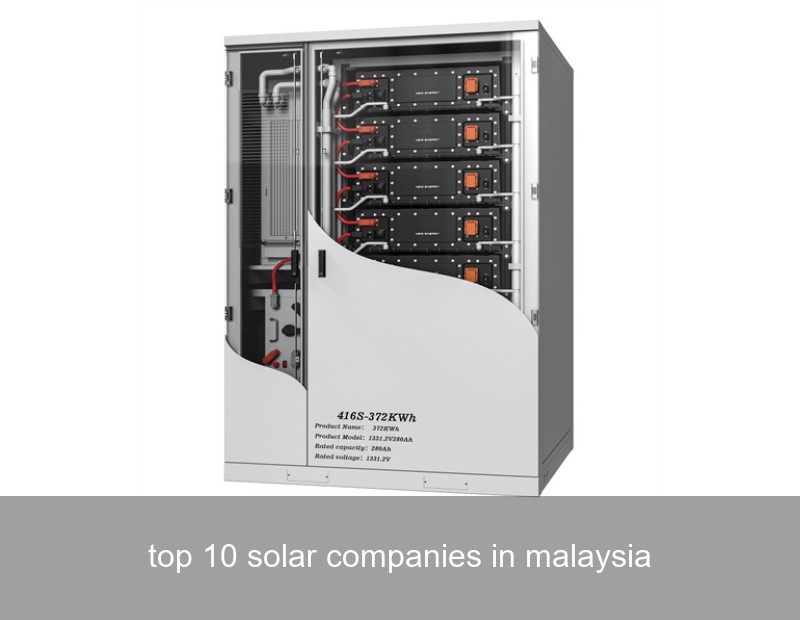
Image Source: Unsplash. A modern battery energy storage system (BESS) installation, crucial for maximizing solar ROI.
Case Study: A Malaysian Industrial Plant's Journey to Energy Independence
Let's look at real data. A major automotive component manufacturing plant in Penang, Malaysia, was facing consistently high electricity costs and wanted to leverage its large rooftop space. They partnered with a leading local C&I solar developer, who installed a 2.5 MW rooftop solar PV system. While this reduced their daytime grid consumption, the plant's energy demand peaked in the early morning and late afternoon, when solar output was low.
The Solution: The solar developer, aiming to provide a best-in-class solution, integrated a Highjoule 1.5 MWh containerized BESS into the project. This turnkey system was pre-assembled and tested for rapid deployment.
The Results (12-month post-installation):
- Solar Self-Consumption Rate Increased from 68% to over 95%.
- Peak Grid Demand Reduced by 40%, leading to significant demand charge savings.
- Overall Energy Cost Savings rose from an estimated 25% (solar only) to 42% (solar + storage).
- ROI Period for the combined system was calculated to be under 7 years, thanks to the enhanced savings.
- The system also provided the plant with a critical 2-hour backup power capability, protecting sensitive production lines from grid disruptions.
This case exemplifies the trend: leading solar companies in Malaysia are no longer just PV installers; they are becoming comprehensive energy solution providers, with storage as a core offering.
A Global Perspective: Lessons from Malaysia for EU and US Markets
For our readers in Europe and the US, Malaysia's trajectory is both familiar and instructive. Markets like Germany, Spain, California, and Texas have already navigated the path from feed-in-tariffs to grid parity and now to storage integration. The Malaysian experience reinforces a global truth: the value of solar is exponentially increased when paired with intelligent storage.
Highjoule's expertise, honed over nearly two decades across diverse global markets, is directly applicable. Whether it's a commercial facility in Bavaria seeking to optimize its Eigenverbrauch (self-consumption), a microgrid in California requiring islanding capability, or an industrial park in Malaysia aiming for peak shaving, the core principles remain the same. Our product lines, from scalable commercial units to robust industrial and microgrid solutions, are designed with this global flexibility in mind, ensuring safety, efficiency, and longevity in any climate or grid condition.
As noted by the International Energy Agency (IEA), energy storage is the linchpin for secure and flexible clean energy transitions worldwide. The growth of solar in emerging markets like Malaysia underscores this universal need.

Image Source: Unsplash. Utility-scale solar farms, like those developed by top players in Malaysia, are foundational to national energy transition goals.
The Future is an Intelligent, Stored Electron
The conversation around the top 10 solar companies in Malaysia is evolving. The leaders of tomorrow will be those who master the entire energy cycle: generation, storage, and intelligent management. They will offer solutions that not only capture the sun's energy but also time-shift it, shape it, and deploy it with precision to meet economic and operational goals.
This is the future Highjoule is building today. We partner with forward-thinking solar developers, EPCs, and end-users worldwide to create resilient, sustainable, and economically superior energy systems. The question is no longer just "how much solar can we install?" but rather "how can we build an intelligent energy ecosystem that delivers power precisely when and where it's needed, at the lowest cost and highest reliability?"
Is your organization, whether in Malaysia, Europe, or the Americas, ready to explore how advanced energy storage can transform your solar investment from a simple savings play into a strategic asset for energy resilience and financial performance?
 Inquiry
 Online Chat