


Unlocking Energy Independence: A Deep Dive into the Sacred Sun Battery 200Ah
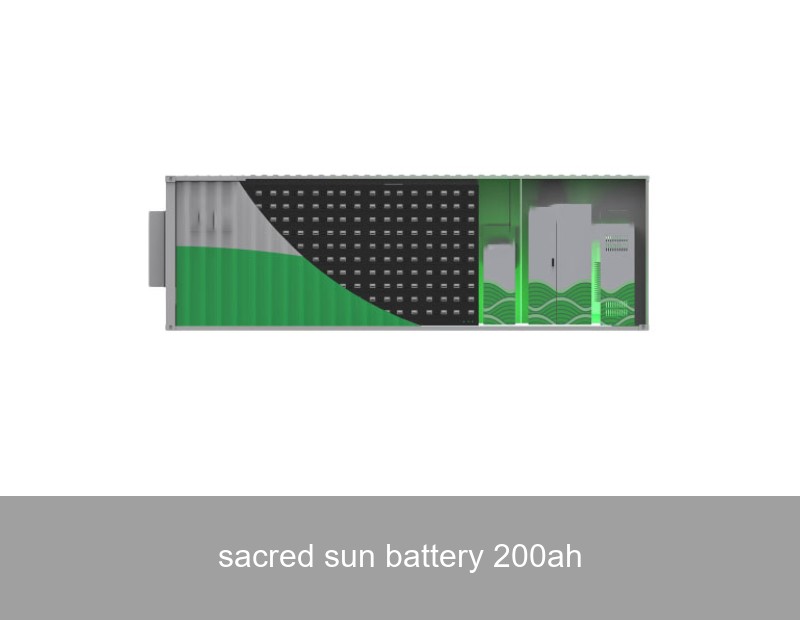
Have you ever looked at your rising electricity bill or worried about grid instability during a storm and thought, "There must be a better way"? You're not alone. Across Europe and the US, homeowners and businesses are actively seeking reliable, sustainable power solutions. At the heart of this energy revolution lies a critical component: the solar battery. And when it comes to robust, high-capacity storage, the Sacred Sun battery 200Ah is a term that frequently surfaces in expert discussions. But what does it truly offer, and how does it fit into a modern energy ecosystem? As a product technology expert at Highjoule, I'll guide you beyond the spec sheet to understand its real-world potential.
Why 200Ah Capacity Matters for Your Energy Independence
Let's demystify "200Ah" first. Amp-hours (Ah) is a unit of electrical charge. In simple terms, a 200Ah battery can, in theory, deliver 200 amps for one hour, 10 amps for 20 hours, and so on. But here's the key: for solar storage, we think in kilowatt-hours (kWh), which is what your utility bill uses. The energy a 200Ah battery stores depends on its voltage.
- 12V System: 200Ah x 12V = 2.4 kWh
- 24V System: 200Ah x 24V = 4.8 kWh
- 48V System (Common for Homes): 200Ah x 48V = 9.6 kWh
Why is 9.6 kWh a sweet spot? It's a substantial amount of energy. According to the U.S. Energy Information Administration, the average U.S. home uses about 29 kWh per day. A well-configured 9.6 kWh battery bank can cover essential loads (refrigeration, lighting, communications, well pump) for a typical household through an evening or a short grid outage. For a business, it can mean avoiding costly operational interruptions.

Image: A modern home energy system integrating solar and storage. Source: Unsplash
Beyond Specs: The Real-World Performance Factors
Not all 200Ah batteries are created equal. The Sacred Sun brand is known for its deep-cycle lead-acid and LiFePO4 (lithium iron phosphate) options. Here’s what you need to consider:
| Factor | Traditional Lead-Acid (e.g., Flooded, AGM) | LiFePO4 (Lithium Iron Phosphate) | Why It Matters |
|---|---|---|---|
| Depth of Discharge (DoD) | ~50% recommended | ~80-90% typical | Higher usable DoD means more of the 200Ah is actually available to you. |
| Cycle Life | 300-1000 cycles (to 50% DoD) | 3000-6000+ cycles (to 80% DoD) | LiFePO4 offers a significantly longer lifespan, translating to lower cost per cycle. |
| Maintenance | May require watering (flooded) or careful voltage control | Essentially maintenance-free | Reduces long-term hassle and monitoring needs. |
| Efficiency | ~80-85% | ~95-98% | Higher efficiency means less solar energy is wasted in the charge/discharge process. |
When evaluating a Sacred Sun battery 200Ah model, identifying its chemistry is crucial. While lead-acid has a lower upfront cost, the long-term value and performance of LiFePO4, especially for daily solar cycling, are often superior.
The Integration Imperative
A battery is not an island. Its performance is heavily dependent on the inverter/charger and the system's brain – the energy management system. A high-quality 200Ah battery paired with a poorly matched inverter will never reach its potential.
Case Study: Powering Resilience in a German Farmstead
Let's look at a real example from Bavaria, Germany. The Huber family runs a medium-sized dairy farm with an annual electricity consumption of approximately 22,000 kWh. Their goals were to increase self-consumption of their existing 30 kWp solar array and ensure uninterrupted power for milking systems and refrigeration.
- Challenge: Grid outages, even brief ones, disrupted automated milking, causing stress for livestock and operational delays. Evening energy usage required drawing from the grid.
- Solution: They installed an energy storage system centered on a bank of Sacred Sun LiFePO4 200Ah batteries, configured for a 48V system, providing a total usable capacity of ~15 kWh. This was integrated with a Highjoule HI-Power 3-phase hybrid inverter and our GridWatch energy management software.
- Result: The system increased their solar self-consumption rate from 35% to over 70%. During a 5-hour grid outage in the winter of 2023, the battery system seamlessly took over, powering all critical farm operations without a hitch. "The peace of mind is invaluable," Mr. Huber noted. "The system doesn't just store energy; it intelligently manages it based on our patterns and grid status."

Image: A professional battery installation in a utility room. Source: Unsplash
Choosing the Right System for Your 200Ah Battery
Thinking about a 200Ah battery? Ask yourself these questions:
- What are my goals? (Backup power, bill savings, full energy independence?)
- What critical loads must stay on during an outage? (List them and tally their wattage.)
- What is my solar PV capacity? (Your battery should be sized to capture excess production.)
- What is my long-term budget perspective? (Upfront cost vs. total cost of ownership over 10+ years.)
Highjoule's Expertise: Integrating Robust Batteries into Intelligent Systems
At Highjoule, we've been designing and deploying advanced energy storage solutions since 2005. We understand that a component like a Sacred Sun battery 200Ah is a quality piece of the puzzle, but the true magic happens in seamless, intelligent integration. Our approach focuses on the system as a whole:
- Highjoule HI-Power Hybrid Inverters: These are the workhorses, expertly converting DC from solar and batteries to AC for your home, and vice-versa. They are designed for compatibility with a wide range of battery technologies, including leading LiFePO4 models, ensuring your 200Ah bank is charged efficiently and discharged safely.
- Smart Energy Management: Our proprietary software, like the system used by the Huber farm, is the brain. It doesn't just react; it learns and forecasts. It can prioritize solar self-consumption, schedule charging during low-rate periods (where applicable), and ensure backup power is always reserved based on weather forecasts and usage patterns.
- Tailored Design for Every Application: Whether it's a residential setup in California, an industrial facility in Italy, or a microgrid for a remote community, we design systems that match the specific energy profile. A 200Ah battery bank might be perfect for one home, while a commercial project may require a modular array of multiple banks.
We select components like Sacred Sun batteries based on rigorous testing for durability, cycle life, and safety, ensuring they meet the demands of our intelligent system architecture.
The Future of Energy Storage: Where Do We Go from 200Ah?
The trend is clear: storage capacity is becoming more accessible and more intelligent. While the 200Ah module is a fantastic building block, the future lies in modular, scalable systems that can grow with your needs. The next frontier isn't just capacity, but grid interactivity. Imagine a system that can not only protect you from outages but also participate in grid stabilization services, creating a potential revenue stream. This requires even smarter software and grid-responsive hardware.
So, as you consider taking control of your energy with a robust storage solution, think beyond the battery label. What kind of intelligent ecosystem will it enable in your home or business? Are you ready to move from being a passive consumer to an active manager of your energy future?
 Inquiry
 Online Chat