


How Much Does a 100 kW Battery Cost? Unpacking the True Investment for Your Energy Independence
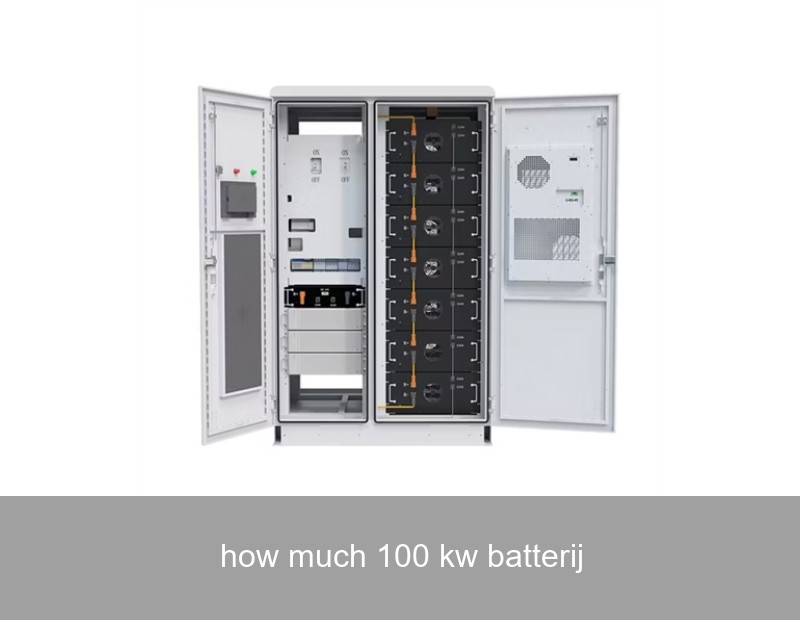
If you're a business owner, facility manager, or even a homeowner with significant energy needs, you've likely asked the question: "how much does a 100 kW battery cost?" It's a logical starting point, much like asking the price of a car based on its horsepower. However, focusing solely on the "100 kW" power rating is like buying that car knowing only its top speed, oblivious to its fuel tank size, efficiency, and advanced features. The real answer is multifaceted. The upfront price for a battery system with a 100 kilowatt (kW) power output can range significantly, but the true value—and total cost of ownership—is determined by what's behind that number. Let's demystify the investment and explore what you're really buying when you invest in a robust energy storage solution.
The Real Cost Factors: It's More Than Just a Price Tag
Quoting a single price for a "100 kW battery" is nearly impossible because the system is built from several key components, each with its own cost drivers. Think of it as building a custom computer; the processor speed (our 100 kW) is crucial, but the memory, storage, and software define its capability and price.
Battery Chemistry: The Heart of the System
The type of battery is the largest cost determinant. Lithium-ion is the standard, but even within this category, there are important differences:
- Lithium Iron Phosphate (LFP): This is the dominant chemistry for stationary storage today, favored by leading providers like Highjoule. It offers superior safety, a longer cycle life (often 6,000+ cycles), and excellent stability, though it may have a slightly lower energy density. For a commercial or industrial application, LFP's longevity and safety often make it the most cost-effective choice over the system's lifetime.
- Nickel Manganese Cobalt (NMC): Commonly found in electric vehicles, NMC batteries offer high energy density. However, they may have a shorter lifespan in daily cycling applications and different thermal management requirements.
The choice here impacts not only the initial purchase price but also degradation rates and long-term performance warranties.
System Integration & Intelligence
A battery rack is not a plug-and-play solution. The Power Conversion System (PCS), which includes the inverter, is what allows the battery's direct current (DC) to power your alternating current (AC) equipment. A high-quality, bi-directional inverter capable of 100 kW is a major component. Furthermore, the Battery Management System (BMS) and Energy Management System (EMS) are the "brains." A sophisticated EMS, like the one integrated into every Highjoule system, is what transforms a simple battery into an intelligent asset. It enables peak shaving, demand charge management, solar self-consumption optimization, and even grid services, directly impacting your return on investment.

Image Source: Unsplash (Representative image of energy storage system components)
Installation & Grid Connection Complexity
Costs vary dramatically by location (e.g., labor rates in California vs. Germany), site preparedness, and grid interconnection requirements. Upgrading electrical switchgear, obtaining permits, and meeting specific utility regulations (like UL 9540 in the US or CE marking in Europe) add to the project's scope. A turnkey provider manages this complexity for you.
Beyond Power: The Critical Role of Energy Capacity (kWh)
This is the most crucial distinction to understand. Power (kW) is how fast energy can be delivered or absorbed—it's the size of the faucet. Energy (kWh) is the total amount of energy stored—it's the size of the tank.
A "100 kW battery" tells you it can discharge at a rate of 100 kilowatts. But for how long? That depends on its energy capacity in kilowatt-hours (kWh).
| System Power Rating (kW) | Energy Capacity (kWh) | Duration at Full Power | Primary Use Case Example |
|---|---|---|---|
| 100 kW | 100 kWh | 1 hour | Peak shaving for a short, high-demand period |
| 100 kW | 200 kWh | 2 hours | Extended backup power or shifting more solar energy |
| 100 kW | >300 kWh | >3 hours | Industrial load shifting, microgrid stability |
As you can see, a 100 kW / 200 kWh system will cost substantially more in battery cells than a 100 kW / 100 kWh system. Most commercial systems are sized with 2-4 hours of duration. Therefore, the more accurate question becomes: "How much does a 100 kW / 200 kWh battery energy storage system cost?"
Case Study: Real-World Numbers from a German Bakery
Let's ground this in reality. A mid-sized industrial bakery in Bavaria, Germany, faced high electricity demand charges and wanted to increase self-consumption of its rooftop solar PV. Their peak load was around 150 kW.
- Phenomenon: Sharp energy demand spikes during oven operation, coinciding with sunset when solar production fell.
- Data & Solution: Highjoule's analysis recommended a 105 kW / 210 kWh lithium iron phosphate (LFP) battery system. This size was optimized to "shave" their peak demand below a critical threshold and store excess midday solar energy for evening use.
- Deployment: The turnkey installation included Highjoule's integrated power conversion system and AI-driven EMS for predictive energy scheduling.
- Insight & Outcome: Within the first year, the bakery reduced its demand charges by 40% and increased its solar self-consumption from 55% to over 80%. The system payback period is projected to be under 7 years, well within the system's 10+ year warranty. The total project cost was in the range of €150,000 - €200,000, inclusive of hardware, software, installation, and grid connection—a figure that was supported by local incentive programs. This case illustrates that the value is measured in ongoing savings and resilience, not just hardware cost. You can explore more about demand charge management from the U.S. Department of Energy.
How a Provider Like Highjoule Delivers Value Beyond the kW
Since 2005, Highjoule has evolved from a component supplier to a global provider of intelligent, integrated storage solutions. When you partner with us, you're not just buying battery cells rated for 100 kW. You're investing in a optimized system designed for your specific application—be it commercial peak shaving, industrial load shifting, or microgrid stabilization.
Our H-Series Commercial & Industrial (C&I) systems are modular, scalable, and built with our proprietary LFP battery packs. They come standard with our advanced EMS platform, which uses machine learning to forecast energy usage and optimize dispatch, maximizing your financial return. For larger applications, our Containerized Megawatt-scale solutions provide utility-grade performance. This holistic approach—where hardware, software, and service are seamlessly integrated—ensures you unlock the full potential of your 100 kW investment, making the total cost a value-driven capital expenditure rather than a mere expense.

Image Source: Unsplash (Representative image of energy management monitoring)
Making the Right Choice for Your Needs
So, where do you start? Begin by looking at your electricity bills. Identify your peak demand (in kW) and your typical energy consumption patterns (in kWh over time). Consult with an expert who can perform a detailed load profile analysis. Reputable sources like the Solar Energy Industries Association (SEIA) offer foundational knowledge on storage applications.
The most effective path is to engage with a seasoned provider for a feasibility study. At Highjoule, this process involves modeling your site's data to size not just the power (kW) but the optimal energy capacity (kWh), forecast financial savings, and provide a clear picture of the total project cost and value. This transforms the question from "How much does a 100 kW battery cost?" to "What is the return on investment for a storage system that solves my specific energy challenges?"
What is the single biggest energy cost driver on your utility bill that you hope a battery storage system could address?
 Inquiry
 Online Chat