


Navigating the Global Energy Market: A Deep Dive into SRNE Company as a Solar & Storage Supplier
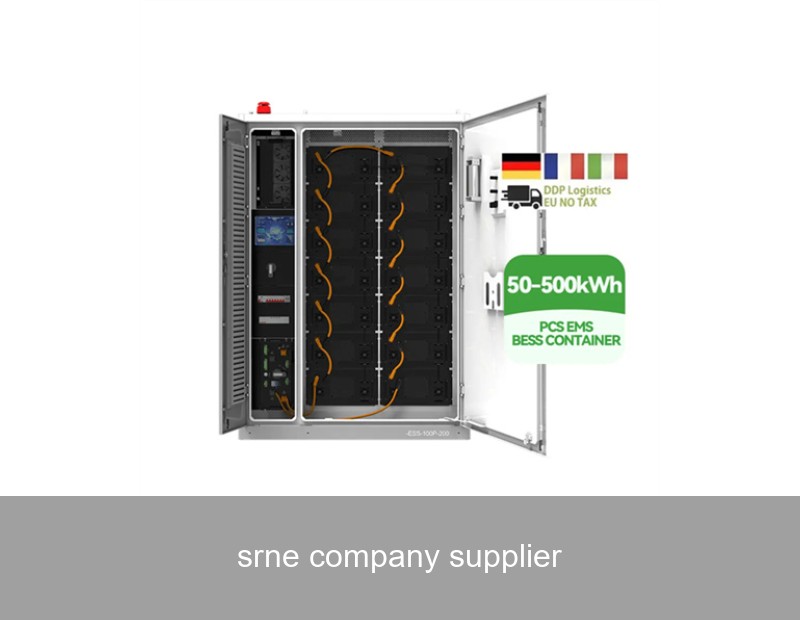
If you're involved in renewable energy projects in Europe or the United States, you've likely encountered the name SRNE company supplier in your sourcing research. The global shift towards solar and storage has made component sourcing a critical, yet complex, part of any project's success. Companies like SRNE have emerged as significant players, supplying the essential building blocks—PV inverters, lithium batteries, and energy management systems—that power our clean energy future. But what does it truly mean to partner with a global supplier, and how do you ensure reliability, quality, and long-term value? Let's unpack the journey from component to complete, reliable power solution.

Image Source: Unsplash - A reliable energy supply starts with quality components.
The Market Phenomenon: Why Global Buyers Turn to Suppliers Like SRNE
The renewable energy sector is uniquely global. A developer in Germany might source panels from Asia, batteries from a supplier like SRNE, and integrate them with a local inverter brand. This phenomenon is driven by the pursuit of cost-effectiveness and technological availability. For system integrators, EPCs (Engineering, Procurement, and Construction firms), and large-scale installers, engaging directly with a high-volume SRNE company supplier can appear attractive for bulk procurement of standardized components. It offers the potential for competitive pricing and access to a broad catalog of products. However, this direct model places the onus of system design, compatibility testing, long-term performance, and warranty management squarely on the buyer. You become the systems integrator, assuming both the opportunity and the risk.
The Data Reality: Cost, Quality, and Supply Chain
Let's talk numbers. While initial unit cost from a component supplier can be lower, total cost of ownership (TCO) is the metric that matters. A 2023 report by the National Renewable Energy Laboratory (NREL) emphasized that system performance and longevity directly impact levelized cost of energy (LCOE). A battery module might have a compelling price per kWh, but without sophisticated thermal management and battery management software, its degradation could be 30% faster, nullifying the upfront savings. Furthermore, supply chain volatility, as documented by the International Energy Agency (IEA), highlights the risks of single-point sourcing. Delays in component shipments can stall entire projects, leading to significant financial penalties. The data suggests that the true cost isn't just the invoice from the SRNE company supplier; it's the sum of integration labor, performance losses, and operational risks.
Key Considerations When Evaluating a Component Supplier:
- Certifications & Compliance: Do the products carry essential regional certifications (e.g., UL 9540 in the USA, CE/Mark in Europe)?
- Technical Support Depth: Can the supplier provide granular firmware support or system design assistance?
- Warranty & Service Network: Is the warranty backed by a local service network, or does it require shipping components overseas?
- Supply Chain Transparency: What are the lead times, and does the supplier have diversified manufacturing?
A Real-World Case Study: Navigating Supplier Partnerships
Consider the experience of a mid-sized commercial farm in Northern Italy. In 2022, they aimed to install a 500 kW solar array with 1 MWh of storage to achieve energy independence and participate in grid services. They initially procured battery racks directly from an SRNE company supplier and partnered with a local installer for the PV and integration. The challenge arose during commissioning: the battery management system (BMS) communication protocol had intermittent faults with the chosen third-party inverter, causing the system to shut down during peak generation. The local installer lacked the deep firmware expertise to resolve it, and support from the supplier was delayed due to time zones and language barriers. The project was delayed by 14 weeks. The eventual solution involved hiring a specialized systems engineer at a high cost to create a custom communication gateway. The projected ROI was set back by nearly two years. This case isn't unique; it underscores the gap between purchasing a component and guaranteeing a functioning, revenue-generating system.
| Approach | Component-Centric (Direct from Supplier) | Solution-Centric (Partner like Highjoule) |
|---|---|---|
| Primary Focus | Unit Cost, Product Specs | Total Cost of Ownership, System Performance |
| Integration Responsibility | On the Buyer/Installer | Managed by the Solution Provider |
| Technical Support | Often Remote, Product-Specific | Local, Holistic System Support |
| Warranty & Risk | Fragmented (Multiple Vendors) | Single Point of Accountability |
Expert Insights for a Sustainable Partnership
The key insight for project developers is to clearly define your core competency. Are you in the business of sourcing and integrating disparate components, or are you in the business of delivering reliable, profitable energy projects to your clients? Partnering with a pure component SRNE company supplier makes sense for entities with extensive in-house engineering resources. For most, however, the wiser path is to partner with an advanced energy storage system provider. A provider takes on the integration risk, delivering a pre-validated, performance-guaranteed system. They source quality components—which may very well include products from leading manufacturers—but they add the crucial layers of intelligent software, seamless hardware integration, and local service. This transforms a capital expenditure into a predictable operational asset.

Image Source: Unsplash - Intelligent control systems are what transform components into a reliable solution.
The Highjoule Approach: Beyond the Component
This is precisely where Highjoule's model creates distinct value. Since 2005, we have evolved from a component expert to a global leader in integrated, intelligent storage solutions. We understand the specifications and performance curves of suppliers like SRNE company because we rigorously evaluate components for our systems. However, we don't just sell you a battery rack; we provide a complete Battery Energy Storage System (BESS) with our proprietary energy management system (EMS) at its core.
Our HPS Series for commercial and industrial applications is a prime example. It incorporates high-density lithium-ion cells into a meticulously engineered enclosure with active cooling, safety systems, and our GridSynch software. This software is the "brain" that handles complex operations—from peak shaving and load shifting to participating in frequency response markets—maximizing your financial return. For residential and microgrid applications, our HomePower and MicroGridMax solutions offer similar turnkey benefits. We assume responsibility for the entire system's performance, backed by local service teams in Europe and North America. This means you get the reliability of globally sourced technology, with the peace of mind of local accountability.
Future-Proofing Your Energy Strategy
The energy landscape is moving towards interoperability and grid intelligence. As highlighted by research from the U.S. Department of Energy, the future grid requires storage systems that can communicate and collaborate with other assets. A standalone component, even a high-quality one, is a passive device. An integrated system like Highjoule's is an active grid citizen, capable of adapting to new market rules and revenue streams through software updates. When you choose a partner, you're not just choosing today's product; you're choosing a platform for tomorrow's opportunities.
Questions to Guide Your Next Project:
- Does my energy partner offer a performance guarantee for the entire system, not just individual parts?
- How will the software be updated to capture new energy market opportunities in the next 5-10 years?
- Who will be on-site to troubleshoot if a system alarm occurs, and what is their guaranteed response time?
As you evaluate your options for your next solar-plus-storage project, we invite you to consider: Is your goal to manage a complex web of supplier relationships, or is it to unlock a seamless, profitable stream of clean energy for your business or community? How can a partnership that provides both cutting-edge technology and localized certainty change the economics of your project?
 Inquiry
 Online Chat