


How Much Does a 500kVA Inverter Cost? A Comprehensive Guide for Commercial & Industrial Energy Projects
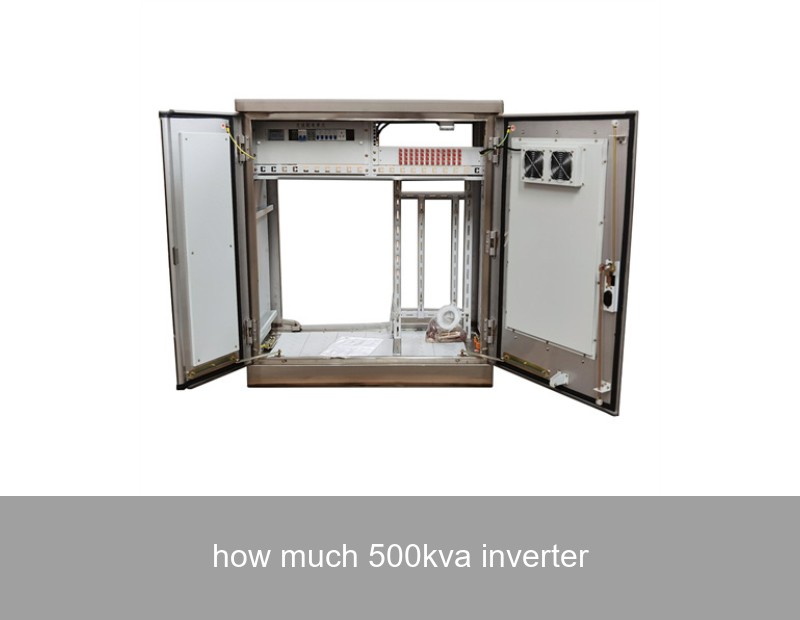
If you're managing a factory, a large commercial facility, or a community microgrid, you've likely encountered a critical question in your energy planning: how much does a 500kVA inverter cost? It's a logical starting point, but as a seasoned expert in the field, I must tell you that focusing solely on the price tag of the inverter unit is like buying a car based only on the cost of the engine. The true investment encompasses technology, integration, and long-term value. For businesses across Europe and the U.S. looking to harness solar power, ensure backup power, or participate in demand response programs, understanding the full scope of a 500kVA inverter system is key to a sound financial and operational decision.
Table of Contents
- Understanding the 500kVA Inverter: More Than Just a Box
- The Real Cost Breakdown: Beyond the Unit Price
- Key Factors Influencing Your 500kVA Inverter System Cost
- A Real-World Case: Cost vs. Value in Action
- The Highjoule Approach: Delivering Value Beyond the Inverter
- Making the Right Investment Decision
Understanding the 500kVA Inverter: More Than Just a Box
A 500kVA inverter is a powerhouse. To put it in perspective, 500 kilovolt-amperes (kVA) translates to a continuous power output capability of roughly 400-450 kilowatts (kW), depending on the power factor. This scale is squarely in the domain of commercial and industrial (C&I) applications. We're talking about facilities like:
- Manufacturing plants with heavy machinery
- Large data centers requiring pristine power quality
- Hospitality complexes and shopping malls
- Agricultural processing facilities
- Community or institutional microgrids
The inverter itself is the technological heart that converts direct current (DC) from sources like solar panels or battery banks into the alternating current (AC) that powers your operations. But its role has evolved. Modern 500kVA inverters, like those in Highjoule's H-Series Industrial Power Conversion System, are intelligent grid managers. They handle bidirectional power flow, provide advanced grid services, and ensure seamless transition between grid, solar, and battery power.
The Real Cost Breakdown: Beyond the Unit Price
So, let's address the core question. A standalone 500kVA inverter unit can range anywhere from $25,000 to $60,000+. This wide variance is the first clue that "the inverter" is not a commodity. However, the total installed cost of a functional system (Balance of System - BOS) is typically 2 to 3.5 times the inverter cost itself. Here’s a more realistic breakdown:
| Cost Component | Description | Estimated Range (USD) |
|---|---|---|
| Inverter Unit (500kVA) | Core power conversion device. Cost varies by technology (central vs. string), efficiency, and features. | $25,000 - $60,000 |
| System Design & Engineering | Electrical design, site surveys, grid interconnection studies, and permitting. | $5,000 - $20,000 |
| Balance of System (BOS) | Transformers, switchgear, cabling, conduit, combiners, disconnects, and safety equipment. | $30,000 - $80,000 |
| Installation & Labor | Skilled electrical labor for installation, commissioning, and testing. Highly variable by region. | $15,000 - $40,000 |
| Grid Interconnection & Monitoring | Utility fees, advanced metering, and energy management system (EMS) software. | $10,000 - $25,000 |
| Total Estimated Installed Cost | $85,000 - $225,000+ | |
As you can see, the inverter is a significant part, but not the whole story. The total cost is profoundly influenced by your specific project requirements and site conditions.

Credit: Photo by American Public Power Association on Unsplash - A commercial-scale energy system requires careful integration.
Key Factors Influencing Your 500kVA Inverter System Cost
To move from a wide estimate to a meaningful quote, consider these critical variables:
- Application & Configuration: Is this for a solar-only plant, a battery energy storage system (BESS), or a hybrid solar-plus-storage system? A hybrid system using a Highjoule H-500 Hybrid Controller may have a higher upfront cost but unlocks far greater ROI through energy arbitrage and resilience.
- Technology & Features: Do you need advanced grid-forming capabilities for microgrid islanding? High voltage battery compatibility? The level of intelligence and grid-support functionality (like reactive power control) directly impacts price.
- Site-Specific Challenges: Distance from generation to point of interconnection, existing electrical infrastructure upgrades, and local labor rates (especially in high-wage areas of the U.S. or Western Europe) can swing costs dramatically.
- Regulatory Environment: In the EU, compliance with strict grid codes may require additional hardware. In the U.S., the Investment Tax Credit (ITC) for storage can effectively reduce net cost by 30-70%, fundamentally changing the economics.
A Real-World Case: Cost vs. Value in Action
Let's look at a recent project Highjoule completed for a mid-sized food processing plant in Bavaria, Germany. The facility faced high peak demand charges and sought to stabilize operations against grid fluctuations.
- Challenge: Reduce peak grid demand and provide backup for critical refrigeration.
- Solution: A 500kVA/500kWh battery storage system centered on Highjoule's H-500 inverter with integrated energy management.
- System Cost: Total installed cost was approximately €180,000.
- Value Delivered: The system achieves €45,000 in annual savings through peak shaving and optimized self-consumption of existing rooftop solar. It also provides full backup for critical loads for up to 4 hours. The simple payback period is just under 4 years, not factoring in potential revenue from future primary control reserve markets.
This case highlights that the right question isn't "how much does the inverter cost?" but "what is the value of the total system over its lifetime?" The inverter is the enabling technology for that value creation.
The Highjoule Approach: Delivering Value Beyond the Inverter
At Highjoule, we understand that you're not shopping for a component; you're investing in an energy solution. Our products, like the H-Series Industrial Power Conversion System, are engineered for this holistic view. They are not just inverters; they are integrated platforms that simplify design, reduce BOS costs, and are built for a 20+ year lifespan.
For a 500kVA application, we offer:
- Pre-configured, Modular Solutions: Reducing engineering complexity and on-site installation time, which directly controls labor costs.
- Advanced Grid Intelligence: Native support for grid services (as outlined in the EU's Electricity Market Design) can turn your system from a cost center into a revenue generator.
- Global Service & Monitoring: Our Highjoule Nexus™ EMS platform provides real-time oversight and predictive maintenance, ensuring your system delivers its promised financial returns year after year.

Credit: Photo by ThisisEngineering RAEng on Unsplash - Intelligent monitoring is key to long-term system value.
Making the Right Investment Decision
When evaluating a 500kVA inverter system, shift the conversation with potential providers from price to performance and total cost of ownership. Ask:
- Can you provide a detailed model of my project's financial returns, not just a equipment quote?
- How does your system's efficiency curve impact my energy yield in my specific climate?
- What is the warranty on the entire power conversion system, and what does your support network look like in my region?
The most "expensive" system can be the one that fails during a critical production run, or one whose complexity leads to endless service calls. Reliability, backed by expert support, is an invaluable part of the equation.
Given the complexity and long-term implications of deploying a 500kVA system, what specific operational challenge or financial goal at your facility is driving you to explore this solution today?
 Inquiry
 Online Chat