


How Much Are Solar Panels? A Clear Breakdown for Homeowners and Businesses
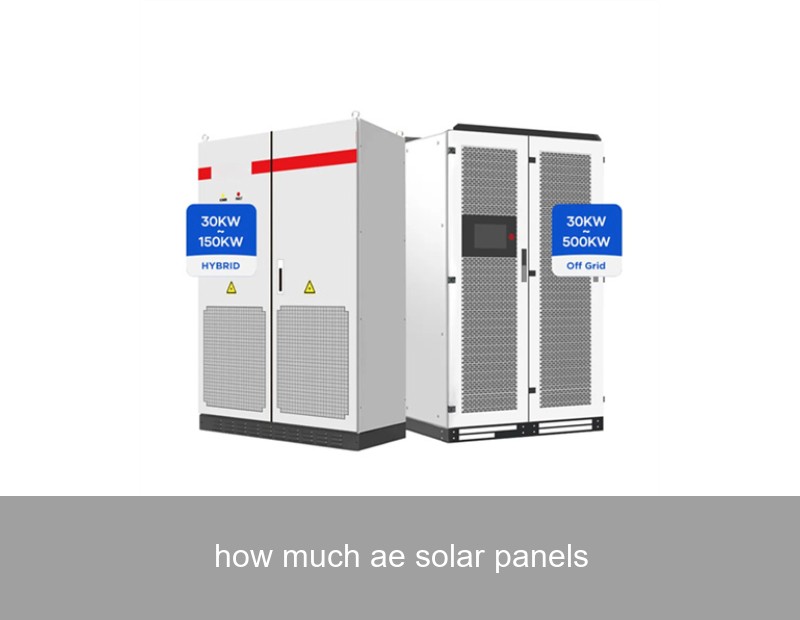
If you're considering solar power, the first question that likely comes to mind is, "How much are solar panels?" It's a smart question, but the answer isn't a single number. The cost of a solar energy system is influenced by everything from your location and energy needs to the quality of the components and the complexity of the installation. As a leading provider of intelligent energy storage, we at Highjoule often see that understanding the full picture—from panels to storage—is key to making a sound investment. Let's demystify the costs and explore what truly drives value in a solar installation.
Key Factors Influencing Solar Panel Costs
Think of buying a solar system like buying a car. The make, model, features, and where you buy it all affect the final price. For solar, the main cost drivers are:
- System Size (kW): This is the most significant factor. A system sized for a large family home (e.g., 10 kW) will cost substantially more than one for a small apartment (e.g., 4 kW). Size is determined by your historical electricity consumption and future needs, like adding an electric vehicle.
- Panel Quality and Technology: Not all panels are created equal. High-efficiency monocrystalline panels command a premium over polycrystalline ones due to their better performance in limited space and lower light conditions. The brand's reputation and warranty (often 25+ years) also play a role.
- Installation Complexity: A simple, composite roof is easier and cheaper to work on than a historic slate tile or a complex metal roof. The system's design, including the need for multiple roof planes or ground mounts, adds to labor costs.
- Location & Local Market: Costs vary by country and even by state. Labor rates, permit fees, and the number of local installers create competitive (or less competitive) markets. For instance, average prices in Germany and California are often lower than in regions with fewer installers.
- Additional Components: The inverter, which converts solar DC power to usable AC power, is a major component. Today, the conversation is increasingly about adding a battery energy storage system (BESS). While this increases upfront cost, it dramatically enhances the system's value, a point we'll explore in depth.
A Detailed Price Breakdown: More Than Just Panels
To move beyond ballpark figures, let's look at a typical cost structure for a residential system in Europe or the US. The following table outlines where your investment goes.
| Cost Component | Approx. % of Total Cost | What It Covers | Why It Matters |
|---|---|---|---|
| Solar Panels & Hardware | 20-25% | The physical panels, racking, and mounting equipment. | Quality here ensures durability and energy yield for decades. |
| Inverter(s) | 10-15% | The central or micro-inverters that convert DC to AC power. | The "brains" of the solar side; efficiency and reliability are critical. |
| Battery Storage System | 25-40% | Lithium-ion battery unit, battery management system (BMS), and hybrid inverter. | Enables energy independence, backup power, and maximizes self-consumption. |
| Installation Labor & Permits | 15-20% | Professional design, installation, electrical work, and securing permits. | Proper installation is non-negotiable for safety, performance, and warranty. |
| Balance of System & Other | 10-15% | Wiring, electrical panels, monitoring systems, and sales/overhead. | Ensures the system integrates seamlessly and safely with your home. |
As you can see, the panels themselves are just one part of the equation. The growing segment of battery storage represents a significant but transformative portion of the investment.

Image Source: Unsplash (Representative image of a solar and storage installation)
The Hidden Value: Why Solar + Storage is the New Standard
So, why are industry leaders like Highjoule emphasizing storage? Simply put, solar panels alone only generate power when the sun shines. Without storage, excess energy is often sold back to the grid at a low rate, and you draw power from the grid at night at a high rate. A battery system changes this dynamic entirely.
By pairing solar with a system like the Highjoule H2 Series for homes or the scalable Highjoule C&I Stack for businesses, you can:
- Maximize Self-Consumption: Store daytime surplus to use in the evening, reducing grid reliance by up to 80% or more.
- Ensure Backup Power: Keep critical loads running during grid outages—a feature increasingly valuable in both the US and Europe.
- Participate in Grid Services: In some markets, you can earn revenue by allowing your stored energy to support the local grid during peak demand.
This integration transforms your solar array from a simple cost-offset tool into a robust, resilient, and intelligent energy asset. The upfront cost is higher, but the long-term financial and practical benefits are exponentially greater.
Real-World Case: A German Bakery's Journey to Energy Independence
Let's look at concrete data. A family-run bakery in Bavaria, Germany, was facing high and unpredictable energy costs, with intensive refrigeration and oven use. Their 50 kW rooftop solar system was offsetting daytime costs but did nothing for their pre-dawn baking hours or grid outages that threatened inventory spoilage.
In 2022, they installed a Highjoule C&I Stack with 120 kWh of storage capacity. The results after one year:
- Grid Electricity Consumption Reduced: From 100% to 28%.
- Self-Consumption of Solar Power Increased: From 35% to over 90%.
- ROI Timeline: Projected payback period of 6.5 years, factoring in German KfW incentives and avoided peak-time energy costs.
- Resilience: The bakery can now operate fully for 8+ hours during a blackout, protecting business continuity.
This case shows that asking "how much are solar panels" evolved into "what is the value of a complete energy independence system?" The bakery's investment secured predictable energy costs and operational resilience.

Image Source: Unsplash (Representative image of a commercial battery system inspection)
Looking Beyond the Price Tag: Long-Term Savings & Incentives
The true cost of solar is net of long-term savings and available incentives. Over a 25-year panel lifespan, electricity bill savings can total tens of thousands of dollars or euros. Both the US and EU offer significant support:
- United States: The federal Investment Tax Credit (ITC) currently offers a 30% tax credit on the total installed cost, including storage! Many states add additional rebates.
- European Union: Programs vary by country but are robust. Germany offers low-interest loans and per-kWh incentives for self-consumption. Italy's Superbonus 110% has driven massive renewal. The UK has removed VAT on clean energy products. Always check with local authorities or a trusted installer for the latest programs.
Furthermore, studies by authorities like the National Renewable Energy Lab (NREL) consistently show that the levelized cost of solar energy continues to fall, making it highly competitive with traditional grid power.
Is Your Roof Ready for Solar? Let's Find Out
The question "how much are solar panels" is your starting point, not the destination. The real journey is about understanding your unique energy profile, your resilience goals, and the intelligent solutions that can meet them. At Highjoule, we believe the future isn't just solar—it's smart, integrated storage that puts you in control.
So, what does your ideal energy day look like? Could your home or business not only save money but also become a pillar of stability in your community during a power outage? The technology to make it happen is here today.
 Inquiry
 Online Chat