


How Much Battery Storage Do You Really Need? Demystifying the 10kW/10kWh Question
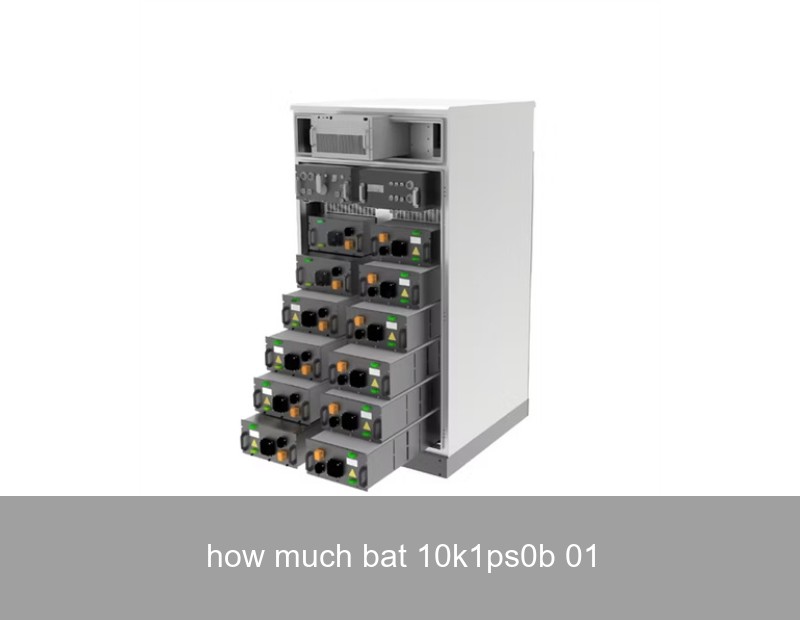
If you're considering a home battery system, you've likely encountered a string of numbers like 10kW/10kWh. It sounds technical, but understanding this simple pairing is the key to unlocking true energy independence and maximizing your savings. This isn't just about having a battery; it's about having the *right* battery for your unique energy life. As a global leader in advanced energy storage since 2005, Highjoule is here to guide you through this essential decision, transforming complex specs into a clear path toward a smarter, more resilient home.
Table of Contents
- Decoding the Numbers: kW vs. kWh
- The Phenomenon: Why "10kWh" Isn't a One-Size-Fits-All Answer
- The Data: How Usage Patterns Dictate Your Needs
- A Real-World Case: The Smith Family in California
- Beyond Basic Storage: The Highjoule Intelligent Solution
- Your Energy, Your Decision
Decoding the Numbers: kW vs. kWh - Your Battery's Personality
Let's break down the code. Think of your battery as a water tank.
- Kilowatt-hours (kWh) is the CAPACITY – the size of the tank. A 10kWh battery can deliver 10 kilowatts of power for one hour, 5 kW for two hours, or 1 kW for ten hours. It tells you "how much" total energy is stored.
- Kilowatts (kW) is the POWER – the width of the pipe coming out of the tank. A 10kW rating means the battery can deliver a maximum of 10 kilowatts at any single moment. This determines "how fast" you can pull energy to run multiple high-power appliances simultaneously.
So, a 10kW/10kWh system is a balanced, common entry point for many homes: it can power a significant portion of your home (up to 10kW instantly) for a period of time (roughly 1 hour at max draw). But is this the right balance for you?
The Phenomenon: Why "10kWh" Isn't a One-Size-Fits-All Answer
The modern energy landscape is shifting. With the rise of rooftop solar, volatile utility rates, and an increase in extreme weather events, homeowners are no longer passive consumers. You are becoming your own energy manager. The common pitfall is focusing solely on total storage (kWh) without considering your home's unique power flow. A family with an electric vehicle (EV), heat pump, and central air conditioning has a dramatically different "energy personality" than a household with gas heating and modest appliance use. Your peak demand (kW) and daily consumption pattern (kWh) must be analyzed together.

This is where generic sizing falls short. An undersized system might not get you through the night or a grid outage. An oversized system means you've over-invested in capacity you'll rarely use.
The Data: How Usage Patterns Dictate Your Needs
Let's look at some typical energy draws to understand the "how fast" (kW) challenge:
| Appliance/System | Typical Power Draw (kW) | Runtime on 10kWh (at that draw) |
|---|---|---|
| Refrigerator | 0.15 - 0.8 kW | 12.5 - 66 hours |
| Central A/C (3-ton) | 3.5 - 5.0 kW | 2 - 2.8 hours |
| Electric Vehicle Charger (Level 2) | 7.2 - 11.5 kW | ~0.9 - 1.4 hours |
| Electric Water Heater | 4.5 kW | ~2.2 hours |
| Whole House (Average U.S.) | 1.2 - 2.5 kW (avg) | 4 - 8 hours |
Data sourced from the U.S. Department of Energy.
See the challenge? If you're running the A/C and charging your EV while the grid is down, you could be drawing 15kW or more—exceeding the 10kW power limit of our example system, even if you have plenty of energy (kWh) left in the tank. This is why professional assessment is critical.
A Real-World Case: The Smith Family in California
Let's examine a real scenario. The Smiths, a family of four in Sacramento, CA, installed a 8kW solar array. They were initially quoted a standard 10kW/13.5kWh battery system. However, their goals were specific: survive evening peak rates (4-9 PM), ensure backup for essential loads during Public Safety Power Shutoffs (PSPS), and future-proof for an EV purchase next year.
A Highjoule energy audit revealed their critical evening load (lights, kitchen, HVAC, pool pump) peaked at 8.2kW and consumed about 15kWh during the peak period. A standard 10kW/13.5kWh battery would cover the energy need but risked "clipping" their peak power demand, potentially overloading the system when the pool pump kicked on.
The Highjoule Solution: We recommended our HPS-12 modular system, configured with a 12kW inverter and 16kWh of usable capacity. This provided the necessary power headroom (12kW > 8.2kW peak) and extra energy to cover their full evening peak shift and essential overnight loads. The system's modular design also allows them to easily add another 4kWh battery module when they purchase their EV.
The Result: In its first year, the Smiths reduced their electricity bill by 94% during summer months and have weathered multiple grid outages seamlessly. The intelligent system software automatically switches to backup mode and prioritizes circuits, giving them peace of mind. This case shows why the question "how much battery storage?" must be answered with "what do you need it to *do*?"

Beyond Basic Storage: The Highjoule Intelligent Solution
At Highjoule, we believe storage is not a commodity but an intelligent ecosystem. Our products, like the HPS Series for homes and the scalable GridMax series for commercial applications, are built on three core principles:
- Adaptive Power & Capacity: Modular designs allow you to scale both power (kW) and energy (kWh) independently. Start with what you need, expand as your life evolves.
- Grid-Interactive Intelligence: Our EnergyOS™ platform doesn't just store energy; it optimizes it. It learns your patterns, integrates with solar production, and can respond to utility signals (where available) to participate in grid services, creating potential revenue streams.
- Uncompromising Safety & Durability: With industry-leading UL 9540 certification and robust thermal management, our systems are engineered for a 15+ year lifespan, protecting your investment.
For a deeper dive into the safety standards that underpin our designs, you can review the framework provided by NFPA 855, the standard for stationary energy storage installations.
Finding Your Perfect Match
So, how do you move from confusion to clarity? Follow this logical ladder:
- Audit & Analyze: Examine 12 months of utility bills. Identify your average and peak daily kWh consumption. List all critical loads you'd want during an outage and their power ratings.
- Define Goals: Is your primary driver bill savings, backup power, sustainability, or a combination? Quantify your desired backup duration (e.g., "through the night" or "24/7 resilience").
- Consult with Experts: Work with a certified Highjoule partner. They will model your solar production (if applicable), load profile, and simulate different battery configurations to find the optimal kW/kWh balance for your budget and goals. A great resource for understanding these calculations is the National Renewable Energy Laboratory's (NREL) sizing tools page.
Your Energy, Your Decision
The journey to energy independence starts with the right question. Instead of asking "is 10kW/10kWh right for me?", what specific energy goal do you want to achieve in the next year, and how can your home's power system be designed as a dynamic partner in that goal?
 Inquiry
 Online Chat