


Unlocking Grid Independence: How a Marsrock Grid Tie Inverter Powers Your Energy Future
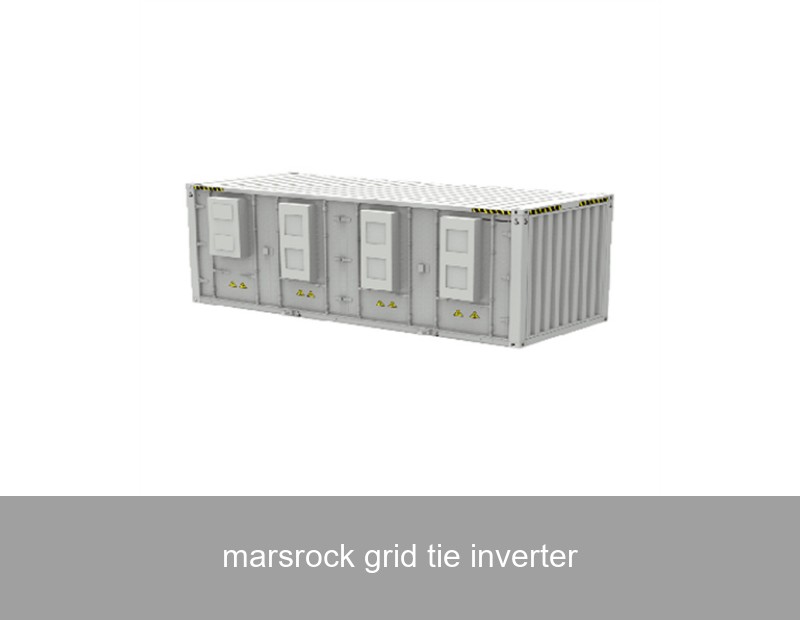
Imagine your solar panels soaking up the sun, your home running on clean power, and any excess energy seamlessly flowing back to the community grid. This isn't just a dream of sustainable living; it's the daily reality enabled by a critical piece of technology: the grid tie inverter. Specifically, advanced models like the Marsrock grid tie inverter are transforming how homes and businesses interact with the power grid, turning passive consumers into active "prosumers." But what happens when the grid itself is unstable, or you want to keep the lights on during an outage? The evolution of this technology holds the key. As a leader in smart energy solutions, Highjoule has been at the forefront of integrating such advanced inverters into resilient and intelligent storage systems since 2005.
Table of Contents
- The Core of Solar Integration: What a Grid Tie Inverter Does
- The Critical Limitation: What Happens When the Grid Goes Down?
- The Evolution: Hybrid Inverters and the Rise of Battery Storage
- Case Study: Achieving 24/7 Solar in California with Highjoule's Solution
- Choosing the Right System: Beyond the Inverter
- Your Energy Future: Questions to Consider
The Core of Solar Integration: What a Grid Tie Inverter Does
Let's break it down simply. Your solar panels generate Direct Current (DC) electricity. Your home appliances and the public grid use Alternating Current (AC). The primary job of any grid-tie inverter is to perform this DC-to-AC conversion efficiently and safely. But a device like a Marsrock grid tie inverter does much more. It synchronizes the phase and frequency of your solar power perfectly with the utility grid—think of it as harmonizing your private energy choir with the public symphony. It also includes vital safety features, like automatic shutdown during a grid outage (anti-islanding), to protect utility workers.
This seamless integration allows for net metering, where your electricity meter spins backwards as you export surplus energy, leading to significant bill savings. However, this traditional setup has a fundamental dependency.
The Critical Limitation: What Happens When the Grid Goes Down?
Here's a paradox many solar owners face: on a bright, sunny day during a grid blackout, their solar panels sit idle. Why? Standard grid tie inverters, for safety reasons, must shut off when the grid fails. Your home, despite having a power source on the roof, goes dark. This vulnerability is becoming increasingly apparent.
Data from the U.S. Energy Information Administration (EIA) highlights that the average U.S. electricity customer experienced just over seven hours of power interruptions in 2021, with major events often driven by extreme weather. In Europe, concerns over energy security and grid stability are equally pressing. This phenomenon exposes a gap: the need for solar independence, not just interconnection.

Image Source: Unsplash. A home with solar panels - but without storage, it's vulnerable during grid outages.
The Evolution: Hybrid Inverters and the Rise of Battery Storage
The solution lies in evolution. Enter the hybrid inverter (or multi-mode inverter). This intelligent device combines the functions of a grid tie inverter with a battery inverter and a critical loads panel controller. It's the brain of a modern energy storage system. Think of it this way: if a Marsrock grid tie inverter is a skilled translator, a hybrid inverter is a multilingual manager who also runs the backup generators.
Here’s how a complete system like those designed by Highjoule works:
- Grid-Tied Mode: Operates like a standard system, using solar and sending excess to the grid.
- Backup Mode: The moment a grid failure is detected, it isolates your home (creating a "microgrid") and continues powering essential circuits using stored battery energy, all within milliseconds.
- Solar Self-Consumption Mode: Maximizes use of your solar power by charging batteries during the day for use at night, drastically reducing grid reliance.
Highjoule's HPS Series integrated energy storage systems are built around this very principle. We pair high-efficiency, durable components with our proprietary energy management software. While we select robust inverters for their performance, the real magic is in the integration. Our systems don't just connect parts; they unify them into a resilient, intelligent whole that can be monitored and controlled from your smartphone, ensuring you get the most out of every kilowatt-hour, whether the grid is up or down.
Case Study: Achieving 24/7 Solar in California with Highjoule's Solution
Consider the real-world challenge faced by a medium-sized winery in Sonoma County, California. Their existing solar setup, centered on a capable grid tie inverter, slashed their energy bills. However, annual wildfire-related Public Safety Power Shutoffs (PSPS) threatened critical operations: temperature-controlled fermentation tanks and cold storage. A multi-day outage could ruin an entire vintage.
The Goal: Ensure uninterrupted power for critical processing and refrigeration loads (approx. 25 kW) for up to 10 hours during grid outages.
The Highjoule Solution: We deployed a Highjoule HPS-30 hybrid storage system alongside their existing solar array. The system featured a high-capacity lithium-iron-phosphate (LiFePO4) battery bank and an advanced hybrid inverter capable of seamless islanding.
| Metric | Before Highjoule System | After Highjoule System |
|---|---|---|
| Grid Outage Resilience | 0 hours (full shutdown) | Over 12 hours of critical load backup |
| Solar Self-Consumption | ~40% (rest exported) | Increased to ~85% |
| Bill Savings During Normal Operation | Significant | Increased by an additional 30% |
The winery now operates with confidence. During a PSPS event in late 2023, the system automatically kicked in, preserving thousands of gallons of wine and proving the investment's value beyond simple payback calculations.

Image Source: Unsplash. A professional battery energy storage system installation, similar to commercial solutions.
Choosing the Right System: Beyond the Inverter
Focusing solely on the inverter brand, like searching only for a Marsrock grid tie inverter, is like buying an engine without considering the rest of the car. For true resilience and savings, you need a system designed for synergy. Key considerations include:
- Battery Chemistry & Capacity: LiFePO4 batteries, used by Highjoule, offer longer lifespan and superior safety compared to other chemistries.
- System Scalability: Can you easily add more batteries later? Our modular systems are designed for future expansion.
- Energy Management Software: This is the true intelligence. Our platform allows for peak shaving, time-based control, and remote monitoring, adapting to your usage and utility rates.
- Professional Integration & Warranty: A single provider for the entire system, like Highjoule, ensures compatibility, simplifies service, and provides a comprehensive warranty.
Your Energy Future: Questions to Consider
The energy landscape is shifting from centralised grids to decentralised, intelligent networks. Whether you're a homeowner tired of blackouts or a business manager focused on operational continuity and cost predictability, the question is no longer just about generating solar power, but how you manage and control it.
What would 24/7 clean energy independence mean for your peace of mind, your business's bottom line, or your contribution to grid stability during peak demand? The technology to achieve it is here, moving far beyond the simple grid tie inverter to a comprehensive energy solution.
Are you ready to explore what a truly integrated, Highjoule smart energy system could look like for your specific needs?
 Inquiry
 Online Chat