


Finding the Cheapest Way to Store Electricity for Your Home and Business
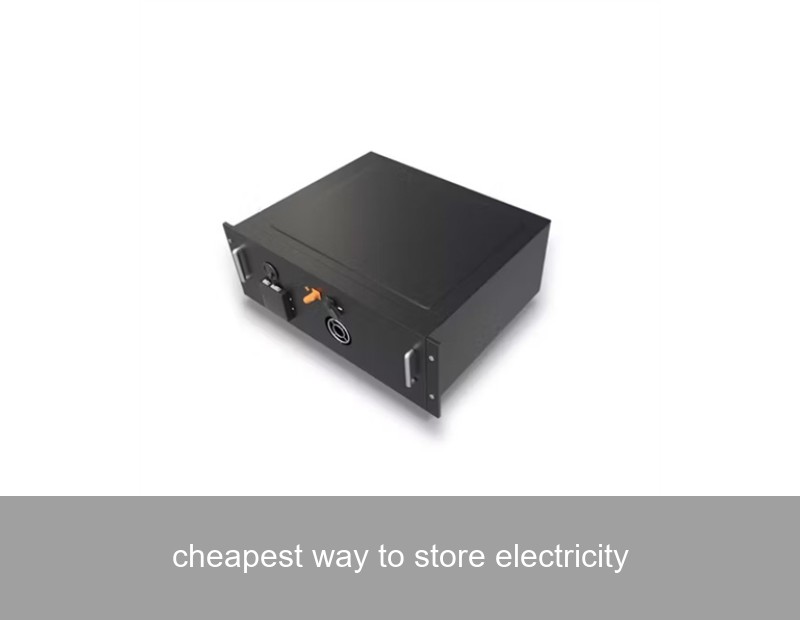
As electricity prices continue to fluctuate and the push for renewable energy grows stronger, a critical question emerges for homeowners and business leaders across Europe and the US: what is the cheapest way to store electricity? The answer isn't a simple one-size-fits-all, but rather a strategic combination of technology, smart management, and understanding your specific energy needs. For over 18 years, Highjoule has been at the forefront of this very challenge, engineering advanced battery storage systems that don't just store power, but optimize it for maximum economic and environmental return. Let's unravel the economics of energy storage together.
Table of Contents
- The Storage Puzzle: Why "Cheapest" is a Moving Target
- Battery Breakdown: Comparing Technologies for Cost-Effectiveness
- Beyond the Battery: The Real Secret to Cheap Storage
- Case Study: A German Bakery's Recipe for Savings
- The Highjoule Approach: Intelligent Storage as a Service
- The Future Horizon: What's Next for Storage Economics?
The Storage Puzzle: Why "Cheapest" is a Moving Target
When we search for the "cheapest" storage, we often think only of the upfront price tag of a battery unit. This is a common pitfall. True cost-effectiveness in electricity storage is measured over the system's entire lifetime, considering not just purchase and installation, but also efficiency, longevity, maintenance, and—most importantly—the value of the services it provides. A cheaper battery that degrades quickly or wastes 30% of the energy you put into it is far more expensive in the long run.
The landscape is also dynamic. According to IRENA, the cost of lithium-ion batteries has fallen by over 90% in the last decade. This dramatic shift makes solar-plus-storage systems increasingly viable. However, the optimal solution depends heavily on your location (solar irradiance, utility rates), consumption patterns, and local grid policies like net metering or feed-in tariffs.
Battery Breakdown: Comparing Technologies for Cost-Effectiveness
Let's look at the main contenders in the residential and commercial storage space. The key metrics are Levelized Cost of Storage (LCOS)—which includes all costs over the system's life divided by total energy output—and cycle life.
| Technology | Upfront Cost (approx.) | Key Strength | Consideration for "Cheapest" |
|---|---|---|---|
| Lithium Iron Phosphate (LFP) | Medium-High | Excellent safety, long cycle life (6,000+ cycles), stable | Often the lowest LCOS due to longevity; ideal for daily cycling. |
| NMC Lithium-ion | Medium | High energy density, compact size | May degrade faster under heavy use; cost-effective for space-constrained applications. |
| Lead-Acid | Low | Mature technology, low initial cost | High LCOS: short lifespan (500-1000 cycles), lower efficiency, frequent replacement needed. |

For most homeowners and businesses seeking a reliable, cheapest way to store electricity over a 15-20 year period, LFP chemistry, like that used in Highjoule's H-Series residential units, has become the industry benchmark. Its durability and safety profile directly translate to lower lifetime cost and peace of mind.
Beyond the Battery: The Real Secret to Cheap Storage
Here's the insider perspective: the hardware is only half the story. The true economics are unlocked by intelligent software. A "dumb" battery simply charges and discharges. A smart system, like Highjoule's EnergyOS™ platform, continuously analyzes weather forecasts, electricity price curves, and your consumption habits to make autonomous decisions.
- Arbitrage: Buy and store grid electricity when prices are low (e.g., at night), use it when prices peak.
- Solar Self-Consumption Optimization: Maximize the use of your own solar PV generation, reducing export at lower rates.
- Grid Services: In some markets, systems can provide grid stabilization services for additional revenue.
- Demand Charge Management: For commercial users, a major cost is "demand charges" based on peak power draw. Storage can shave these peaks, delivering massive savings.
This intelligent orchestration is what transforms a capital expense into a dynamic financial asset. The cheapest way to store electricity is, paradoxically, sometimes to invest in a smarter, more integrated system upfront.
Case Study: A German Bakery's Recipe for Savings
Let's ground this in reality. A family-owned bakery in Bavaria, Germany, faced high electricity costs, especially during early morning operational peaks coinciding with grid peak tariffs. Their existing rooftop PV system was exporting excess afternoon power at a modest feed-in tariff.
The Solution: Highjoule installed a commercial C-Series battery storage system (50 kWh capacity) integrated with their existing PV and controlled by EnergyOS™.
The Data-Driven Outcome (First Year):
- Self-Consumption of Solar: Increased from 35% to 82%.
- Demand Charge Reduction: Peak grid draw reduced by 40%, cutting this portion of their bill significantly.
- Overall Energy Cost Savings: 68% reduction in electricity costs from the grid.
- Payback Period: Achieved in under 5 years due to Germany's high energy prices and intelligent dispatch.
For this bakery, the cheapest way to store electricity was not the lowest-bid battery, but a tailored Highjoule system that actively managed their unique load profile against real-time market signals.
The Highjoule Approach: Intelligent Storage as a Service
At Highjoule, we believe the most cost-effective storage solution is one designed for your specific context. Our process reflects this:
- Consultation & Energy Audit: We analyze your past bills, energy generation, and goals.
- System Design & Simulation: Using proprietary tools, we model different configurations to project your precise financial and energy outcomes.
- Deployment of Integrated Hardware: From our robust H-Series for homes to scalable C-Series for businesses and M-Series for microgrids, we provide certified, safe, and high-cycle-life battery systems.
- Activation of EnergyOS™: This brain of the system is where the ongoing savings are generated, with remote monitoring and over-the-air updates ensuring peak performance for decades.

We act as your long-term partner in energy independence, ensuring the system you install today remains the cheapest way to store electricity throughout its operational life.
The Future Horizon: What's Next for Storage Economics?
Innovation continues. While LFP dominates today, technologies like sodium-ion batteries promise even lower raw material costs. Furthermore, vehicle-to-grid (V2G) integration could turn electric vehicle fleets into distributed storage assets. The core principle, however, will remain: intelligence is as crucial as chemistry. A National Renewable Energy Laboratory (NREL) report emphasizes that software-driven grid integration is key to maximizing storage value.
So, as you ponder the cheapest way to store electricity for your own property, we leave you with this question: Is your current energy strategy just paying bills, or is it an actively managed asset poised to save you money for the next 20 years?
 Inquiry
 Online Chat