


How Much Do BESS Systems Cost? A Clear Breakdown for 2024
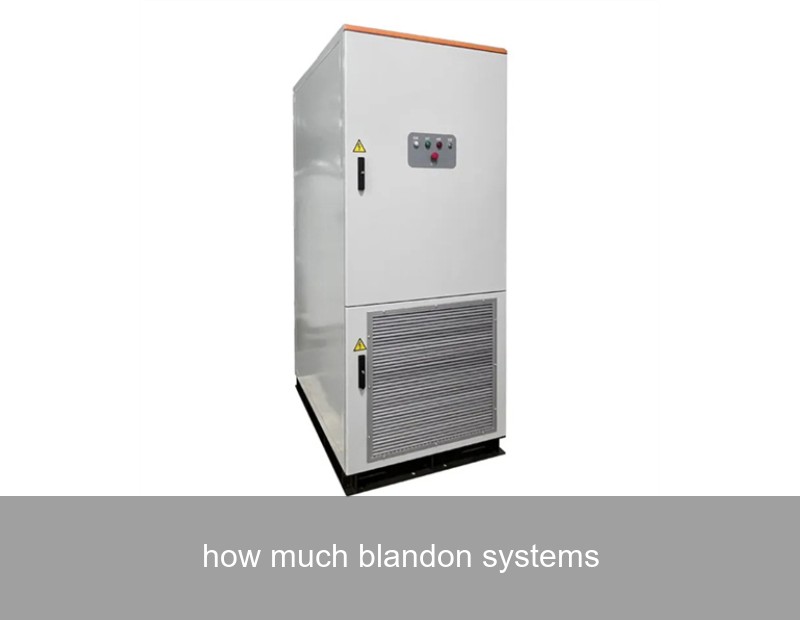
If you're exploring battery energy storage systems (BESS) for your business, factory, or home, one question inevitably rises to the top: how much do BESS systems actually cost? You're not just buying a battery box; you're investing in energy resilience, operational savings, and a step toward sustainability. The price tag isn't a single number—it's a puzzle where components, scale, intelligence, and long-term value interlock. As a global leader in advanced energy storage since 2005, Highjoule is here to demystify that puzzle. Let's move beyond the simple per-kWh quote and understand what truly defines the cost and value of a robust BESS solution.
Table of Contents
- The BESS Cost Puzzle: It's More Than Just Batteries
- Key Cost Drivers: What You're Really Paying For
- A Real-World Case: Commercial Storage in Action
- Highjoule's Approach: Maximizing Value, Optimizing Cost
- Looking Beyond the Price Tag: The Total Value of Ownership
The BESS Cost Puzzle: It's More Than Just Batteries
Ask for a BESS quote, and you might initially hear a figure like "$400 to $800 per kilowatt-hour (kWh)." While this gives a baseline, it's like quoting the price of a car based solely on engine size. The total installed cost hinges on a system's architecture and capabilities. A basic, passive system has a different cost profile than an intelligent, grid-interactive solution like those Highjoule designs for commercial and industrial applications.
The real question evolves from "how much do BESS systems cost?" to "how much value do they deliver?" To answer that, we need to dissect the core components. Primarily, you have the battery cells (the chemical energy store), the battery management system (BMS, the brain for health and safety), the power conversion system (PCS, or inverter, which talks to the grid), and the sophisticated energy management system (EMS) that decides when to charge or discharge based on weather, tariffs, and demand. The integration quality of these components is where providers like Highjoule differentiate, ensuring safety, longevity, and performance.
Key Cost Drivers: What You're Really Paying For
Let's break down the factors that move the needle on your investment.
- System Scale & Configuration: Costs generally decrease per kWh as capacity (MWh) and power (MW) increase. A 100 kWh system has a higher per-unit cost than a 2 MWh system due to economies of scale. Configuration, like DC-coupled vs. AC-coupled design, also impacts efficiency and cost.
- Technology & Chemistry: Lithium Iron Phosphate (LFP) is now the dominant chemistry for stationary storage due to its safety, longevity (often 6,000+ cycles), and falling costs. Highjoule utilizes top-tier LFP cells, prioritizing lifecycle over marginally cheaper but less durable options.
- Intelligence & Software (The Hidden Value Engine): This is crucial. A "dumb" battery just stores energy. A smart BESS, powered by an advanced EMS, can perform revenue-generating or cost-avoiding tasks like peak shaving, energy arbitrage, and frequency response. The software intelligence, a core of Highjoule's offering, adds to the upfront cost but delivers the ROI.
- Installation & Grid Integration: Site preparation, electrical cabling, permitting, and interconnection fees vary widely by region (e.g., U.S. vs. EU) and site complexity. A retrofit can be more costly than a new-build integration.

Image: A complex BESS installation requires expert integration. Source: Unsplash
A Real-World Case: Commercial Storage in Action
Let's ground this in data. Consider a mid-sized manufacturing plant in Germany facing high energy prices and demand charges. Their goal: reduce operational costs and ensure backup power for critical lines.
- Challenge: Sharp afternoon peak demand creating high grid fees; vulnerability to short grid outages.
- Solution: A tailored 500 kWh / 250 kW Highjoule BESS with intelligent EMS.
- Deployment: The system was configured for daily peak shaving, charging during low-cost solar hours or off-peak night rates, and discharging during the expensive afternoon peak period. It also provides seamless UPS functionality.
- Cost & Savings: The total turnkey project cost fell within the typical commercial range. The financial analysis projected a payback period of under 5 years, based primarily on slashing demand charges and leveraging time-of-use arbitrage. Furthermore, the system qualifies for local grid support incentives, adding another revenue trickle.
This case shows that the relevant metric isn't just "how much do BESS systems cost?" but "what is the net present value (NPV) over 15 years?" When operational savings and potential revenue streams are factored in, the equation shifts dramatically.
Highjoule's Approach: Maximizing Value, Optimizing Cost
At Highjoule, we engineer systems with Total Cost of Ownership (TCO) in mind. Our products, like the HI-Series Commercial Stack, are designed for scalability and ease of installation, reducing soft costs. They come integrated with our JouleMind AI EMS, a platform that continuously optimizes dispatch based on real-time data, weather forecasts, and market signals.
For a business, this means we don't just sell hardware; we deliver an automated energy asset. Our service includes ongoing performance monitoring, software updates, and advisory services to ensure your system adapts to changing tariff structures or grid rules, especially in dynamic markets like the US (FERC Order 2222) and the EU. This long-term partnership approach protects your investment and ensures the cost question is answered with a compelling value proposition.
| Cost Component | Influence on Total Price | Highjoule's Value Addition |
|---|---|---|
| Battery Cells & Racks | ~30-40% | Long-life LFP chemistry; modular design for future expansion. |
| Power Conversion (Inverter) | ~15-20% | High-efficiency, bi-directional inverters with grid-forming capability for microgrids. |
| Energy Management System | ~10-15% | Proprietary JouleMind AI for maximum ROI; includes ongoing updates. |
| Installation & Integration | ~20-30% | Streamlined design & partner network to reduce time and complexity on-site. |
| Permitting & Grid Connection | ~5-10% | Expertise in navigating local regulations in the US and Europe. |
Looking Beyond the Price Tag: The Total Value of Ownership
So, when evaluating "how much do BESS systems cost," consider these value pillars that often outweigh the initial capital expenditure (CapEx):
- Resilience: What is the cost of a 2-hour production halt? For many, a BESS as backup power is an insurance policy with a calculable premium.
- Sustainability Goals: Pairing a BESS with on-site renewables like solar maximizes green energy consumption. This has tangible value in corporate ESG reporting and compliance with regulations.
- Future-Proofing: Energy markets are shifting. A smart BESS positions you to participate in demand response programs or virtual power plants (VPPs), creating future revenue. Highjoule's systems are built with this market agility in mind.
Ultimately, the most expensive system can be the one that fails prematurely or sits idle because its software can't capture value. According to a report by NREL, software and controls are increasingly critical to unlocking stacked value streams.
Your Next Step: From Cost to Clarity
The journey to a clear answer starts with your specific needs. What are your peak demand charges? Do you have on-site solar or wind? What are your resilience requirements? At Highjoule, we begin every project with a detailed energy analysis to model the optimal system size and financial return for your unique situation.
Instead of asking for a generic price, why not share your latest energy bill with our experts? We can show you a personalized projection of not just the cost, but the savings and value a Highjoule BESS would bring to your operation over the next decade.
 Inquiry
 Online Chat