


How Much Does a Condo Generator Cost? The Ultimate Breakdown for 2024
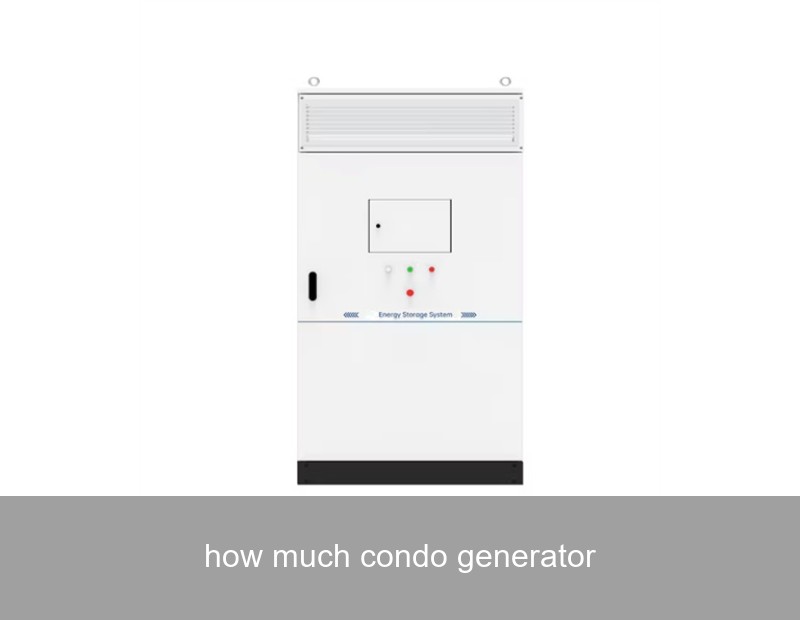
You hear a distant rumble, the lights flicker, and then... silence. A power outage in a condominium isn't just an inconvenience; it’s a disruption to safety, comfort, and property value. As extreme weather events and grid instability become more frequent, condo boards and residents are asking a critical question: how much does a condo generator actually cost? The answer isn't a simple number—it's a spectrum defined by your building's needs, the type of system, and the long-term value of resilience. This guide will break down the true cost, from initial investment to long-term savings, and explore how modern energy storage is revolutionizing backup power for multi-unit dwellings.
Beyond the Price Tag: The Real Cost Spectrum
When condo associations inquire about generator costs, they're often quoted a figure for a large diesel or natural gas standby generator. While this covers the hardware, it's merely the entry point. The total cost of ownership (TCO) encompasses installation, fuel, ongoing maintenance, compliance, and potential revenue disruption. A 2023 report by the National Fire Protection Association (NFPA) highlights stricter codes for standby generator installations in multi-family buildings, impacting design and cost. Conversely, innovative solutions like battery energy storage systems (BESS) offer backup while creating new value streams, fundamentally altering the cost equation.
System Types & Price Ranges: From Diesel to Solar+Storage
The choice of technology is the primary driver of cost. Let's compare the main options.
| System Type | Typical Capacity Range | Estimated Upfront Cost* | Key Cost Drivers |
|---|---|---|---|
| Traditional Standby Generator (Diesel/Natural Gas) | 100kW - 2MW+ | $50,000 - $500,000+ | Generator size, fuel tank & piping, sound attenuation, electrical switchgear, concrete pad, ongoing fuel contracts & maintenance. |
| Battery Energy Storage System (BESS) | 50kW / 100kWh - 1MW+ | $100,000 - $800,000+ | Battery capacity (kWh), inverter power (kW), system integration complexity, thermal management, utility interconnection fees. |
| Solar + Storage Hybrid System | Varies with roof space | $200,000 - $1M+ | Solar PV array size, battery system size, structural reinforcements, building integration, smart energy management software. |
*Costs are highly variable and depend on location, building size, and specific requirements. These are ballpark figures for mid-to-large condo buildings.
While the upfront cost of a BESS can be comparable or higher than a traditional generator, its operational profile is different. Think of it this way: a diesel generator is an insurance policy you hope never to use. A modern BESS, like those from Highjoule, is an asset that works daily. It can provide backup power during outages, but also perform peak shaving (reducing demand charges from the utility) and energy arbitrage (storing cheap energy for use during expensive periods). This can generate significant monthly savings, offsetting its cost.
The Hidden Cost Factors Every Condo Board Must Consider
The generator unit itself is only part of the story. Hidden costs can derail a budget:
- Architectural & Engineering Fees: Structural analysis, electrical design, and architectural integration.
- Permitting & Compliance: Local building codes, environmental permits (for fuel), fire department approval, and strict utility interconnection agreements.
- Infrastructure Upgrades: Your condo's electrical room may need upgrades to accommodate new switchgear or inverters.
- Long-Term Maintenance: Diesel generators require oil changes, filter replacements, and regular testing. BESS have minimal maintenance but may involve software subscriptions for advanced management.
- Fuel Security & Storage: Diesel degrades and requires rotation, delivery contracts, and secure, EPA-compliant storage.

Image Source: Unsplash - A modern condo building showcasing potential for rooftop solar integration.
Case Study: A Chicago Condo's Journey to Energy Resilience
Let's look at real data. A 120-unit condominium in Chicago's Lincoln Park neighborhood faced frequent short outages and crippling monthly demand charges from ComEd. Their board evaluated a 400kW natural gas generator quoted at $280,000. However, they discovered a Highjoule H-Ion 500 battery storage solution.
- Upfront Investment: $325,000 for a 500kW/750kWh system.
- Implementation: Highjoule's team handled full turnkey installation, including utility coordination and a seamless integration with the building's existing electrical system.
- Results: The system provides 8+ hours of backup for critical loads (elevators, hallway lighting, lobby). Crucially, its automated peak shaving function reduced the building's monthly demand charges by an average of 28%, saving over $2,200 per month.
- Financial Payback: The annual savings of ~$26,400, combined with available Federal Investment Tax Credit (ITC) for standalone storage, created an attractive ROI, transforming the backup system from a cost center into a revenue-positive asset.
The Highjoule Solution: Smart, Sustainable Condo Power
At Highjoule, we believe backup power for condos should be intelligent, silent, and sustainable. Our approach moves beyond the simple "how much does a condo generator cost" question to "what value can an energy resilience system create?" Our H-Ion Commercial Series is engineered for multi-family buildings.
Our systems feature:
- Scalable Architecture: Modular design allows you to start with core backup and expand capacity as needed.
- AI-Powered Energy Management: Our Horizon OS software predicts energy usage patterns and utility rate schedules to autonomously optimize for cost savings and readiness.
- Grid Services Ready: In some markets, systems can participate in utility demand response programs, generating additional income for the condo association.
- Silent & Zero-Local-Emission Operation: No fumes, noise, or vibration, preserving neighbor relations and air quality.
For condos with roof space, integrating our storage with a new or existing solar PV array creates a truly resilient microgrid. This combination maximizes self-consumption of solar energy, provides backup even during daytime outages, and further slashes utility bills.
Calculating Your True ROI: More Than Just Backup
So, how much does a condo generator cost? For a traditional unit, it's a capital expense with ongoing operational costs. For a modern BESS, it's a capital investment with ongoing returns. The right analysis looks at:
- Cost of Inaction: What is the financial and reputational cost of a 24-hour outage for your building?
- Total Project Cost: All-inclusive price from a qualified provider like Highjoule.
- Operational Savings: Monthly demand charge reduction, energy bill savings (if paired with solar), and avoided maintenance/fuel costs.
- Incentives: ITC, state-level rebates, and potential utility grants.
- Increased Property Value: A building with guaranteed backup power and lower operating costs is a more attractive asset.

Image Source: Unsplash - Advanced monitoring and control of an energy storage system.
The conversation is shifting. Condo boards are no longer just purchasing emergency equipment; they are making strategic infrastructure investments that enhance livability, financial health, and sustainability. The question for your association isn't merely about price—it's about what kind of future you want to power.
Has your condo board started evaluating how an intelligent energy storage system could address both your resilience concerns and your long-term operating budget?
 Inquiry
 Online Chat