


How Much Do Energy Solutions Cost? A Real-World Guide for Businesses and Homeowners
If you're looking into renewable energy or battery storage, one question inevitably rises to the top: how much do energy solutions actually cost? It's a great starting point, but the answer is rarely a simple number on a price tag. The true "cost" of an energy solution is better understood as an investment—one that encompasses not just the initial purchase, but long-term savings, energy independence, and resilience. In this guide, we'll break down the factors that influence pricing, look at real-world data, and show you how to evaluate the true value of modern power systems for your home or business.
Table of Contents
- The Price Puzzle: Why "How Much?" is a Complex Question
- Key Cost Factors for Solar and Storage Systems
- Beyond the Sticker Price: The ROI of Smart Energy Management
- Case Study: A California Winery's Calculated Investment
- The Highjoule Approach: Tailored Solutions, Transparent Value
- Your Next Step: From Cost Question to Energy Strategy
The Price Puzzle: Why "How Much?" is a Complex Question
Asking "how much" for an energy solution is like asking "how much for a house?" The range is vast. A basic residential solar setup differs wildly from a commercial microgrid with backup power. The final figure depends on your unique energy profile: your current consumption, your goals (saving money, backup power, sustainability), your location's weather and incentives, and the specific technology you choose.
For instance, according to the National Renewable Energy Laboratory (NREL), the benchmark installed cost for residential photovoltaic (PV) systems in the U.S. continues to fall, but varies significantly by state and system size. This is why reputable providers, like Highjoule, start not with a catalog price, but with a detailed consultation to understand your needs.
Key Cost Factors for Solar and Storage Systems
Let's deconstruct the main components that answer the "how much" question.
1. System Size and Energy Needs
This is the biggest driver. A system designed to offset 100% of your electricity bill will cost more than one covering 50%. Professionals analyze your past utility bills to size the system correctly.
2. Technology and Equipment Tier
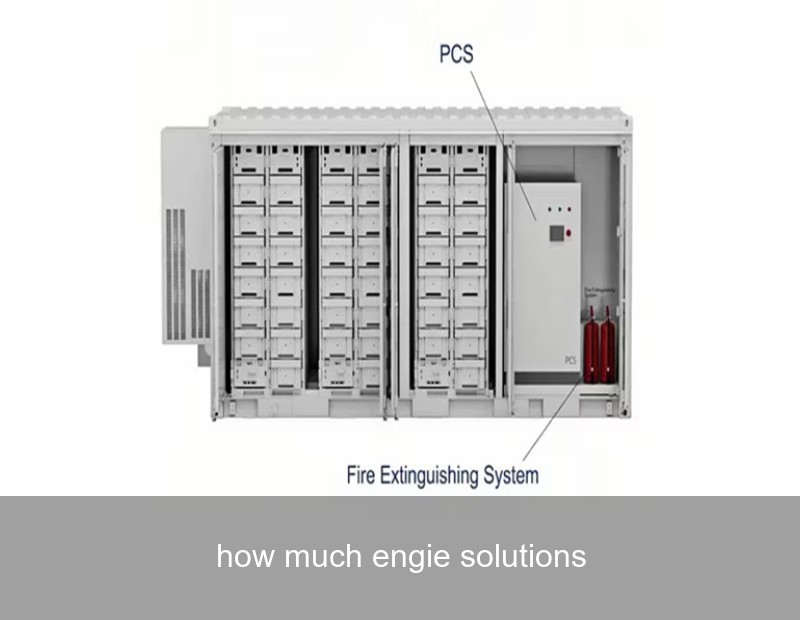
Not all solar panels or batteries are created equal. Premium, high-efficiency panels may have a higher upfront cost but produce more power in limited space. For battery storage, key metrics are capacity (kWh) and power rating (kW). A robust Battery Energy Storage System (BESS), like Highjoule's H-Series commercial units, offers advanced features like scalable capacity and integrated energy management software, which add value beyond basic storage.

Credit: Unsplash / ThisisEngineering. Modern BESS installations require expert design for optimal cost and performance.
3. Installation Complexity
Roof type, electrical panel upgrades, and local permitting fees all impact cost. Ground-mounted systems have different cost structures than rooftop ones.
4. Incentives and Financing
This is where the net cost changes dramatically. In the U.S., the federal Investment Tax Credit (ITC) can reduce your system cost by 30%. Many European countries and U.S. states offer additional rebates. The U.S. Department of Energy maintains a database of incentives. Smart financing can make the initial investment cash-flow positive from day one.
| System Type | Typical Capacity | Estimated Cost Range (USD) | Primary Cost Drivers |
|---|---|---|---|
| Residential Solar + Storage | 7-12 kW PV + 10-20 kWh storage | $25,000 - $45,000+ | Panel/battery brand, roof complexity, local labor rates |
| Commercial Solar | 50 kW - 1 MW+ | $1.00 - $2.50 per Watt | Scale, mounting structure, interconnection fees |
| Commercial BESS (e.g., Highjoule H-Series) | 100 kWh - 1 MWh+ | Custom Quote | Capacity, power electronics, system integration, software intelligence |
Beyond the Sticker Price: The ROI of Smart Energy Management
The most transformative energy solutions today aren't just hardware; they're intelligent systems. This is where the conversation shifts from cost to value. A smart BESS with AI-driven software can:
- Reduce Demand Charges: For commercial users, a significant portion of the utility bill is based on peak power demand. A battery can discharge during these peaks, potentially cutting this charge by 30% or more.
- Enable Energy Arbitrage: Store cheap electricity (from solar or off-peak grid rates) and use it during expensive peak hours.
- Provide Resilience: The value of avoiding a production halt during a grid outage can be enormous for a business or critical facility.
Highjoule's EnergyOS™ platform is central to this value proposition. It doesn't just store energy; it actively manages it, learning your patterns and optimizing for savings and reliability, making the system pay for itself faster.
Case Study: A California Winery's Calculated Investment
Let's ground this in reality. A mid-sized winery in Sonoma County, California, faced rising energy costs and frequent public safety power shutoffs (PSPS) threatening their refrigeration and operations. They asked: how much would an energy solution cost to solve these problems?
The Solution: A turnkey system from Highjoule featuring a 250 kW solar canopy and a 500 kWh H-Series BESS with EnergyOS™.
- Total Project Cost: ~$850,000 (pre-incentive).
- Federal ITC & State Rebates: Reduced net cost by ~40%.
- Annual Savings: $72,000 from reduced energy bills and demand charge management.
- ROI Period: Projected payback in under 7 years, with a system lifespan of 20+ years.
- Intangible Value: Zero production loss during multiple grid outages, protecting millions in inventory and maintaining brand reputation for reliability.

Credit: Unsplash / tommao. Agribusinesses like wineries are ideal candidates for solar+storage solutions.
This case shows that the right question evolved from "how much does it cost?" to "what is the value of uninterrupted production and predictable energy costs?"
The Highjoule Approach: Tailored Solutions, Transparent Value
Since 2005, Highjoule has been guiding customers through this exact journey. We believe in transparency. Our process starts with a deep dive into your energy data and goals. We then model various scenarios using our proprietary tools, presenting you with a clear analysis of:
- Upfront investment (net of all applicable incentives).
- Projected annual savings and financial returns.
- Technical specifications of the recommended system, whether it's our residential EverCharge systems, commercial H-Series BESS, or a full microgrid solution.
We don't just sell products; we provide a long-term partnership, ensuring your system performs optimally for decades. Our global experience in Europe and the U.S. means we understand diverse market regulations and incentive structures, helping you maximize your investment.
Your Next Step: From Cost Question to Energy Strategy
So, how much do energy solutions cost? As we've seen, the definitive answer is unique to you. The most empowering step you can take is to move from a general price inquiry to a focused evaluation of your own energy challenges and opportunities.
What single energy problem—be it a volatile bill, a resilience fear, or a sustainability goal—if solved, would bring the most value to your home or business this year?
 Inquiry
 Online Chat