


How Much Energy Can an Industrial Energy Storage System Save? A Deep Dive into Real-World Impact
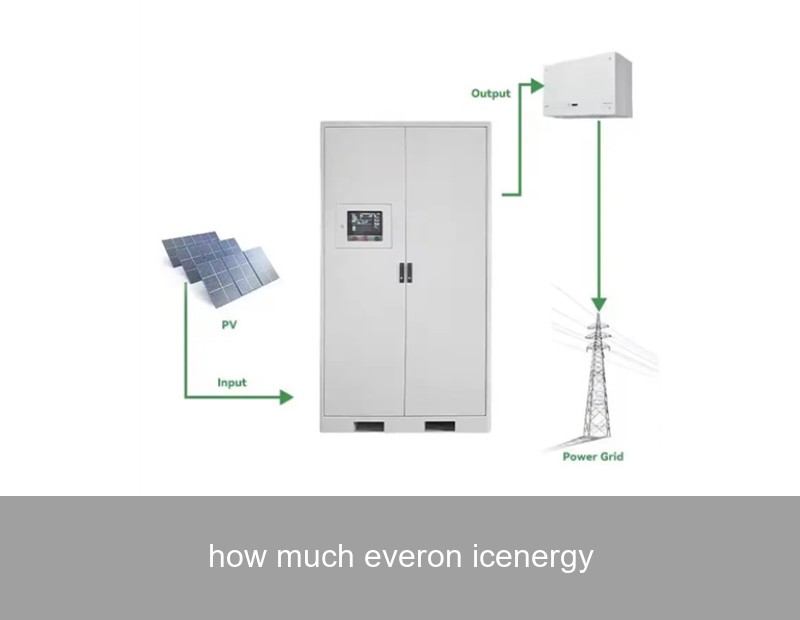
You're looking at your facility's soaring energy bill, hearing the buzz about grid instability, and feeling the pressure to meet sustainability goals. The question isn't just *whether* to invest in industrial energy storage, but how much energy—and crucially, how much money—a system like this can truly save. The answer, as we'll see, goes far beyond simple kilowatt-hours. It's about intelligent energy management that transforms your power consumption from a cost center into a strategic asset. Let's break down the real savings potential.
Table of Contents
The Phenomenon: Volatility as the New Normal
Industrial operations are caught in a perfect storm. Energy prices, particularly in Europe and the US, are no longer predictable. According to the U.S. Energy Information Administration (EIA), industrial electricity prices can fluctuate by over 50% in some deregulated markets based on time of day and demand (Source: EIA). Simultaneously, the push for decarbonization means integrating more variable renewable sources like solar and wind, which, while clean, can strain grid reliability. This volatility isn't just a line item—it's a direct threat to operational continuity and profitability.

Image: Modern industrial facilities face complex energy decisions. (Photo by American Public Power Association on Unsplash)
The Data: Quantifying the Savings Levers
So, how much can you save? It's a multi-faceted equation. An advanced Battery Energy Storage System (BESS) delivers savings through several key mechanisms:
- Arbitrage (Time-of-Use Optimization): This is the core of savings. The system charges batteries when electricity is cheap (e.g., at night or during peak solar generation) and discharges it to power your facility when rates are high. In regions with high peak/off-peak differentials, this alone can slash energy costs by 15-40%.
- Demand Charge Reduction: For many commercial and industrial users, a significant portion of the bill is based on peak power demand (kW), not just total consumption (kWh). A BESS acts like a buffer, discharging during short periods of high demand to "shave the peak," potentially reducing this charge by 20-30%.
- Grid Services & Incentives: In many markets, you can earn revenue by allowing your system to provide grid stabilization services like frequency regulation. Programs like FERC 841 in the US or various Balancing Mechanism units in Europe create new income streams.
| Savings Mechanism | Typical Impact Range | Key Driver |
|---|---|---|
| Energy Arbitrage | 15% - 40% on energy costs | Local Time-of-Use rate differential |
| Demand Charge Management | 20% - 30% reduction | Peak power demand (kW) profile |
| Incentives & Grid Revenue | Varies by market; can significantly improve ROI | Local regulatory programs |
The Case Study: A European Manufacturing Plant
Let's move from theory to practice. A mid-sized automotive parts manufacturer in Germany faced crippling peak-time energy prices and stringent CO2 reduction targets. They partnered with Highjoule to deploy a 2 MWh / 1 MW lithium-ion battery storage system integrated with their existing rooftop solar PV.
- Energy Cost Savings: €185,000 annually, achieved through optimized time-of-use shifting and peak shaving.
- Self-Consumption Increase: Solar self-consumption rate rose from 35% to over 80%, maximizing their renewable investment.
- ROI: The project achieved a simple payback period of under 5 years, factoring in available local grants for decarbonization technology.
- Resilience: The system provided backup power for critical loads during two grid disturbances, preventing an estimated €50,000 in production line stoppage costs.
This case illustrates that the question "how much energy can it save?" translates directly into financial, operational, and environmental returns.
The Highjoule Advantage: Smart Storage for Maximum ROI
Not all storage solutions are created equal. The magnitude of your savings depends heavily on the intelligence and durability of the system. This is where Highjoule's nearly two decades of expertise comes into play. Our ICEnergy™ Industrial Containerized Storage Solution is engineered specifically for the rigors and financial demands of commercial and industrial applications.
What makes the difference? Our integrated Energy Management System (EMS) is the brain of the operation. It doesn't just store and release energy; it continuously learns your load profile, predicts electricity prices (where markets allow), and optimizes every charge-discharge cycle for maximum economic return. Coupled with our proprietary battery management and thermal control systems, the ICEnergy™ platform ensures not just high performance on day one, but sustained savings and longevity over a 15+ year lifespan.

Image: Advanced, containerized energy storage systems require robust design and smart software. (Photo by Kindel Media on Pexels)
For businesses looking to go further, Highjoule provides end-to-end microgrid solutions. We seamlessly integrate solar PV, wind, generator sets, and storage into a resilient, self-optimizing energy network. This allows facilities to operate as "islands" from the grid during outages or price spikes, securing operations and locking in energy costs.
Beyond Savings: Resilience and Sustainability
While the financial "how much" is critical, the value proposition extends further. An industrial BESS is a cornerstone of energy resilience. In an age of increasing climate-related grid disruptions, the ability to power critical operations for hours can be a business-saving investment. Furthermore, by enabling higher penetration of on-site renewables and reducing reliance on fossil-fuel peaker plants, your storage system becomes a tangible asset in your corporate sustainability reporting, enhancing brand value and meeting stakeholder expectations.
Your Next Step: Calculating Your Potential
The case is clear: industrial energy storage is a powerful tool for financial control, operational resilience, and sustainability. But your specific savings potential is unique—defined by your location, utility rate structure, load profile, and goals.
So, the most important question is no longer a general "how much energy can it save?" but a specific one: What is the tailored financial and operational impact a Highjoule ICEnergy™ system could deliver for *your* facility? Our experts are ready to conduct a detailed feasibility analysis for you, using real data to model your precise ROI. The journey to energy independence and predictable costs starts with a single, data-driven conversation.
 Inquiry
 Online Chat