


How Much Smarter Is a Smart Generator? Unlocking the True Value of Intelligent Backup Power
You've likely heard the buzz around "smart generators." But when the lights flicker or a storm warning pops up, the real question isn't just about having backup power—it's about having how much generator smart technology you truly need. Is it a minor convenience or a game-changer for your energy security and wallet? The shift from traditional, fuel-guzzling units to intelligent, integrated systems represents a fundamental leap, not just an incremental upgrade. This article delves into the measurable intelligence of modern backup power, exploring how smart technology transforms generators from reactive machines into proactive energy assets.
Table of Contents
- The Phenomenon: From Dumb Backup to Smart Energy Nodes
- The Data: Quantifying the "Smart" in Fuel, Cost, and Reliability
- Case Study: A U.S. Dairy Farm's Intelligent Transition
- The Smart Generator Intelligence Framework
- Beyond Backup: Smart Generators as Grid Partners
- Choosing Your Level of Intelligence: Where Highjoule Powers the Future
The Phenomenon: From Dumb Backup to Smart Energy Nodes
For decades, a backup generator was a simple, if noisy, insurance policy. It waited for a failure, then roared to life, often with a manual transfer switch requiring someone to physically flip it. Its "intelligence" was minimal. Today, a smart generator is a networked energy asset. Think of it as the difference between a basic cell phone and a modern smartphone. The core function—communication—is there, but the smartphone's value lies in its apps, connectivity, data processing, and ability to solve problems you didn't know you had.
This evolution is driven by two forces: the increasing frequency and severity of grid disruptions (from storms to heatwaves), and the rapid rise of distributed energy resources like solar panels and battery storage. A standalone, dumb generator can even conflict with these modern systems. In contrast, a truly intelligent generator integrates seamlessly, making decisions in milliseconds to optimize for cost, fuel efficiency, and emissions.

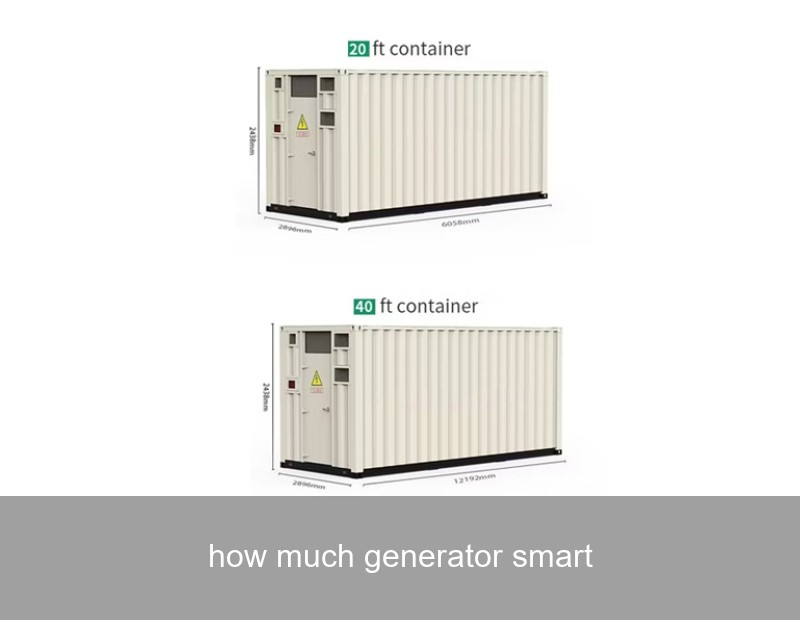
Modern systems integrate generators with storage and management software for optimal performance.
The Data: Quantifying the "Smart" in Fuel, Cost, and Reliability
So, how much smarter are we talking? Let's break it down with tangible metrics. A traditional generator might run at a fixed speed regardless of the actual load, wasting fuel. A smart generator with load-sensing and variable-speed technology can reduce fuel consumption by 15-40% under partial loads, which is most of the time. Over a 72-hour outage, this translates to hundreds of dollars in savings and extended runtime.
Furthermore, the U.S. Department of Energy highlights that integrated energy management can improve overall system efficiency by up to 50% in microgrid applications. But the intelligence goes deeper than fuel. Consider these capabilities:
- Predictive Maintenance: Sensors monitor oil pressure, coolant temperature, battery health, and more, predicting failures before they happen, reducing downtime by up to 30%.
- Automatic Transfer Switching (ATS) with Logic: Beyond just switching, smart ATS can prioritize loads, stagger start-ups to prevent overload, and even decide not
- Remote Monitoring & Control: Manage and monitor your system from anywhere via a smartphone app, receiving real-time alerts on status, fuel levels, and performance.
These features collectively answer the "how much smarter" question with hard numbers: significantly smarter in ways that directly impact operational expenditure and peace of mind. For a deeper dive on grid resilience and modern backup strategies, see this report from the National Renewable Energy Laboratory (NREL).
Case Study: A U.S. Dairy Farm's Intelligent Transition
Let's look at a real-world example from the American Midwest. A large dairy farm with 2,500 cows relied on a 500kW traditional diesel generator for backup. Milking parlors, cooling tanks, and ventilation were critical. Their challenges were high fuel costs during frequent grid sags, manual operation delays, and the inability to integrate their existing rooftop solar.
They upgraded to an intelligent hybrid system featuring:
- A Highjoule IntelliGen 500i smart generator with variable speed drive.
- A Highjoule Energy Router for advanced system control.
- Integration with their existing 200kW solar array and a new 500kWh battery storage system.
The results after one year were stark:
| Metric | Traditional System | Smart Hybrid System | Improvement |
|---|---|---|---|
| Annual Fuel Use for Backup | 8,200 gallons | 2,900 gallons | 64% reduction |
| Average Cost per Backup Event | $1,850 | $420 | 77% reduction |
| Response Time to Outage | 45-90 seconds (manual) | 2 seconds (fully automatic) | Near-instantaneous |
| Solar Utilization During Outages | 0% (islanded) | 100% (managed) | Full renewable leverage |
This case crystallizes the value proposition. The farm didn't just buy a better generator; it invested in an intelligent energy ecosystem. The Highjoule system's brain—the Energy Router—constantly calculated the most economical and reliable power source: solar first, then battery discharge, and only engaging the generator at its most fuel-efficient point for the exact load required.
The Smart Generator Intelligence Framework
To systematically evaluate how much generator smart capability you need, consider this four-tier framework:
Level 1: Basic Automation (The Reactor)
Automatic start/stop and transfer switch. It reacts to a grid failure. This is the baseline.
Level 2: Connectivity & Monitoring (The Informant)
Adds remote monitoring, diagnostics, and alerts. You know what's happening from your phone, but decision-making is still largely manual.
Level 3: Integrated Optimization (The Strategist)
The generator operates as part of a system with solar and/or storage. Software makes real-time decisions on source prioritization for cost and efficiency. This is where major savings materialize. Highjoule's Smart Microgrid Controller excels here, acting as the central intelligence for such hybrid systems.
Level 4: Grid Interactive & Predictive (The Visionary)
The system doesn't just protect you; it can participate in grid services (where markets allow), predict outages using weather data, and pre-charge batteries or perform pre-emission checks. It transitions from a cost center to a potential revenue stream.

Advanced software dashboards provide control and insight into hybrid energy systems.
Beyond Backup: Smart Generators as Grid Partners
The ultimate intelligence is when your on-site power contributes to broader grid stability. In regions like California or the EU, programs exist for Demand Response and Frequency Regulation. A smart generator, when paired with a large battery, can form a Virtual Power Plant (VPP). During peak demand, the grid operator can signal these distributed assets to discharge power, preventing blackouts and earning the owner revenue. Highjoule's grid-interactive solutions are designed for this future, turning passive backup into an active grid asset. The European Union's energy policy actively encourages such flexibility; you can learn more about their vision in this document from the European Commission.
Choosing Your Level of Intelligence: Where Highjoule Powers the Future
Determining how much generator smart technology is right for you depends on your critical load profile, existing renewables, and long-term energy goals. For a small business, Level 2 might be sufficient. For a hospital, data center, or a facility with high energy costs and sustainability targets, Level 3 or 4 is not just an option—it's a strategic necessity.
This is where Highjoule's expertise becomes critical. Since 2005, we've evolved from an advanced battery provider to a complete smart energy solutions architect. Our product suite is designed to deliver measurable intelligence:
- Highjoule IntelliGen Series: Our flagship smart generators with built-in connectivity, ultra-low emission designs, and seamless hybrid readiness.
- Highjoule Energy Storage Systems (ESS): Scalable, lithium-ion battery systems that are the perfect partner for intelligent generators, storing excess solar or cheap grid power.
- Highjoule Energy Management System (EMS): The brain of the operation. This software platform uses AI and real-time data to optimize every kilowatt-hour across generators, batteries, solar, and the grid, ensuring you always use the most economical and reliable source.
We don't just sell components; we provide integrated, intelligent power solutions for commercial, industrial, and microgrid applications. Our systems are designed to answer the "how much smarter" question with a definitive "smarter enough to future-proof your operations."
So, as you contemplate your energy resilience strategy, we leave you with this question: Is your current backup power a cost you simply endure, or could it be transformed into an intelligent, value-generating asset for your business?
 Inquiry
 Online Chat