


How Much Energy Can H&S Energy Produce? A Deep Dive into Renewable Energy Yield
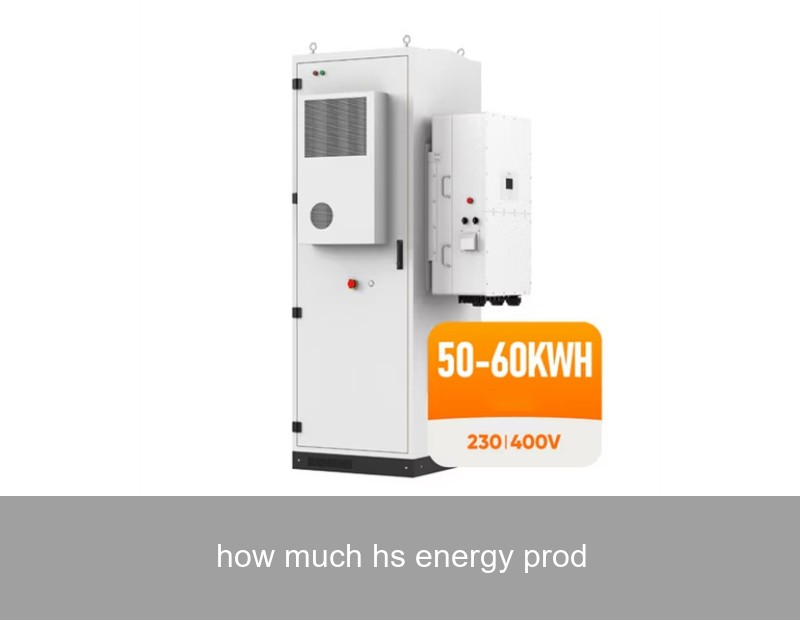
As the world accelerates its transition to clean power, a fundamental question emerges for businesses, communities, and homeowners alike: how much energy can H&S energy produce? Understanding the potential yield of renewable systems is crucial for making informed investment decisions and achieving true energy independence. In this article, we'll demystify the factors that determine energy production, explore real-world data, and show how advanced technology from companies like Highjoule can help you maximize every kilowatt-hour generated by your solar and storage assets.
Table of Contents
- Understanding Renewable Energy Yield: It's More Than Just Panels
- Key Factors Determining "How Much Energy" You Get
- The Storage Multiplier: Why H&S Must Go Together
- A Real-World Case Study: From Theory to Megawatt-Hours
- Highjoule's Role: Intelligent Systems for Maximized Production
- Future Trends and Your Next Step
Understanding Renewable Energy Yield: It's More Than Just Panels
When people ask "how much energy can H&S energy produce," they are often referring to a combined Hybrid & Storage (H&S) system. This isn't just about solar panels on a roof. It's an integrated ecosystem comprising Hybrid generation (like solar PV, sometimes paired with wind or other sources) and Storage (battery systems). The total energy production and, more importantly, the usable energy, depend on a symphony of components working intelligently together. A high-quality solar array might capture the sun's energy, but without a sophisticated storage and management system, a significant portion of that potential can be wasted, fed back to the grid at low rates, or simply not available when you need it most.

Image Source: Unsplash - A solar farm's production depends on location, technology, and system design.
Key Factors Determining "How Much Energy" You Get
Let's break down the primary variables that answer the core question. Think of these as the levers you can pull to optimize your system's output.
1. Geographical and Environmental Factors
- Solar Irradiance: This is the starting point. A location in Southern Spain will naturally produce more solar energy per year than one in Northern Germany. Tools like PVGIS from the European Commission provide excellent historical data.
- Local Climate: Average temperature, fog, and seasonal weather patterns significantly impact daily yield. Interestingly, solar panels become slightly less efficient in extremely high temperatures.
- Site-Specific Details: Shading from trees or buildings, roof orientation (south-facing is ideal in the Northern Hemisphere), and tilt angle are critical.
2. Technology and System Design Factors
| Component | Impact on Production | Consideration |
|---|---|---|
| PV Panel Efficiency | Higher efficiency panels (22%+) convert more sunlight into electricity in the same space. | Monocrystalline panels typically offer higher yields than polycrystalline. |
| Inverter Quality | The inverter converts DC to AC. High-quality inverters minimize conversion losses (often below 2%). | Look for high European or California efficiency ratings (e.g., 98.5%). |
| Battery Storage Capacity & Chemistry | Doesn't increase production but defines how much produced energy you can use. Round-trip efficiency (AC-AC) is key. | Lithium Iron Phosphate (LFP) batteries, like those used by Highjoule, offer long life, safety, and consistent performance. |
| System Sizing | Matching generation and storage to your consumption profile is an art. Oversizing can lead to curtailment; undersizing leaves savings on the table. | Advanced simulation software is used by experts to find the sweet spot. |
The Storage Multiplier: Why H&S Must Go Together
This is where the magic happens. A solar-only system might produce a surplus at noon, but what about at 7 PM when demand peaks? Without storage, you're forced to import expensive grid power. A battery storage system effectively multiplies the value of every kilowatt-hour your H system produces. It shifts energy from times of abundance to times of need, increasing your self-consumption rate from maybe 30-40% to over 80% or even 100% for off-grid systems. Therefore, the question "how much energy can H&S energy produce" is best reframed as "how much reliable, on-demand energy can my H&S system deliver?"
A Real-World Case Study: From Theory to Megawatt-Hours
Let's move from theory to practice. Consider a medium-sized dairy processing plant in Bavaria, Germany. The facility has high, consistent energy demands for cooling and processing, operating mostly during daylight hours but with a significant base load extending into the evening.
- Challenge: Reduce soaring energy costs and hedge against price volatility, while contributing to corporate sustainability goals.
- Solution: A tailored H&S system featuring a 850 kWp rooftop solar array coupled with a 500 kWh Highjoule GridMaster Pro battery energy storage system (BESS).
- Outcome & Data: In its first full year of operation:
- The solar array produced 812 MWh of electricity (closely matching pre-installation simulations).
- The Highjoule BESS, with its intelligent energy management software, enabled a 92% self-consumption rate of that solar energy, up from an estimated 35% without storage.
- The system provides 250 kW of backup power for critical loads, ensuring operational continuity during short grid outages.
- Annual energy cost savings: €114,000, with a projected return on investment (ROI) period under 6 years.
This case illustrates that the real "production" is measured in displaced grid energy and cost savings, not just raw PV output. The Highjoule system's advanced thermal management and AI-driven dispatch algorithms ensured the battery operated at peak efficiency year-round, maximizing cycle life and financial return.

Image Source: Unsplash - Commercial and industrial sites are ideal for maximizing H&S energy production.
Highjoule's Role: Intelligent Systems for Maximized Production
Founded in 2005, Highjoule has evolved into a global leader by focusing on one core principle: optimizing the entire energy asset lifecycle. We don't just sell batteries or inverters; we provide integrated, intelligent power solutions that ensure you extract the maximum possible value from your investment in renewable generation. For our clients across Europe and North America, this translates directly to a more favorable answer to "how much energy can H&S energy produce."
Highjoule Products That Drive Performance:
- GridMaster Pro & HomeGuard Series: Our flagship BESS solutions for C&I and residential applications. Built with stable LFP chemistry, they feature industry-leading round-trip efficiency (up to 96% AC-AC) and a modular design for scalable capacity. Their integrated smart inverter reduces system complexity and points of failure.
- Orion Energy Management System (EMS): This is the brain of the operation. Orion uses predictive algorithms based on weather forecasts, consumption patterns, and real-time grid signals to autonomously decide when to store, use, or (where allowed) sell energy. It dynamically adjusts to ensure you're always operating in the most economical mode.
- Highjoule Monitoring & Analytics Platform: Provides 24/7 visibility into system performance, energy flows, and savings. You can track exactly "how much" energy is being produced, stored, and consumed, down to the minute, from any device.
By handling the complex optimization in the background, Highjoule's technology allows facility managers, homeowners, and microgrid operators to focus on their core activities, confident that their energy system is performing at its peak.
Future Trends and Your Next Step
The landscape of renewable energy production is constantly evolving. Innovations like bifacial solar panels, perovskite solar cells, and even higher-density battery chemistries promise to push the boundaries of "how much" further. Furthermore, the rise of virtual power plants (VPPs) and advanced grid services means that your H&S system could soon become a revenue-generating asset by providing stability to the local network. The U.S. Department of Energy's Solar Futures Study outlines a path where solar could provide up to 45% of the nation's electricity by 2050, a goal unimaginable without ubiquitous, smart storage solutions.
So, the ultimate answer to "how much energy can H&S energy produce" is: It depends, but with the right technology and partner, it can be far more than you might think—enough to power your operations, secure your energy future, and make a substantial dent in your carbon footprint.

Image Source: Unsplash - The future of energy is integrated, smart, and personalized.
What does your unique energy consumption profile look like, and what potential savings could a precisely engineered H&S system unlock for your home or business?
 Inquiry
 Online Chat