


The Complete Guide to a Solar BESS 10kW Off-Grid System: Your Path to Energy Independence
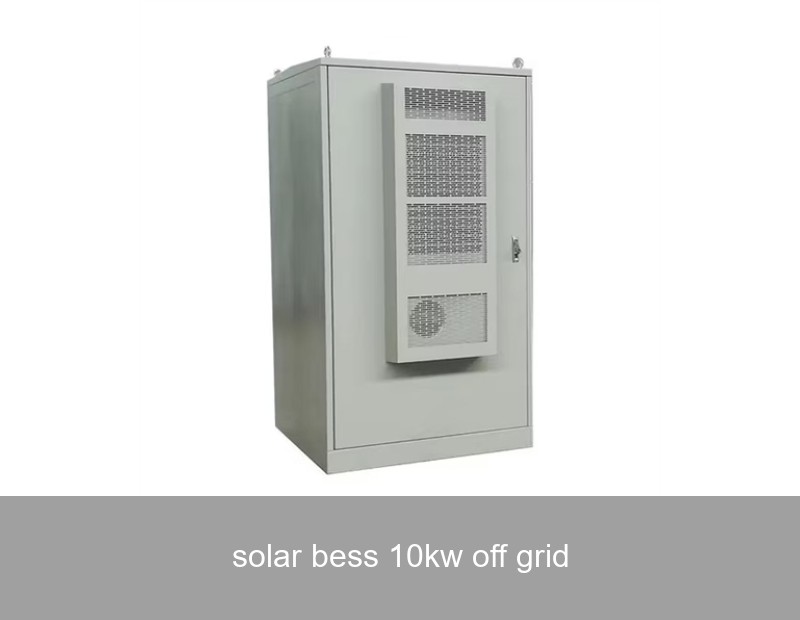
Imagine a life where your power supply is immune to grid outages, rising electricity tariffs, and geographical limitations. This is the promise of true energy independence, and for a growing number of homeowners, businesses, and remote communities, the solar BESS 10kW off-grid system is the key. Combining robust solar generation with substantial battery storage, this setup isn't just a backup—it's a complete, self-sustaining power station. Let's explore how this technology works and why it's becoming a cornerstone of modern, resilient energy planning, especially in regions like Europe and the U.S. where energy security is paramount.
Table of Contents
- What is a 10kW Off-Grid Solar BESS?
- The Off-Grid Imperative: Why Go Independent?
- Key Components of a Reliable 10kW Off-Grid System
- Real-World Performance: A Case Study from California
- Designing Your System: Beyond the Basics
- Highjoule's Tailored Approach to Off-Grid Solutions
- Is a 10kW Off-Grid System Right for You?
What is a 10kW Off-Grid Solar BESS?
Let's break down the terminology. Solar BESS stands for Solar Battery Energy Storage System. A 10kW off-grid configuration typically refers to a system with a solar array capable of a 10-kilowatt peak (kWp) generation, paired with a battery bank sized to store enough energy to power your loads independently, without any connection to the public utility grid. The "10kW" often describes the inverter's continuous power output, meaning it can simultaneously handle loads up to 10,000 watts. This size is significant—it's powerful enough to run a typical American or European family home, including essentials like refrigeration, lighting, computing, and well pumps, plus intermittent high-power appliances like washing machines or power tools.

The heart of this system is the battery storage. While solar panels only produce energy during daylight, the Battery Energy Storage System (BESS) captures excess daytime production for use at night or during periods of poor weather, ensuring a continuous 24/7 power supply.
The Off-Grid Imperative: Why Go Independent?
The trend towards off-grid living is driven by more than just a desire for a rustic lifestyle. It's a calculated move towards resilience and cost predictability.
- Grid Instability & Outages: From winter storms in Texas to grid constraints in rural Europe, power outages are a tangible risk. An off-grid system provides unwavering energy security.
- Remote Locations: For cabins, agricultural operations, or telecom sites, connecting to the grid can be prohibitively expensive, often costing tens of thousands of dollars. An off-grid system presents a more economical alternative from day one.
- Rising Energy Costs: With electricity prices fluctuating, locking in your "fuel" cost at zero (sunshine) provides long-term financial shelter. According to the U.S. Energy Information Administration (EIA), residential electricity prices have seen significant volatility, making fixed-cost solutions attractive.
- Environmental Goals: A fully off-grid system represents the pinnacle of clean energy use, eliminating reliance on fossil-fuel-based grid generation.
Key Components of a Reliable 10kW Off-Grid System
Building a system that you depend on for all your electricity requires robust, correctly sized components. Here’s what you need:
| Component | Role | Key Consideration for 10kW Off-Grid |
|---|---|---|
| Solar Panels (Array) | Primary energy generator | Typically 12-14kWp array to account for inefficiencies and ensure batteries are fully charged even in sub-optimal weather. |
| Off-Grid Inverter/Charger | Converts DC from panels/battery to AC for appliances; charges batteries. | Must have a continuous 10kW AC output rating. A dual or multi-unit setup is common for scalability and redundancy. |
| Battery Bank (BESS) | Stores energy for use when sun isn't shining. | Capacity is measured in kWh. For a 10kW system, 20-40kWh of storage is common to cover 1-3 days of autonomy (no sun). |
| Charge Controller | Manages power flow from panels to batteries, preventing overcharge. | MPPT (Maximum Power Point Tracking) type is essential for maximizing harvest from your solar array. |
| Backup Generator (Optional) | Provides backup during extended cloudy periods. | Automatically starts to recharge batteries if they fall below a set level, ensuring ultimate reliability. |
The most critical choice is the battery technology. While lead-acid was once standard, Lithium Iron Phosphate (LFP) batteries are now the preferred choice for off-grid systems due to their longer lifespan (often 6,000+ cycles), deeper safe discharge, higher efficiency, and minimal maintenance. This is where partnering with a specialized provider makes all the difference.
The Battery: The Beating Heart of Your Off-Grid System
Think of your battery bank as your personal energy reservoir. Its capacity determines how long you can run without sun. For a 10kW load profile, a battery bank sized at 30kWh might allow you to run essential loads (about 10kWh per day) for three days of cloudy weather. Advanced battery management systems (BMS) are crucial for monitoring cell health, temperature, and state-of-charge, ensuring safety and longevity.
Real-World Performance: A Case Study from California
Let's move from theory to practice. Consider a real-world application: a vineyard estate in Sonoma County, California. The property, beyond the cost-effective reach of grid extension, required a reliable power source for its residence, irrigation pumps, and small processing facility.
- Challenge: Provide 100% reliable, clean power for a 3-bedroom home and agricultural operations with a peak load of 8.5kW.
- Solution: A tailored 12.5kWp solar array paired with a 38.4kWh lithium (LFP) battery storage system, controlled by a 10kW off-grid inverter system.
- Outcome & Data: In its first full year, the system generated over 16,000 kWh. The battery system provided seamless power through the night and during a notable 5-day winter storm period with minimal sunlight. The generator runtime was less than 50 hours for the entire year, primarily as an automated maintenance check. The estate eliminated a projected $15,000 grid connection fee and saves approximately $2,800 annually on what would have been fuel costs for a generator-only system.

This case underscores that a correctly sized and professionally installed solar BESS 10kW off-grid system isn't an experiment—it's a proven, industrial-grade solution.
Designing Your System: Beyond the Basics
Sizing an off-grid system is a precise science. A common mistake is to size based on average consumption alone. Professionals conduct a detailed load audit and consider:
- Peak Load: Can the inverter handle the simultaneous start-up of your well pump, refrigerator compressor, and microwave?
- Energy Autonomy Days: How many consecutive cloudy days should you prepare for? This drastically impacts battery size.
- Seasonal Solar Yield: Solar production in Minnesota in December is vastly different from Arizona. System design must be based on the worst-month solar insolation data for your location, available from sources like NREL's National Solar Radiation Database.
- Future Expansion: Will you add an electric vehicle or a workshop? Your system's architecture should allow for growth.
Highjoule's Tailored Approach to Off-Grid Solutions
This is where deep expertise matters. At Highjoule, with nearly two decades of experience since 2005, we don't just sell components; we engineer resilient power ecosystems. For the off-grid client, our process is comprehensive.
We begin with a virtual consultation and detailed energy assessment. Our engineers then model your site using advanced software, proposing a system built around our high-cycle life LFP battery modules and intelligent hybrid inverters. These components are known for their robustness and seamless communication, managed by our proprietary energy management system (EMS) that optimizes every watt of solar harvest and battery cycle.
For a 10kW off-grid application, we might recommend our HJPowerStack 10 battery units, scalable from 10kWh to 50kWh, paired with our HJInvert Pro Series of off-grid inverters. These systems are designed for the demanding duty cycle of full off-grid living, providing not just power, but peace of mind through 24/7 system monitoring and proactive alerts.

Our service extends beyond installation. We provide remote monitoring, firmware updates, and a dedicated support channel to ensure your energy independence is hassle-free for the long term.
Is a 10kW Off-Grid System Right for You?
The journey to energy independence is exciting, but it requires careful planning and partnership. The right system empowers your life; an undersized or poorly integrated one can become a burden.
Ask yourself these questions: What are the true costs of grid dependency or generator reliance for my location? What are my non-negotiable loads during a prolonged outage? Am I prepared to be an active manager of my energy consumption, or do I need a system intelligent enough to automate that for me?
The technology is here, proven, and more accessible than ever. The question is no longer if you can go off-grid, but how to design the optimal off-grid system for your unique energy profile and goals. What would energy independence enable you to do or build that isn't possible today?
 Inquiry
 Online Chat