


How Much Inverter 6.2 kW: A Complete Guide to Power, Cost, and System Sizing
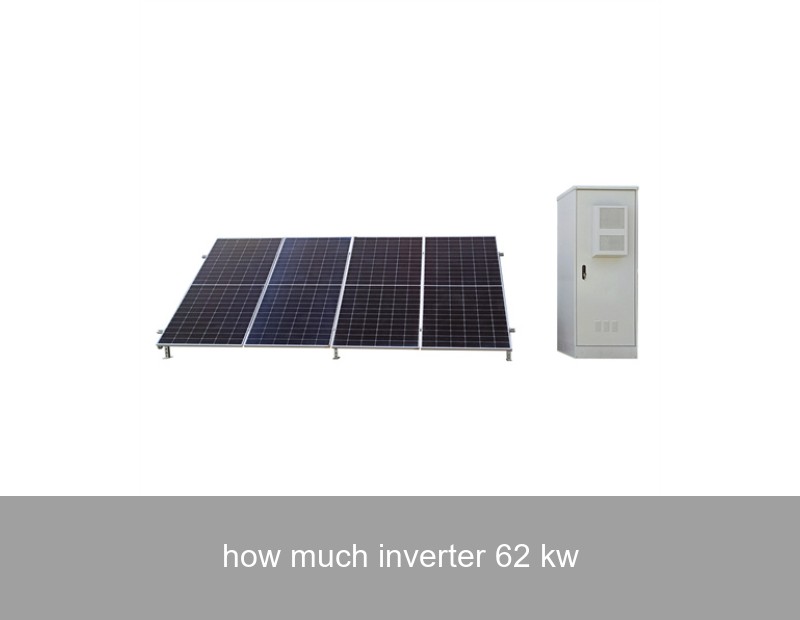
So, you're sizing a solar or battery storage system and keep seeing "6.2 kW" pop up. It's a common power rating, but the immediate question is: how much inverter 6.2 kW do I actually need, and what does that figure mean for my energy independence? As a product technology expert at Highjoule, I spend my days demystifying these numbers for homeowners and businesses across Europe and the U.S. The inverter is the brain of your power system, and getting its size right is crucial for efficiency, safety, and return on investment. Let's break down what a 6.2 kW system entails, the inverter required to manage it, and how to build a solution that truly fits your energy life.
Table of Contents
- What Does a 6.2 kW System Actually Power?
- The Inverter Match: Why Size Matters More Than Rating
- Breaking Down the Cost: How Much for a 6.2 kW Inverter System?
- Beyond Solar: The 6.2 kW Inverter in Battery Storage Systems
- Real-World Performance: A Case Study from Hamburg
- Choosing the Right Inverter: Technology and Features for the Future

Credit: Photo by American Public Power Association on Unsplash. A modern hybrid inverter, similar to Highjoule's solutions, is the central hub for solar and storage.
What Does a 6.2 kW System Actually Power?
Let's start with the basics. A 6.2 kilowatt (kW) rating typically refers to the direct current (DC) power output of a solar panel array. In simpler terms, it's the maximum raw power your panels can theoretically produce under ideal laboratory conditions—full, bright sun perfectly hitting them. But in your home or business, that DC power needs to be converted to the alternating current (AC) that your appliances use. That's the inverter's job.
So, what can a 6.2 kW DC system power in the real world? After accounting for inverter conversion losses (typically 2-8%), you're looking at an AC output of roughly 5.7 to 6.0 kW. On a sunny day, this system could simultaneously run:
- A central air conditioning unit (2.5-3.5 kW)
- A refrigerator (0.2-0.4 kW)
- LED lighting throughout a home (0.2-0.3 kW)
- A home office setup (0.3-0.5 kW)
- And still have headroom for miscellaneous loads.
According to data from the U.S. Department of Energy, a 6 kW system is a very common residential size in many American states and European countries, often sufficient to cover a significant portion of a typical household's annual electricity consumption. The key is pairing it with an inverter that can handle that input efficiently and safely.
The Inverter Match: Why Size Matters More Than Rating
Here's the most critical technical point: Your inverter's AC power rating should be carefully matched to your panel's DC rating. For a 6.2 kW DC array, you wouldn't necessarily buy a precisely 6.2 kW AC inverter. Why? Two key concepts:
- Clipping Ratio (DC-to-AC Ratio): Installers often slightly "oversize" the solar array relative to the inverter. A 6.2 kW array might be paired with a 6.0 kW or even a 5.5 kW inverter. This is because panels rarely produce their maximum rated output for extended periods. A slightly smaller inverter costs less and operates more efficiently at its rated capacity, while the minimal "clipped" energy on the sunniest few days is often outweighed by the gains in overall production and cost-effectiveness.
- Surge Capacity: Certain appliances, like well pumps or air conditioner compressors, require a brief burst of high power (surge) to start. A quality inverter must handle these surges beyond its continuous rating.
At Highjoule, our H-Energy Hub Hybrid Inverters are designed with this intelligent matching in mind. For a 6.2 kW solar input, we might recommend our 6.0 kW model, which features a high DC/AC ratio tolerance and superior surge handling (often 150-200% of rating for several seconds). This ensures you capture the most energy possible throughout the year without paying for an oversized, underutilized inverter.
Breaking Down the Cost: How Much for a 6.2 kW Inverter System?
When asking "how much inverter 6.2 kW," we must look at the system context. The inverter itself is one component of the total installed cost.
| Cost Component | Estimated Range (USD/EUR) | Notes |
|---|---|---|
| 6.2 kW Solar Panel Array | $6,200 - $9,300 | Highly dependent on panel efficiency and brand. |
| Hybrid Inverter (e.g., Highjoule H-Energy Hub 6.0kW) | $1,500 - $2,500 | Includes advanced battery management and grid interaction features. |
| Battery Storage (Optional) | $4,000 - $8,000+ | For a compatible 10-15 kWh battery bank. |
| Balance of System & Installation | $2,500 - $4,000 | Mounting, wiring, permits, and labor. |
| Estimated Total System Cost | $14,200 - $23,800 | Before incentives. Battery significantly increases cost. |
Remember, government incentives dramatically affect net cost. In the U.S., the federal Investment Tax Credit (ITC) can reduce cost by 30%. Many European countries offer feed-in tariffs or rebates. The IEA Policy Database is a good resource to check local schemes. The inverter's intelligence, like that in Highjoule systems, can maximize your earnings from such schemes by optimizing when to use, store, or sell energy back to the grid.
Beyond Solar: The 6.2 kW Inverter in Battery Storage Systems
The conversation about inverters is evolving. Today, the most asked-about product is the hybrid inverter, which can manage solar panels, battery storage, and the grid simultaneously. For a 6.2 kW solar setup, a hybrid inverter like ours becomes the command center for true energy resilience.
Imagine this: Your 6.2 kW solar array produces excess power during the day. A basic inverter sends it to the grid. A Highjoule hybrid inverter, however, can divert that excess to charge a battery bank. Then, in the evening when grid prices are high or during a power outage, the same inverter draws from the battery to power your critical 6.2 kW-rated loads. It seamlessly switches modes without you noticing. This capability transforms a solar-only system into a 24/7 personal power plant.

Credit: Photo by Andreas Gücklhorn on Unsplash. A home integrated with solar and battery storage, enabled by a hybrid inverter system.
Real-World Performance: A Case Study from Hamburg
Let's move from theory to practice. In 2023, Highjoule deployed a system for a mid-sized bakery in Hamburg, Germany. Their challenge: volatile energy costs and a need for uninterrupted refrigeration.
- System Specs: 6.2 kWp solar array, Highjoule H-Energy Hub 6.0 kW hybrid inverter, paired with a 15 kWh Highjoule battery module.
- Result: The system was commissioned in Q1 2023. Over the following 12 months:
- The bakery achieved 78% self-consumption of its solar energy (far above the ~30% typical for solar-only systems), thanks to the battery storing daytime surplus for use during morning baking hours.
- They reduced grid energy imports by 65%, shielding themselves from peak pricing.
- During two short grid outages, the inverter automatically switched to island mode, keeping refrigeration and essential lighting online without disruption—a critical factor for food safety.
The bakery manager noted, "The inverter's software was the unsung hero. It made all the complex decisions for us, optimizing for cost and security without any daily input." This case highlights that the value of a 6.2 kW inverter system isn't just in the hardware cost, but in the intelligent software and integration that delivers tangible operational savings and resilience.
Choosing the Right Inverter: Technology and Features for the Future
When selecting an inverter for your 6.2 kW project, look beyond the price tag. Consider these features that define modern, professional-grade systems like those from Highjoule:
- Grid Services Readiness: Can it provide frequency regulation or voltage support? In some markets, this can generate additional revenue. NREL research indicates the growing value of these services.
- Software and Monitoring: A user-friendly app that shows real-time production, consumption, and battery status is non-negotiable for maximizing your investment.
- Scalability: Can you easily add more battery capacity later if your needs grow? Modular design is key.
- Warranty and Support: A 10+ year warranty with robust local technical support is essential for a product meant to last decades.
Your inverter is a long-term investment. Choosing one that is merely a converter today is a missed opportunity. It should be an intelligent energy manager that adapts to changing tariffs, weather, and your personal consumption patterns.
Now that you understand the scope, cost, and capabilities of a 6.2 kW inverter system, what specific energy goal is driving your consideration—is it reducing your next utility bill, achieving energy security during storms, or taking a definitive step towards a net-zero footprint for your business?
 Inquiry
 Online Chat