


The Ultimate Guide to a 24-Hour Home Battery Backup with the Right Inverter
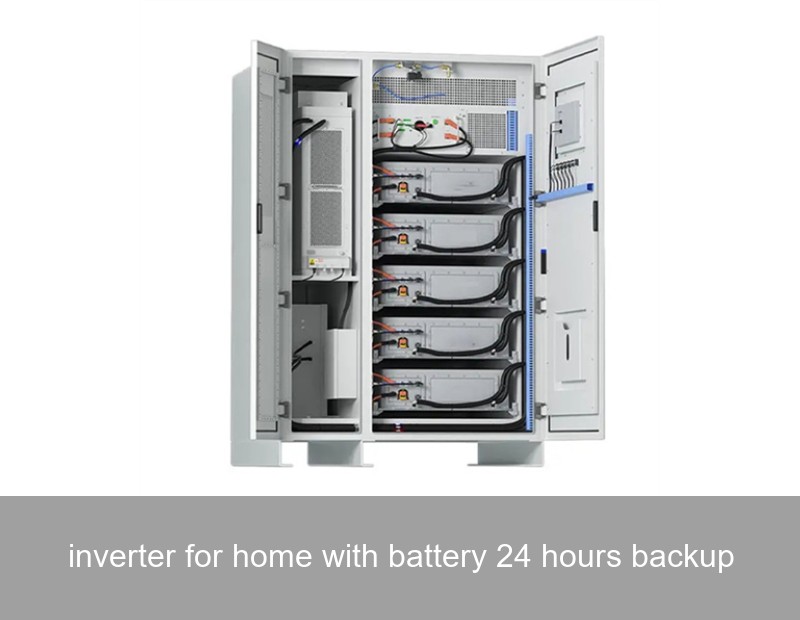
Imagine this: a storm knocks out the grid just as you're about to start dinner. The lights flicker and go out. But in your home, the refrigerator hums, the Wi-Fi stays on, and life continues uninterrupted—not just for a few hours, but for a full day or more. This isn't a fantasy; it's the reality made possible by a modern inverter for home with battery 24 hours backup. This combination is more than just a power accessory; it's the core of a resilient, intelligent, and sustainable home energy system. Let's explore how this technology works and why choosing the right system is crucial for true energy independence.
Table of Contents
- The 24-Hour Backup Phenomenon: More Than an Emergency Kit
- Data & Power Demand: What Does 24 Hours of Backup Really Require?
- The Heart of the System: Understanding Your Hybrid Inverter
- Real-World Case Study: The Smith Family's Peace of Mind
- Key Components for a Robust 24-Hour Backup System
- The Highjoule Solution: Engineered for Uninterrupted Living
- The Future of Home Energy: What's Next for Home Backup?
The 24-Hour Backup Phenomenon: More Than an Emergency Kit
Gone are the days when backup power meant a noisy, fume-spewing generator you'd drag out for a few critical hours. Today's homeowners, especially in regions prone to wildfires, severe storms, or with less stable grids, are looking for seamless and automatic solutions. A 24-hour home battery backup system powered by a sophisticated inverter represents a fundamental shift. It's not just about weathering an outage; it's about maintaining a modern lifestyle—powering home offices, medical equipment, security systems, and climate control—without a second thought. This shift from reactive to proactive energy management is at the heart of the modern resilient home.
Data & Power Demand: What Does 24 Hours of Backup Really Require?
The concept of "24-hour backup" isn't one-size-fits-all. It depends entirely on your home's energy consumption. According to the U.S. Energy Information Administration (EIA), the average U.S. household consumes about 29 kWh per day. However, during an outage, you'd likely switch to "essential loads" mode.
Let's break down a typical essential load scenario for 24 hours:
| Appliance/Circuit | Estimated Wattage | Hours Used in 24h | Energy (kWh) |
|---|---|---|---|
| Refrigeration | 150-400 W | 24 (cycling) | 3.0 - 5.0 |
| Lighting (LED) | 100 W total | 6 | 0.6 |
| Wi-Fi & Modem | 20 W | 24 | 0.48 |
| Furnace Fan | 300-800 W | 8 (intermittent) | 2.4 - 4.8 |
| Well Pump | 500-1,500 W | 0.5 | 0.25 - 0.75 |
| Television & Laptop | 200 W | 4 | 0.8 |
As you can see, even a conservative essential load can require 8-12 kWh of usable battery capacity. And this doesn't account for inefficiencies. Therefore, a system designed for genuine 24-hour backup often starts with a battery capacity of 10-15 kWh or more.

Image Source: Unsplash - A modern home energy storage installation.
The Heart of the System: Understanding Your Hybrid Inverter
This is where the magic happens. The inverter is the brain and the central nervous system of your backup solution. For a system with a battery, you need a hybrid inverter (or a battery-ready inverter). It performs three critical functions:
- DC to AC Conversion: It converts direct current (DC) from your solar panels and batteries into the alternating current (AC) that your home appliances use.
- Energy Management: It intelligently decides where to pull or send energy—from the grid, solar panels, or batteries—based on settings, tariffs, and grid status.
- Seamless Switching: During a grid outage, a high-quality hybrid inverter can disconnect from the grid and switch to battery power in milliseconds (< 20ms), so your devices never notice the interruption.
Choosing an inverter with high peak power capability (e.g., 5-10 kW) is also vital to start large motors like well pumps or air conditioners, even if their running power is lower.
Real-World Case Study: The Smith Family's Peace of Mind
Let's look at a real example from California, USA. The Smith family, living in a wildfire-prone area, experienced 6 planned safety power shutoffs (PSPS) in one year, with the longest lasting 36 hours. Their old portable generator was inadequate and hazardous.
In 2023, they installed a complete solar-plus-storage system featuring a 10 kW hybrid inverter coupled with a 15 kWh lithium iron phosphate (LFP) battery. During their most recent outage:
- Duration: 28 hours of grid downtime.
- System Performance: The system automatically took over. Solar generation during the day covered loads and partially recharged the battery.
- Result: Essential loads (including a critical medical device for a family member) ran uninterrupted. The battery state of charge never dropped below 40%.
- Data Point: They consumed 22 kWh from the battery over the 28 hours, perfectly aligning with their system's design. The inverter's load management feature even prioritized circuits to maximize backup duration.
Key Components for a Robust 24-Hour Backup System
Building a reliable system requires more than just a large battery and an inverter.
- High-Cycle Life Battery: Lithium Iron Phosphate (LFP) chemistry is now the industry standard for home storage due to its safety, longevity (6,000+ cycles), and stability. It's the workhorse that makes daily cycling and long backup feasible.
- Intelligent Energy Management System (EMS): This software, often integrated into the inverter, allows you to set modes like "Backup Reserve," "Time-of-Use Optimization," or "Self-Consumption."
- Proper Installation & Critical Loads Panel: A professional installer will typically set up a sub-panel for your essential circuits. This ensures your battery energy is spent wisely on critical loads, extending backup time.
- Scalability: Can you add more batteries later? A future-proof system allows for capacity expansion as your needs or budget grow.
The Highjoule Solution: Engineered for Uninterrupted Living
At Highjoule, with nearly two decades of experience in advanced energy storage, we've engineered our home solutions specifically to meet the demand for reliable, long-duration backup. Our ResiCore 24H System is built around the principle of seamless resilience.
The system's centerpiece is the Highjoule H6 Hybrid Inverter. This robust inverter features an ultra-fast sub-20ms transfer switch and a surge power capability of 200% for 3 seconds, ensuring it can start even the most demanding home appliances. It's natively compatible with our Highjoule LFP Battery Modules (each providing 5 kWh of storage), which can be stacked to create systems from 10 kWh to 30 kWh. This modular design means you can start with a configuration that meets your 24-hour essential load target and expand later if needed.
What sets the Highjoule system apart is its Predictive Grid Management software. By integrating weather forecasts and local grid status data (where available), it can proactively adjust charging strategies. For example, if a major storm is predicted for tomorrow, the system will ensure your batteries are fully charged today, maximizing your preparedness. This intelligent approach transforms your system from a passive backup into an active home energy asset.

Image Source: Unsplash - Monitoring home energy production and consumption.
The Future of Home Energy: What's Next for Home Backup?
The evolution of the inverter for home with battery is moving towards greater grid interaction and intelligence. We're seeing the rise of virtual power plants (VPPs), where thousands of home systems can aggregate to support the main grid during peak demand, potentially earning revenue for homeowners. The next generation of inverters will be the gateway to this participation.
Furthermore, as electric vehicles become ubiquitous, the concept of "backup" will expand to include vehicle-to-home (V2H) technology, where your EV's massive battery can power your house for days. The inverter will be the critical piece managing this bidirectional flow.
So, as you consider taking control of your home's energy resilience, ask yourself: Is your current plan for grid outages a temporary fix, or is it an integrated, intelligent system designed for the realities of tomorrow's climate and energy landscape?
 Inquiry
 Online Chat