


How Much Does a Next-Generation Battery System Really Cost? Unpacking the Investment
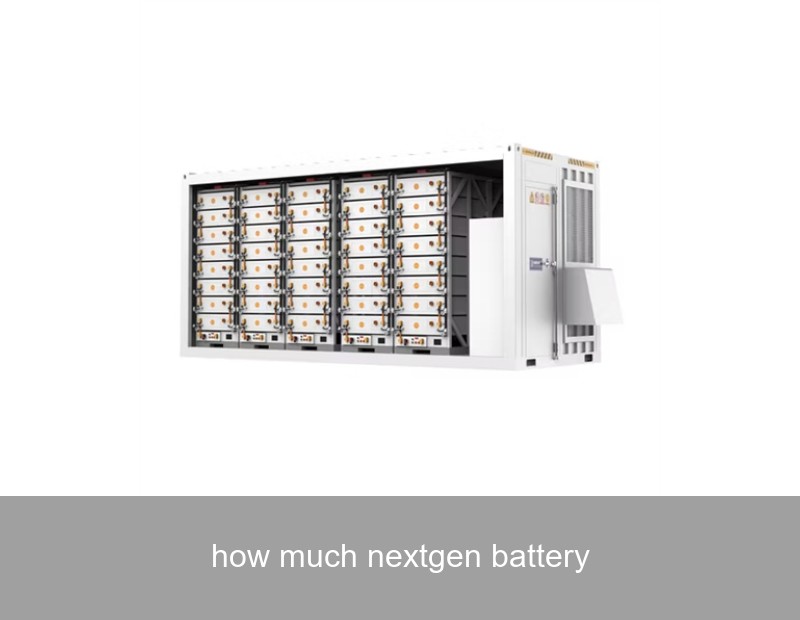
Table of Contents
If you're a homeowner or business leader looking at energy independence, you've likely asked the question: "How much does a next-generation battery system cost?" It's a smart question, but the answer is rarely a simple number on a quote. The true cost of advanced battery storage extends far beyond the initial purchase price, weaving in installation, software, long-term value, and the specific energy challenges you aim to solve. Let's demystify the investment together and explore what you're really paying for.
The Price Puzzle: Beyond the Sticker Shock
When you search for battery prices online, you might see figures ranging from $8,000 to over $50,000. This variance isn't random—it reflects a fundamental shift. We're moving from basic battery units to intelligent, integrated next-generation battery systems. Think of it as the difference between buying a simple cell phone and a modern smartphone. Both make calls, but one's value lies in its apps, connectivity, and ecosystem.
For a next-gen system, the core hardware—the battery modules, the inverter, the enclosure—typically constitutes 60-70% of the upfront cost. But the remaining 30-40% is where the "next-gen" magic happens: advanced energy management software, seamless integration with solar PV, professional system design, permitting, and installation by certified technicians. This holistic package is what transforms a capital expense into a strategic investment with a measurable return.
Key Cost Drivers of Next-Gen Battery Storage
To understand the final quote, it's crucial to break down the components. Here are the primary factors influencing how much a nextgen battery system will cost for your property:
| Cost Factor | Description | Impact on Total Cost |
|---|---|---|
| Energy Capacity (kWh) | How much electricity the battery can store. Determines backup duration. | High. Directly proportional; more kWh = higher cost. |
| Power Rating (kW) | How much electricity the battery can deliver at once. Determines what appliances you can run simultaneously. | High. Larger inverters and components increase cost. |
| Chemistry & Technology | Lithium Iron Phosphate (LFP) is now the safety and longevity standard for next-gen systems. | Medium. LFP may have a slightly higher upfront cost than older chemistries but offers superior lifecycle value. |
| System Intelligence & Software | The "brain" that optimizes charging from solar/grid, manages discharge, and participates in grid services. | Critical for ROI. Adds to initial cost but unlocks significant savings and revenue. |
| Installation Complexity | Electrical panel upgrades, site preparation, distance between components, local permitting fees. | Variable. Can range from straightforward to a major project factor. |
| Incentives & Rebates | e.g., U.S. Federal ITC (30%), California's SGIP, or various European national subsidies. | Reduces net cost significantly. A $20,000 system may cost $14,000 after a 30% tax credit. |
As you can see, the question evolves from "how much for a battery?" to "what level of energy resilience and financial benefit do I need?" This is where a detailed energy audit becomes invaluable. A provider like Highjoule doesn't just sell hardware; we analyze your past utility bills, peak demand charges, solar production, and local rate structures to size a system that delivers the optimal economic return.
A Real-World Case: The German Bakery's Sweet Savings
Let's ground this in reality. A medium-sized artisan bakery in Bavaria, Germany, faced two problems: volatile energy prices and high demand charges from simultaneous oven use. Their monthly peak demand charge often exceeded €1,200. In 2023, they installed a next-generation battery system tailored for commercial use.
- System: A 100 kWh / 50 kW lithium iron phosphate (LFP) battery with intelligent peak shaving software.
- Upfront Cost: Approximately €85,000 (before applicable German federal funding for commercial storage).
- Results: The system automatically discharges during the bakery's 30-minute peak usage window, capping grid draw.
- Reduced monthly demand charges by an average of 65% (saving ~€780/month).
- Stores excess solar from their rooftop for use during high-tariff evening hours.
- Projected payback period: Under 7 years, with a system warranty of 10+ years.
This case highlights that the relevant metric isn't just "cost per kWh" of storage. It's the cost per avoided expense and the value of operational certainty. For this bakery, the battery is a predictable, fixed-cost asset mitigating an unpredictable, variable operational cost.

Image: A modern commercial battery storage installation. Source: Unsplash (Representative image)
Highjoule's Approach: Maximizing Value, Not Just Storing kWh
At Highjoule, with nearly two decades of experience since 2005, we've learned that the most successful storage projects are those designed with the total cost of ownership (TCO) in mind. Our next-generation battery solutions, like the Highjoule H-Series for commercial & industrial applications and the Voltrix Home system, are built on this principle.
Our integrated energy management platform, SmartJoule OS, is the cornerstone. It doesn't just react—it forecasts. By analyzing weather data, utility price signals, and your consumption patterns, it makes autonomous decisions to charge or discharge, ensuring every kilowatt-hour stored delivers the maximum financial or resilience benefit. For microgrid projects, this intelligence is what allows seamless islanding and stable grid formation.
When you partner with Highjoule, you're investing in a system engineered for longevity (with LFP chemistry at its core), backed by performance monitoring and expert support. We handle the complexity of system design, regulatory compliance, and incentive applications, providing you with a clear picture of net cost and projected savings from day one.
The Future of Battery Costs: What to Expect
Industry analysts, like those at BloombergNEF, have tracked a dramatic fall in lithium-ion battery pack prices—down 89% in real terms from 2010 to 2023 (BloombergNEF, 2023). While prices stabilized somewhat recently due to supply chain factors, the long-term trend for next-generation battery systems is toward greater affordability per cycle.
However, the future cost benefit will increasingly come from value stacking. Imagine a single home battery that:
- Provides backup power during outages.
- Automatically avoids peak-time electricity rates.
- Aggregates with other systems to support the local grid (a concept known as Virtual Power Plants - VPPs), earning revenue for the owner.
This multi-revenue stream model, already active in markets like California and parts of the EU, fundamentally changes the ROI calculation. The battery transitions from a cost center to an income-generating asset. Highjoule is at the forefront of designing systems ready to participate in these grid service programs, ensuring our customers' investments are future-proof.

Image: A modern home integrated with solar and battery storage. Source: Unsplash (Representative image)
Your Energy, Your Decision
So, how much does a nextgen battery cost? It's an investment that starts with understanding your unique energy profile and goals. The most effective path forward is to move beyond a generic price search and begin a conversation about value. What specific financial pain point—high bills, demand charges, grid instability—are you looking to solve? How much is uninterrupted power worth to your home or business?
We invite you to share your biggest energy challenge with us. What single question about battery storage has been the hardest to get a clear answer on?
 Inquiry
 Online Chat