


How Much Solar Connection Do You Really Need? A Practical Guide
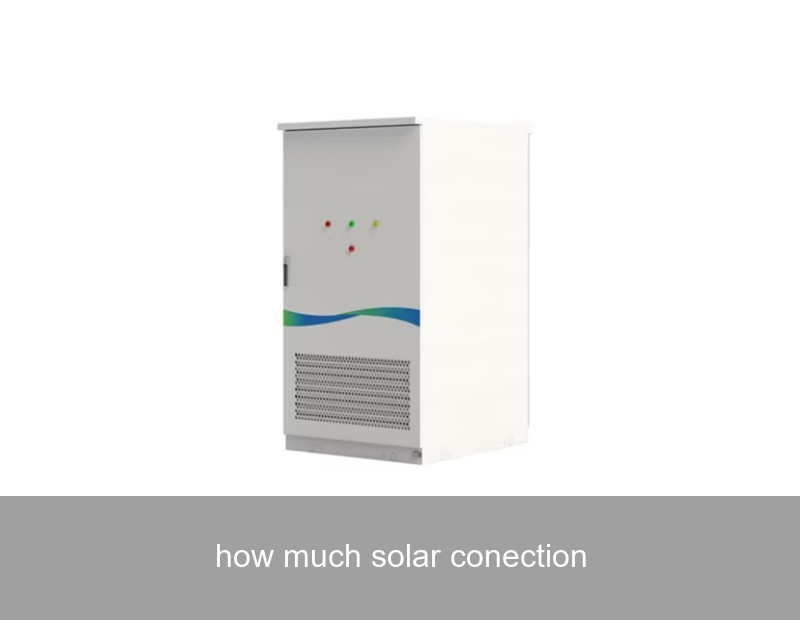
You've decided to go solar. It's a brilliant move for your wallet and the planet. But as you dive into the planning, one question inevitably surfaces: how much solar connection—or capacity—is right for my home or business? It's not just about covering your roof with panels. It's about matching a system's output to your unique energy appetite, future goals, and the practical limits of your electrical connection. Getting this calculation wrong can mean leaving savings on the table or facing costly grid upgrade fees. Let's demystify the process.
Table of Contents
The Core Question: Generation vs. Consumption
Think of your solar connection not as a single number, but as a balance. On one side is your annual energy consumption (measured in kilowatt-hours, kWh). On the other is your system's potential generation. The goal isn't necessarily 100% offset year-round—that can be technically challenging. The goal is to maximize self-consumption and return on investment.
For a typical U.S. household consuming about 10,600 kWh annually, a common starting point is a 6-8 kW DC solar system. But this is a crude estimate. A family in sun-drenched Arizona will generate more per kW installed than one in cloudy Seattle, meaning they might need fewer panels for the same output.

Image: Calculating the right solar connection starts with understanding your roof's potential. Source: Unsplash
Beyond the Basics: The "Duck Curve" Phenomenon
Here's where it gets interesting. Modern energy grids, especially in California and parts of Europe, face the "duck curve"—a midday surplus of solar power followed by an evening demand spike. This phenomenon directly impacts how much solar connection is beneficial without storage. If you send all your excess power to the grid at noon when it's least needed, you may get a lower feed-in tariff. The true optimization, therefore, shifts from simply maximizing size to intelligently managing when you use the power.
Key Factors Determining Your Solar Connection Size
To move from a guess to a precise plan, you must consider these variables:
- Historical Energy Usage: Analyze 12 months of utility bills. Look for seasonal patterns and your average daily kWh use.
- Future Load Changes: Are you planning an EV purchase, a heat pump, or a home addition? Future-proof your system.
- Roof Space & Orientation: South-facing (in the Northern Hemisphere) roofs with minimal shading are ideal. The physical space limits the maximum panel count.
- Local Climate & Insolation: The number of peak sun hours your location receives is critical. Madrid needs a smaller system than Hamburg to produce the same kWh.
- Grid Connection Limits: This is often the hidden bottleneck. Your main service panel and utility agreement may cap the solar capacity you can connect, often requiring expensive upgrades for larger systems.
| Consumption Profile | Recommended Solar Starting Point (DC kW) | Critical Consideration |
|---|---|---|
| Low (Apartment, small home < 8,000 kWh/yr) | 3 - 5 kW | Space constraints; focus on high-efficiency panels. |
| Medium (Family home, 8,000 - 15,000 kWh/yr) | 6 - 10 kW | Load timing; battery storage becomes highly attractive. |
| High (Large home, EV, pool > 15,000 kWh/yr) | 11 - 20 kW+ | Grid connection upgrade feasibility; three-phase power. |
| Commercial (Small business, 30,000+ kWh/yr) | 20 - 100 kW+ | Demand charge reduction; commercial tariffs and storage. |
The Game Changer: The Role of Battery Storage
Asking "how much solar connection?" is now incomplete without asking "and how much storage?" A battery storage system like those from Highjoule fundamentally changes the equation. It allows you to:
- Increase Self-Consumption: Store your midday solar surplus for use in the evening, boosting your energy independence from ~30% to 70% or more.
- Avoid Grid Upgrade Costs: By capping your export power, you can often install a larger solar array without triggering a costly main panel or grid connection upgrade.
- Provide Backup Power: Keep essential loads running during grid outages—a feature becoming increasingly valuable.
This is where Highjoule's expertise shines. Our HES Series Hybrid Energy Systems are designed to seamlessly integrate solar generation with intelligent battery storage. The system's AI-driven energy management software doesn't just store energy; it learns your patterns, forecasts weather, and decides the most economical moment to charge, discharge, or export, ensuring you get the maximum value from every kilowatt-hour your panels produce.
A Real-World Case Study: The German Bakery
Let's make this tangible with data from a real project. A medium-sized artisan bakery in Bavaria, Germany, had an annual consumption of 52,000 kWh with high daytime usage and significant demand charges. Their initial proposal was a 40 kW solar-only system, but they faced a grid export limit of 15 kW.
The Problem: A 40 kW system would frequently produce over 30 kW at peak sun, forcing over 15 kW to be "clipped" and wasted due to the grid connection limit—a direct financial loss.
The Highjoule Solution: We designed a 35 kW solar array paired with a 25 kWh Highjoule HES-50 battery system. The battery acts as a buffer, absorbing any excess generation above the 15 kW export limit. This stored energy is then used to power the bakery's ovens and chillers during the late afternoon peak.
The Result:
- Solar Self-Consumption Rate: Increased from an estimated 45% (solar-only) to 92%.
- Grid Demand Charges: Reduced by over 60% by flattening the peak load.
- Payback Period: Shortened by 2 years due to avoiding a €20,000 grid upgrade and maximizing the value of every kWh generated.
This case clearly shows that the optimal answer to how much solar connection was not the largest possible array, but a slightly smaller, intelligently buffered one paired with storage.

Image: A battery storage system, like Highjoule's HES Series, maximizes the utility of your solar connection. Source: Unsplash
Tailored Solutions: How Highjoule Ensures the Perfect Fit
At Highjoule, we believe there is no one-size-fits-all answer. Since 2005, we've moved beyond being just an equipment provider to becoming a solution architect for commercial, industrial, and residential clients worldwide. Our process answers "how much solar connection" with precision:
- Deep Energy Assessment: We analyze your load profiles, site conditions, and future aspirations.
- Advanced Modeling: Using industry-leading software, we simulate hundreds of system configurations across different weather years.
- Holistic System Design: We integrate the optimal blend of high-efficiency solar panels, our scalable HES battery systems, and our smart energy gateway.
- Future-Proofing: Our systems are modular. You can start with a core solar-plus-storage setup and easily add more battery capacity or panels as your needs evolve.
For microgrids and larger commercial applications, our GridFirmTM platform takes this further, allowing the orchestration of multiple energy assets (solar, storage, generators) to create a resilient, cost-optimized power ecosystem.
A Note for the US and European Markets
In the US, net metering policies are evolving, making storage essential for protecting your investment. In Europe, with soaring energy prices and a strong push for independence, the focus is on maximizing self-consumption. Highjoule's solutions are engineered to adapt to these diverse regulatory and economic landscapes, ensuring your system is compliant and profitable for decades.
Your Next Step Towards Energy Independence
So, how much solar connection do you need? The honest answer is: it depends on the intricate dance between your consumption, your roof, your grid, and your ambitions. The era of simply sizing a system to your past consumption is over. The new paradigm is about designing an intelligent, adaptive energy system that generates, stores, and manages power on your terms.
What unique energy challenge is holding your home or business back from achieving true energy resilience and cost predictability?
 Inquiry
 Online Chat