


How Much Solar for a Condo? Your Guide to Community and Personal Renewable Power
So, you live in a condominium and you're keen on tapping into clean, cost-saving solar energy. It's a fantastic ambition, but you're immediately hit with a complex question: how much solar for a condo is actually needed? Unlike a single-family home, the answer isn't just about your electricity bill. It involves shared roofs, homeowner associations (HOAs), local regulations, and the collective will of your neighbors. This guide will walk you through the unique journey of powering a condo with solar, blending the "how-to" with the "how-much," and introducing smart solutions that make it feasible.
Calculating Your Solar Needs: It's More Than Just Panels
Determining the right solar capacity for a condo requires a multi-layered approach. You must consider personal consumption, shared common area loads, physical constraints, and the legal framework governing your building.
Step 1: The Energy Audit – Know Your Baseline
Start with your own unit. Gather 12 months of electricity bills to understand your average monthly kilowatt-hour (kWh) consumption. For example, a condo in Southern California might use 400-600 kWh per month, while one in New York with different heating systems could use more. This is your personal energy footprint.
Next, inquire with your condo board about the energy consumption of common areas—hallway lighting, elevators, lobby HVAC, gym equipment, and pool pumps. This "common load" can be significant. Sizing a system that covers both personal and partial common area use often yields better economics and broader community support.
Step 2: Assessing Available Space – The Ultimate Limiting Factor
This is the crux of the "how much solar for a condo" question. Roof or facade space is a finite shared resource.
- Roof Area: A standard solar panel requires about 15-20 square feet. A 6 kW system (a common residential size) might need 300-400 sq ft of unshaded roof space.
- Shared Allocation: The total usable roof area must be divided among interested owners or allocated to a common system. This often leads to systems that are smaller than individual home installations.

Image Source: Unsplash - Photo of a condo rooftop, highlighting potential solar space.
Step 3: System Sizing and Efficiency – Quality Over Quantity
With limited space, maximizing the output of every square foot is paramount. This is where high-efficiency monocrystalline panels become essential. They generate more power per panel, meaning you can meet a higher percentage of your energy needs with a smaller array. The formula is straightforward but must be adjusted for condo realities:
Estimated System Size (kW) = (Total Annual kWh Usage / Local Peak Sun Hours) / System Efficiency Factor
For instance, a unit using 6,000 kWh annually in a location with 4.5 daily peak sun hours might need a ~4.5 kW system for full offset. But if only space for a 3 kW system exists, you aim for a 65-70% offset, dramatically reducing your grid dependence.
The Critical Role of Storage for Condos
Here's a pivotal insight: for condos, solar panels are only half the solution. An integrated battery energy storage system (BESS) is what truly unlocks energy independence and resilience.
- Maximizing Self-Consumption: You generate solar power during the day, but peak condo usage often occurs in the evenings. A battery stores excess daytime production for use at night, drastically increasing the utility of your limited solar array.
- Backup Power: In areas prone to grid outages (like parts of California or Texas), a storage system can provide critical backup power for essential loads in individual units or common areas.
- Load Management: For the entire building, a large-scale storage system can help manage demand charges—a major cost for commercial and multi-family properties—by discharging battery power during peak grid demand periods.
A Real-World Case Study: The "Sunrise Towers" Project
Let's look at a real example. A 40-unit condominium complex in Barcelona, Spain, faced rising energy costs and a desire to improve sustainability. The board, after a year of planning, implemented a two-phase project:
| Phase | Action | Result |
|---|---|---|
| 1. Common Areas | Installed a 50 kW rooftop solar array coupled with a 100 kWh Highjoule HiveStack BESS. | Reduced common area electricity bills by 60% and eliminated peak demand charges. The system powers all nighttime lighting and elevator operation. |
| 2. Individual Units | Offered owners a chance to subscribe to a "solar share" program from the common system, with the option to add a smaller Highjoule HomeCell battery inside their utility closet for personal backup. | 25 owners subscribed, each reducing their personal grid consumption by an average of 40%. During a localized grid fault, the HiveStack kept common areas online, and HomeCell units provided uninterrupted power to subscribed apartments. |
This case shows the power of a hybrid approach: a centralized system for the building combined with personalized storage solutions for residents. Data from the International Energy Agency (IEA) underscores the growth of such distributed solar+storage models in urban settings.
Navigating Condo Solar Logistics: From HOA to Grid Connection
The technical calculation is one thing; the human and regulatory hurdle is another. Success depends on:
- HOA/Board Approval: Present a compelling proposal focused on cost savings, property value increase (studies by the U.S. Department of Energy show this benefit), and environmental leadership.
- Interconnection Agreements: Your utility company must approve connecting a solar system to the grid. This process varies widely by region in both Europe and the U.S.
- Financing Models: Options include a direct purchase by the HOA, a special assessment, third-party ownership (like a Power Purchase Agreement for the building), or individual owner-funded systems for exclusive-use areas.
Highjoule's Integrated Condo Solution
At Highjoule, we specialize in turning these complex scenarios into streamlined, operational reality. Our approach to the "how much solar for a condo" question is holistic. We don't just sell panels; we provide intelligent, integrated energy systems.
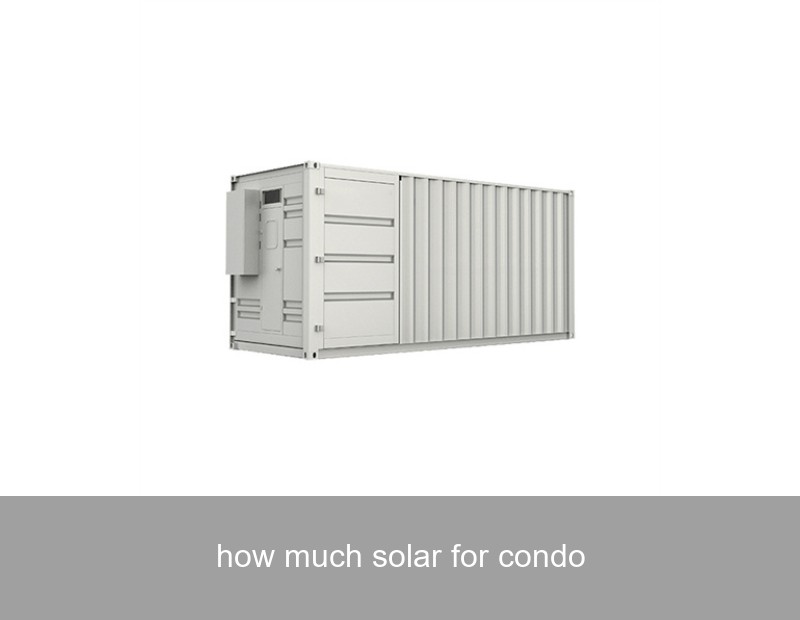
For condos and multi-tenant buildings, our HiveStack Commercial Energy Storage system is a game-changer. It's a modular, scalable BESS designed to integrate seamlessly with new or existing solar arrays on shared roofs. Coupled with our Energy Management System (EMS) software, it allows boards to intelligently dispatch stored energy—prioritizing common area loads, managing peak demand, or allocating savings to participating units.
For individual residents who want control within their walls, our HomeCell residential battery system provides personal energy security and maximizes the value of any shared solar allocation. All our systems are built with the safety and reliability that comes from nearly two decades of experience in grid-scale and commercial storage, now distilled into solutions for denser living environments.

Image Source: Unsplash - Example of clean energy storage installation in a utility space.
Is Your Condo Ready for the Solar Shift?
The journey to answering "how much solar for a condo" starts with a single conversation. It begins with asking your board: What is our building's total energy footprint, and what portion of our roof or facade can we dedicate to a cleaner, more resilient future? Could a pilot project on common area loads prove the concept and build consensus?
What small step will you take this month to explore solar power for your community?
 Inquiry
 Online Chat