


How Much Solar Do I Need for an Off-Grid System? A Practical Guide
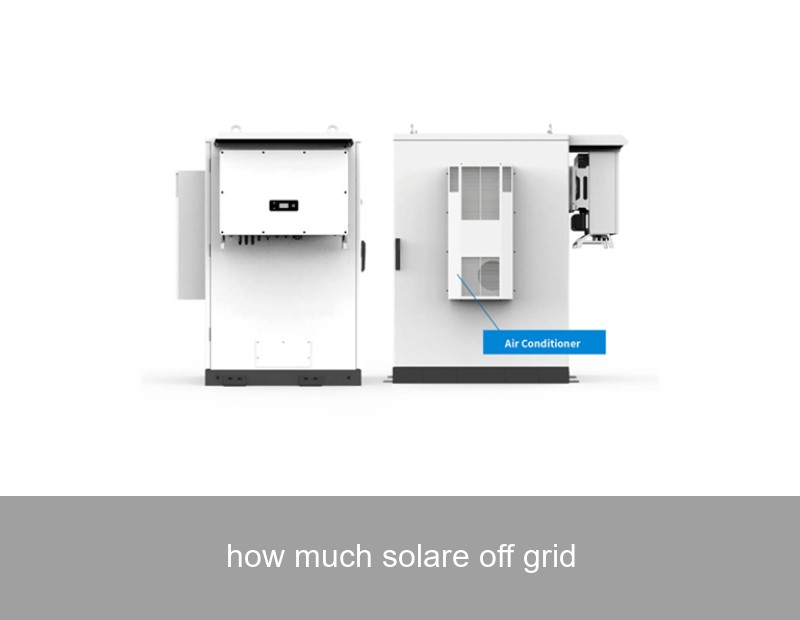
Dreaming of energy independence? The question "how much solar for off-grid" is the crucial first step on that journey. It's not about just covering your roof with panels; it's about designing a precise, resilient system that matches your unique energy lifestyle. Let's demystify the process and calculate your path to true power freedom.
Table of Contents
The Core Question: It's More Than Just Panels
When most people ask "how much solar for off-grid," they're thinking of panel count. However, a functional off-grid system is a carefully balanced triad: solar generation, battery storage, and intelligent energy management. Underestimating any component leads to frustration—like running out of power on a cloudy winter evening.
The key metric isn't just peak sun hours; it's your daily energy consumption in kilowatt-hours (kWh). This number becomes the foundation for everything. For context, the average European household consumes around 3,500 kWh annually, or roughly 9.6 kWh per day, but an efficient off-grid home typically aims for much less through high-efficiency appliances.
Your Step-by-Step Off-Grid Solar Calculation
Let's break down the calculation into a manageable process. Grab your last utility bill or an appliance list.
Step 1: Tally Your Daily Energy Load (kWh/day)
List every appliance, its wattage, and daily usage hours. Use this formula for each: (Wattage × Hours Used) / 1000 = Daily kWh.
| Appliance | Watts | Hours/Day | Daily kWh |
|---|---|---|---|
| LED Lighting | 40 | 5 | 0.20 |
| Refrigerator (Efficient) | 100 | 8 (cycles) | 0.80 |
| Laptop | 60 | 4 | 0.24 |
| Water Pump | 800 | 1 | 0.80 |
| Total Daily Load | ~5.5 kWh (example) | ||
Pro Tip: Add a 20% "buffer" for system inefficiencies, making our example load ~6.6 kWh/day.
Step 2: Determine Your Solar Panel Array Size
Now, we translate energy need into panel power. You need panels to generate enough on the worst sun days to recharge the batteries. The formula: Daily kWh Needed ÷ Peak Sun Hours ÷ System Efficiency Factor = Total Solar kW.
- Peak Sun Hours: Not daylight hours, but equivalent hours of full sun. This varies massively by location (e.g., 2.5h in Northern Germany in December vs. 5.5h in Arizona).
- Efficiency Factor: Accounts for losses (dirt, temperature, wiring). Use ~0.85.
For our 6.6 kWh load in a location with 3 winter sun hours: 6.6 kWh / 3h / 0.85 = ~2.6 kW of solar panels.

Credit: Photo by American Public Power Association on Unsplash - A well-sized off-grid solar array.
Step 3: Size Your Battery Bank – The Heart of Off-Grid
Batteries store sun for night and cloudy days. Sizing depends on your required days of autonomy (how many cloudy days you want to weather). For our 6.6 kWh daily load and aiming for 2 days of autonomy:
- Usable Energy Needed: 6.6 kWh/day × 2 days = 13.2 kWh.
- Battery Bank Capacity: Lead-acid batteries should only be discharged 50%, while modern Lithium Iron Phosphate (LiFePO4) can safely use 80-90%. For a LiFePO4 system: 13.2 kWh / 0.9 = ~14.7 kWh of battery capacity.
This is where quality matters. A poorly sized or low-cycle-life battery is the most common point of off-grid system failure.
A Real-World Case Study: The Bavarian Mountain Retreat
Let's look at a real project Highjoule completed for a year-round cabin in the German Alps. The client's goal was complete independence, with power for a fridge, lighting, water system, and occasional use of a washing machine and power tools.
- Calculated Daily Load: 8.2 kWh (with efficiency measures).
- Local Winter Sun Hours: As low as 2 hours.
- Challenge: Extended periods of low light and sub-zero temperatures.
- Highjoule Solution:
- Solar Array: A 4.8 kW ground-mounted system, oversized to capture low-angle winter sun.
- Storage: A 19.2 kWh Highjoule H-Joule Cube (LiFePO4) battery system, providing over 2 days of autonomy even with minimal charging.
- Brain: Highjoule's AI-powered energy management system, which learns consumption patterns and optimizes every watt, even prioritizing loads during scarce solar input.
Result: The system has operated flawlessly for two winters, maintaining 100% energy independence despite a recorded 11-day period with less than 1 peak sun hour per day. The intelligent management stretched battery reserves and triggered a silent, efficient backup generator (integrated into the system) only twice during that period, seamlessly.
Beyond the Basics: Critical Factors for Reliability
Your raw calculation is just the start. These factors make or break an off-grid system:
1. The Inverter: Your System's Conductor
You need a true off-grid inverter, which converts DC battery power to AC for appliances. Its size (in kW) must handle the surge of all appliances starting simultaneously. A 5 kW inverter might be needed for a home with a 2 kW steady load.
2. Climate and Seasonality
You must design for your least sunny season, not the annual average. Snow cover, as noted in a NREL report on PV in snow country, can reduce yield but also reflects light if panels are tilted—another factor smart design considers.
3. The "Energy Diet"
The cheapest watt is the one you don't use. Switching to DC lighting, using a propane fridge, or choosing AAA+++ rated appliances dramatically reduces your system size and cost.

Credit: Photo by Kindel Media on Pexels - A modern lithium-ion battery bank, key for off-grid storage.
Engineered for Independence: Highjoule's Off-Grid Solutions
At Highjoule, we don't just sell components; we engineer resilient energy ecosystems. We understand that "how much solar for off-grid" is a question with a unique answer for every customer, and we build accordingly.
Our Off-Grid Power Station product line integrates high-efficiency bifacial solar panels (capturing light from both sides), our proprietary H-Joule Cube LiFePO4 battery systems with exceptional cycle life, and the intelligent Highjoule Harmony OS. This software is the true differentiator—it doesn't just monitor; it predicts weather, learns your habits, and autonomously manages energy flow to maximize longevity and reliability.
For larger applications like remote microgrids for communities or industrial sites, our Containerized Battery Energy Storage Systems (BESS) offer scalable, plug-and-play power plants that can integrate solar, wind, and backup generation into a seamless, off-grid network.
Is Your Site Ready for Off-Grid Living?
The journey to energy independence is deeply rewarding but requires meticulous planning. You've now seen the calculations, the real-world variables, and the technology that bridges the gap. So, let's turn the question around: What does your ideal day of energy independence look like, and what's the first appliance you'd want to power solely by the sun?
We invite you to share your vision or your preliminary load calculations. The first step towards a reliable off-grid system is a conversation grounded in your reality.
 Inquiry
 Online Chat