


Understanding Solar System in Kenya Prices: A Smart Investment Guide
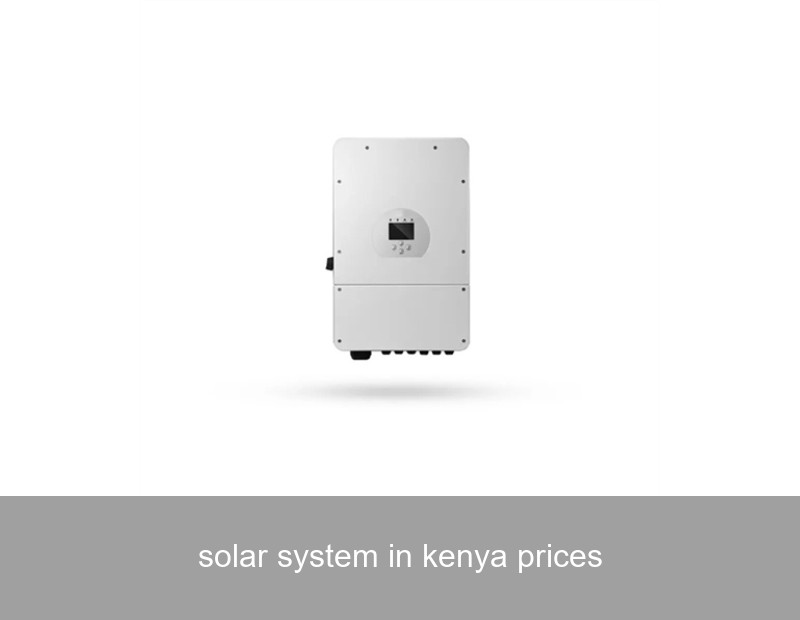
Thinking about going solar in Kenya? You're not alone. Across the country, from bustling Nairobi to serene homes in the Rift Valley, Kenyans are looking to harness the abundant sunshine to power their lives. The conversation often starts with one key question: what are the real solar system in Kenya prices? While a simple online search might give you a dizzying range of figures, the true cost—and value—of a solar installation is a more nuanced story. It's not just about the upfront price tag; it's about long-term energy independence, reliability, and the quality of the components that will power your home or business for decades. As a global leader in advanced energy storage, Highjoule understands that a solar system is a significant investment, and making an informed decision requires looking beyond the initial quote.
Table of Contents
- The Real Breakdown: What Drives Solar System Prices in Kenya?
- The Battery Storage Myth: Why Cheap Can Be Costly
- A Kenyan Case Study: From Unreliable Grid to Sustainable Power
- How Highjoule's Expertise Elevates Kenyan Solar Projects
- Your Solar Investment: Navigating the Market Smartly
The Real Breakdown: What Drives Solar System Prices in Kenya?
Let's demystify the cost. A typical solar photovoltaic (PV) system price in Kenya is influenced by several core components:
- Solar Panels: The engine of your system. Prices vary based on efficiency (monocrystalline is typically more efficient and costly than polycrystalline) and brand reputation.
- Inverter: The brain. This converts DC power from panels to AC for your appliances. Quality here dictates system stability and lifespan.
- Battery Storage System: The heart for off-grid or hybrid systems. This is often the single most significant cost variable and the most critical for performance.
- Balance of System (BOS): Mounting structures, wiring, charge controllers, and protective devices.
- Installation & Soft Costs: Professional design, labor, permits, and after-sales service.
For a rough estimate, as of late 2023, a quality 5kW off-grid system suitable for a medium-sized home in Kenya can range from KES 1.2 million to over KES 2 million. The wide range hinges primarily on the type and capacity of the battery storage. A system built with basic lead-acid batteries will sit at the lower end, while one featuring advanced, long-life lithium-ion technology will command a higher, but ultimately more valuable, price point.
The Battery Storage Myth: Why Cheap Can Be Costly
This is where many consumers get stuck. It's tempting to choose a system with the lowest solar system in Kenya prices, often achieved by specifying low-cost, low-cycle-life batteries. However, this is a classic case of false economy. Think of it like this: would you buy a car based solely on its showroom price, ignoring its fuel efficiency and maintenance costs over 10 years?
Traditional lead-acid batteries may have a lower upfront cost, but they typically last 3-5 years, require regular maintenance, and offer a lower usable depth of discharge (DoD). This means you need to buy more battery capacity upfront and replace them more frequently. In contrast, modern lithium-ion solutions, like the Highjoule HPS series designed for resilient off-grid and hybrid applications, offer:
- Longer Lifespan: 10+ years of reliable service, often with performance warranties to match.
- Higher DoD: You can safely use 90% of the stored energy without damaging the battery, meaning you need less physical capacity.
- Zero Maintenance: Sealed, smart systems that manage themselves.
- Integrated Intelligence: Built-in Battery Management Systems (BMS) optimize performance and safety.
The levelized cost of storage (LCOS)—the total cost of owning and operating the storage over its lifetime per kWh—is often far lower for high-quality lithium-ion systems. This is a crucial metric that any reputable installer should discuss with you.

Image: A reliable solar installation is a long-term asset. (Photo by Unsplash)
A Kenyan Case Study: From Unreliable Grid to Sustainable Power
Let's look at real data. A medium-sized dairy farm in Nakuru County was facing crippling power outages, disrupting milk cooling and daily operations. Their initial quote for a 10kW solar system with lead-acid batteries was KES 2.8 million. After a detailed energy audit and lifecycle cost analysis, they opted for a system featuring Highjoule's HPS-15 lithium-ion battery storage.
| Factor | Lead-Acid Proposal | Highjoule Lithium-Ion System |
|---|---|---|
| Upfront System Cost | KES 2.8M | KES 3.4M |
| Battery Expected Lifespan | 4 years (1 replacement cycle needed in year 5) | 12+ years |
| Estimated Replacement Cost (Year 5) | KES 600,000 | KES 0 |
| Usable Energy per Cycle | ~50% of rated capacity | >90% of rated capacity |
| Required Maintenance | Regular water top-ups, terminal cleaning | Fully automated, zero routine maintenance |
Over a 12-year period, the total cost of ownership for the lithium-ion system was projected to be 15-20% lower, not to mention the avoided operational hassles and guaranteed power for critical cooling equipment. The farm now runs entirely on solar during the day, uses stored energy at night, and only uses the grid as a backup, slashing their energy bills by over 80%. This case underscores that the true solar system in Kenya prices must be evaluated over the system's lifetime, not just on day one. For more on Kenya's renewable energy landscape, you can refer to data from the Ministry of Energy and Petroleum.
How Highjoule's Expertise Elevates Kenyan Solar Projects
At Highjoule, we don't just sell batteries; we provide intelligent energy resilience. Founded in 2005, we've spent nearly two decades perfecting storage technology for diverse global environments, from European winters to sun-drenched regions like Kenya. Our products, like the HPS (Hybrid Power Station) series, are engineered for durability and simplicity in challenging conditions.
For Kenyan partners and installers, integrating Highjoule storage means offering clients:
- Adaptive Technology: Our systems seamlessly integrate with most major inverter brands, giving installers flexibility.
- Remote Monitoring: Through the Highjoule Energy Management Platform, users and installers can monitor system health, energy flow, and savings in real-time from anywhere in the world—a huge advantage for proactive maintenance.
- Scalability: Start with what you need and add more storage capacity as your needs grow, protecting your initial investment.
We support a network of certified installers across the globe, providing them with the technical training and tools needed to design systems that truly meet the long-term economic and practical needs of Kenyan homes, businesses, and agricultural operations. By focusing on total value, we help move the conversation beyond just solar system in Kenya prices to one about energy security and return on investment. The International Renewable Energy Agency (IRENA) provides excellent context on global renewable power generation costs.

Image: Smart monitoring ensures optimal system performance. (Photo by Unsplash)
Your Solar Investment: Navigating the Market Smartly
So, how do you ensure you're making a wise investment? Ask the right questions:
- Request a Detailed Lifecycle Cost Analysis: Don't just compare initial quotes. Ask for a 10-year projection including potential battery replacements, maintenance, and expected energy yield.
- Prioritize Component Quality: Insist on knowing the brands and models of key components, especially the inverter and battery. Research their warranties and global track record.
- Choose the Right Partner: Your installer is as important as the equipment. Choose a certified, experienced professional who performs a thorough site assessment and explains your options clearly.
- Think About Tomorrow: Consider your future energy needs. Will you buy an electric vehicle? Expand your business? Ensure your system can be cost-effectively scaled.
Remember, solar is a 20-25 year investment in your property and peace of mind. The goal is to maximize energy independence and minimize lifetime cost, not just to find the lowest entry ticket.
Ready to Power Your Future with Confidence?
The journey to energy independence starts with the right information. While solar system in Kenya prices are a necessary starting point, the real story is written in decades of reliable, clean power. What energy challenge—whether it's unpredictable bills, grid instability, or a commitment to sustainability—is motivating you to explore solar power today?
 Inquiry
 Online Chat